
Trisha Ziff
Frida: The Girl Just Doesn't Go Away
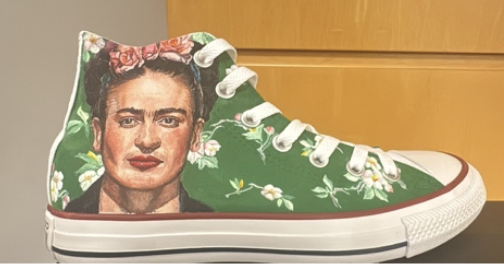
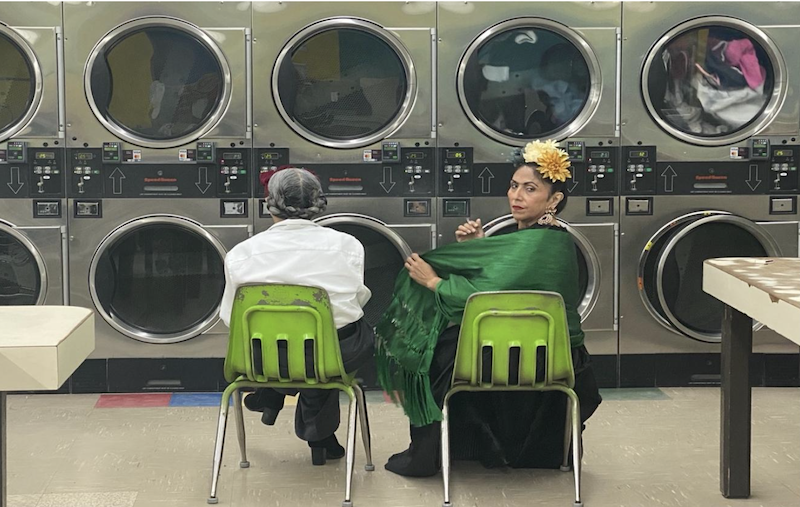
The film, Frida: The Girl Just Doesn't Go Away, does not include any of Frida's work. It looks at the fascination with her, it looks at what's happened to Frida commercially during the last two decades or so. It's not another biopic. It's not about her work, or even her suffering. But it does look at how she has become this kind of iconic figure for many people who may not even have a very strong interest in art. I mean, if you ask many of them who Diego Rivera is in relation to Frida, they don’t have a clue.
It's a fun film, and it's very different, in a way, to my other films. It's the only film I've ever made about a woman. All of my films actually have predominantly male characters, and as a feminist, I reflect on that.
In a way, it's quite an analytical film. It includes a lot of talking heads. It's a discussion. It is also visual, so people can enjoy watching it, and that balances out the narrative of the discussion. Why Frida? That was the aim of the film. The film pulls out different threads: the commercialization, how that all happened; the complexity of commercialization, which makes it very difficult to make work around Frida.
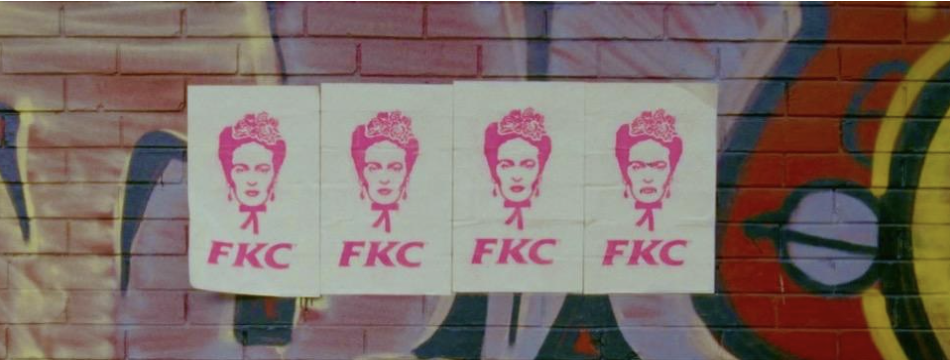
There is so much litigation around her. For example, I could not have called my film Frida Kahlo in any way. You cannot use the words Frida Kahlo together, because those words are owned by the Frida Kahlo Corporation. And they litigate over it. So the film obviously addresses that.
Frida: The Girl Just Doesn't Go Away is a small, modest, independent Mexican film, made essentially by women in Mexico: me and my writer, Marina Stavenhagen. And from a budgetary point of view, that limited us. Even if we'd wanted to put in a Frida Kahlo painting, we couldn't have afforded it. Whereas the BBC, Sky, National Geographic, Amazon, they can make films about Frida. We can't. And for me, that's important. A Mexican indie doc doesn't have the freedoms that these large international companies have if they want to explore the issues.
We wanted to have the voices of different people talking about this evolution. Julie Taymor, who directed the first international Frida feature film, is in our doc. She talks about how she doesn't like the commercialization of Frida. Cristina Kahlo, the great-niece of Frida and granddaughter of Frida's sister Cristina, talks very critically of this commercialization. But she also talks about growing up as a Kahlo in Mexico. She is an artist, a photographer in her own right. We have Ofelia Medina in the film. Ofelia was the first actress to play Frida, in the very first feature film about her.
We also filmed Siobhan Guerrero, an intellectual, a professor of philosophy here in Mexico, who talks about the gender issues around Frida. And Renato Camarillo, a historian of costume, talks about the whole issue of Frida wearing Mexican indígena dress as a non-indígena woman, and the politics of that. Mari Carmen Ramírez and Arden Decker, the two curators of the Frida, Making of an Icon exhibition at the Museum of Fine Arts in Houston, are in the film talking about the phenomenon of Frida. Arden asks the question at one moment: who has the right to own Frida?
The film goes in these different directions, these voices who talk about all these different agendas.
Ongoing thread. More from Trisha Ziff to follow.
Curator: Bora Pajo
Frida: The Girl Just Doesn't Go Away
Available here →October 21, 2026
20261021-ziff-frida-in-a-nutshell
In a nutshell
The rest of this thread
Trisha Ziff
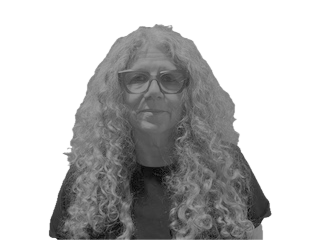
Trisha Ziff is a documentary filmmaker, curator, and writer, and a Guggenheim Fellow. Born in the north of England, she studied Fine Art at Goldsmiths College London. In 1981 she founded Camerawork Derry in Northern Ireland, a community photography workshop that documented the conflict through the eyes of young people. She later directed the Network Photographers collective in London, then moved to the United States in 1990 to work as an independent curator of major international exhibitions. In 2007 she founded 212 BERLIN FILMS in Mexico City. She has directed and produced seven feature documentaries and four short films.
Pull this thread
Frida Kahlo's commercial afterlife has turned her from an artist into a global symbol of cultural resistance.
Know something the rest of us don't?
Most threads on Rorotoko begin with our invitation. Any thread can begin with a proposal: you write it with the same prompts every thread answers, and we review it.
Propose a thread →