
Trisha Ziff
Frida: The Girl Just Doesn't Go Away
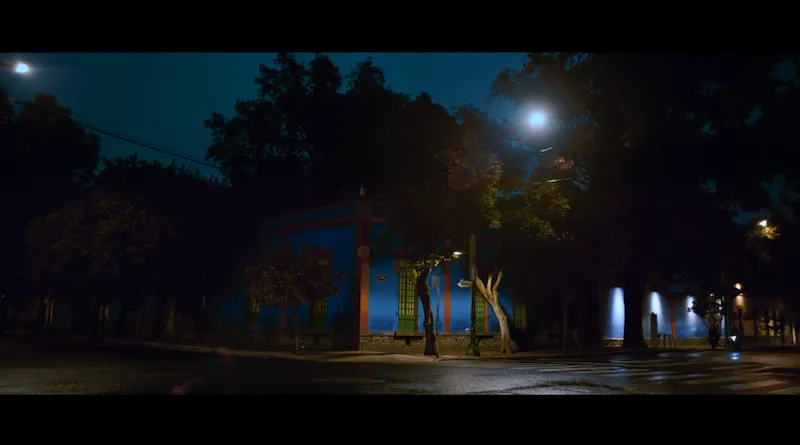
I live here in Mexico City, in Coyoacán, and the wall of my garden is shared with the wall of the Casa Azul, Frida's house. I've lived here for 17, 18 years now, so I've seen the transformation. I have a dog, and I walk my dog past the Casa Azul twice a day. I pass the line in the street, and the sellers in the street, and the community that exists around the house. I see firsthand how the world of Coyoacán has changed with the commercial interest in Frida.
I've seen the house change, from being a place where you could just buy a ticket at the entrance, go in, wander around, and spend as much time there as you wanted, to now, where you have to buy your ticket online only, at least a month in advance, otherwise you really don't get in. You have an allotted time frame, and there's someone in front of you and someone behind you as you're shuttled through the space.
There are tour buses that come, and they're huge, and these are very narrow streets. This is a residential area. They leave their motors running, and they just park in front of your house with no regard for the community whatsoever. The market in Coyoacán used to sell vegetables everywhere, and flowers, and meat, and fish. It still does, but very modestly, because many of the little stores have turned into cafés or stores that sell Frida paraphernalia. Many less local people don't go to the market of Coyoacán anymore, which is really a pity. It's become a tourist trap. That's the reality.
I was here during the years of the pandemic, when no one visited the house, which was kind of perfect, actually. I wouldn't say love-hate, because that's too extreme, but I have a complex relationship with the fact that I'm a neighbor of the Casa Azul. A lot of people I know come to Mexico and want to go there. So afterwards, they come and have coffee with me, and I really love that!
Those are some of the reasons why I became interested in this project. Why this fascination? What is it that keeps this artist in the forefront for women artists globally? It's not just here in Mexico, it's global. So that's, in a way, the seed of my idea for making the film.
I come from a curatorial background, working specifically with photography. I live emotionally in still photography, to this day. I had done a big exhibition around the very famous image of Che Guevara by the Cuban photographer Alberto Korda, and some friends of mine in LA had seen the exhibition and said it would make a great doc. That became my first documentary, Chevolution. It was for Netflix, with Red Envelope, back when they would send you the DVDs in a red envelope through the mail. I'm aging myself here!
Chevolution wasn't about Che, and it wasn't about Korda. It was about the narrative of the image, an analysis of the narrative of the image. So people say to me now, "Oh, Frida, it's your new Chevolution." They make the comparison, and they're right to make the comparison, in a way. All my films have a relationship to photography, this fascination and love of photography.
The relationship between Mexico and people of Mexican origin in the United States is something I've looked at in other films too. Oaxacalifornia, and then Oaxacalifornia: The Return, both look at that relationship. In this film it's very specific: the cultural relationship of the Chicanx community in the United States to Frida, what she represents, the history of that. We have different voices that talk to that, including the feminist Chicana artist Amalia Mesa-Bains, who talks about the history of it. For me, it's perhaps the most interesting. To be honest, I could have made a film only exploring that theme. You have to make it broader. If I'd had the funding, I would have gone to other countries, like Japan, and explored Hello Kitty Frida and all of that.
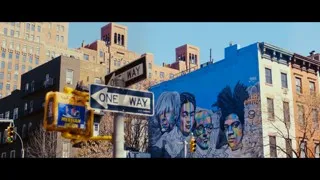
I worked on the film with the Museum of Fine Arts in Houston, that mounted a major exhibition that is essentially a parallel to the film. I had no idea they were making the exhibition, and they had no idea I was working on the film, until a friend in LA said to me, "You should talk to Mari Carmen Ramírez in Houston; she's doing this exhibition." So I contacted her, and they couldn't have been more generous towards us. We filmed some of the art in that exhibition as well.
Ongoing thread. More from Trisha Ziff to follow.
Curator: Bora Pajo
Frida: The Girl Just Doesn't Go Away
Available here →November 2, 2026
20261102-ziff-frida-the-wide-angle
The wide angle
The rest of this thread
Trisha Ziff
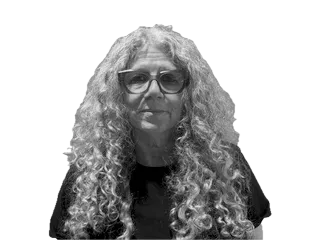
Trisha Ziff is a documentary filmmaker, curator, and writer, and a Guggenheim Fellow. Born in the north of England, she studied Fine Art at Goldsmiths College London. In 1981 she founded Camerawork Derry in Northern Ireland, a community photography workshop that documented the conflict through the eyes of young people. She later directed the Network Photographers collective in London, then moved to the United States in 1990 to work as an independent curator of major international exhibitions. In 2007 she founded 212 BERLIN FILMS in Mexico City. She has directed and produced seven feature documentaries and four short films.
Pull this thread
Frida Kahlo's commercial afterlife has turned her from an artist into a global symbol of cultural resistance.
More in Arts
More in Books
Know something the rest of us don't?
Most threads on Rorotoko begin with our invitation. Any thread can begin with a proposal: you write it with the same prompts every thread answers, and we review it.
Propose a thread →