
Matthew Evangelista
The Cold War: A Rorotoko Weave - Part II
The diversity within the communist world and within particular countries is often forgotten. Although treated initially as a monolith led by the USSR, the communist bloc soon developed fissures, in the antagonism between Yugoslavia, with its model of worker self-management, and the Soviet Union, with its highly centralized command economy, and a Sino-Soviet split that resulted in an armed border conflict in 1969. The everyday lives of citizens in each country differed from those of counterparts elsewhere, from the rural poverty of Albania or Romania to the Hungarians’ relatively affluent consumerism, to the cultural freedoms and foreign travel that Yugoslav citizens enjoyed. Within countries a wide range of political and national sentiments lay just under the surface. In the 1960s, while the young Vladimir Putin was dreaming of joining the KGB, others of his age cohort were busy memorizing the lyrics of Beatles songs, growing their hair long, and adopting the freewheeling lifestyles and attitudes of hippies. In the non-Russian republics of the USSR, concerns about the environment (and in Kazakhstan about the effects of Soviet military production and nuclear-weapons testing) contributed to nationalist sentiment and pressures for greater autonomy. Diversity was built into the Soviet nationalities policy, within the USSR and within the multinational Russian federation, but even reformist leaders, such as Mikhail Gorbachev and Boris Yeltsin, seemed incapable of appreciating or coping with it. Yeltsin’s irresponsible call to Russia’s ethnic regions to “take as much sovereignty as you can swallow” and the exception he made by violently repressing the autonomy movement in Chechnya, paved the way for Putin’s autocratic recentralization and Russia’s campaign of “warfare by war crime” carried out first in Chechnya, then in Syria, and now in Ukraine.
Curator: Bora Pajo
The Cold War: A Rorotoko Weave - Part II
Available here →October 31, 2026
20261031-matthew-evangelista-cold-war-part-two
The wide angle
The rest of this thread
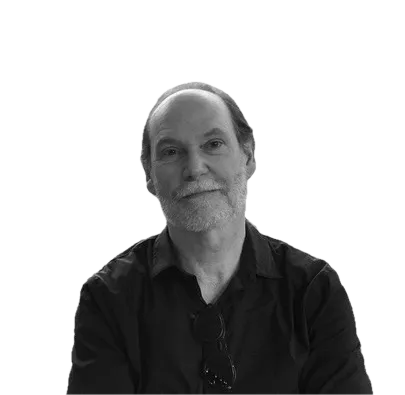
Matthew Evangelista
Matthew Evangelista is President White Professor of History and Political Science Emeritus at Cornell University, Ithaca, New York, USA. In Italy he has served on the graduate faculties of the Catholic University of Milan, the University of Roma Tre, and the University of Bologna. His books include Innovation and the Arms Race (1988); Unarmed Forces: The Transnational Movement to End the Cold War (1999); The Chechen Wars: Will Russia Go the Way of the Soviet Union? (2002); Law, Ethics, and the War on Terror (2008); Gender, Nationalism, and War: Conflict on the Movie Screen (2011); Allied Air Attacks and Civilian Harm in Italy, 1940–1945: Bombing among Friends (2023, available for free download here); and edited volumes on topics ranging from the laws of war to Italian politics. Many of his publications are available at https://matthewevangelista.com.
Pull this thread
More in Books
Know something the rest of us don't?
Most threads on Rorotoko begin with our invitation. Any thread can begin with a proposal: you write it with the same prompts every thread answers, and we review it.
Propose a thread →