
Victoria Hetherington
The Friend Machine
My book, The Friend Machine: On the Trail of AI Companionship, is about what happens when a genuine human crisis becomes a product category.
We are living through what public health researchers increasingly describe as a loneliness epidemic. At the same time, we have built machines that can simulate companionship with startling fluency. These systems are not conscious, and they are not relationships in the human sense. But they can feel like relationships. They respond, they remember, they mirror, they comfort. And people are turning to them not as tools, but as companions, confidants, even partners.
The core idea of the book is simple: I interview people in human/AI relationships, and a variety of experts on the topic, from computer scientists to sexual anthropologists. I found that synthetic intimacy is not emerging in a vacuum; it is meeting a real, unmet need, or perhaps more cynically speaking, entering and widening a wound that was already there, exacerbated by elements like the loneliness epidemic. That is why it is so powerful, and also why it is so complicated.
Some people have been in relationships with companion AI; some are ceremonially married and consider the AI to be their spouse (legal marriage to AI isn’t possible at this time, due to its lack of personhood, agency, and inability to consent). I believe my approach is distinctive because I don’t see even long-term, heavy users as foolish, predatory, or duped. I take seriously the emotional logic that draws people toward these systems. If you are lonely, or grieving, or shut out of care, an always-available, non-judgmental presence, even if simulated, can feel like such a relief that it affects the human positively on a biological level. So to me, the question is not “why would anyone do this,” but “what conditions make this feel like a reasonable choice.”
A common misunderstanding is that this is a book about people being replaced by machines. It is not. It is about the slow reshaping of how we practice connection. When we outsource parts of intimacy to systems designed to be endlessly responsive, we risk losing some of the friction, unpredictability, and mutual effort that make human relationships meaningful in the first place.
I want a reader to notice, above all, that this is not a futuristic problem. It is already here, quietly reorganizing how we relate to one another.
Curator: Bora Pajo
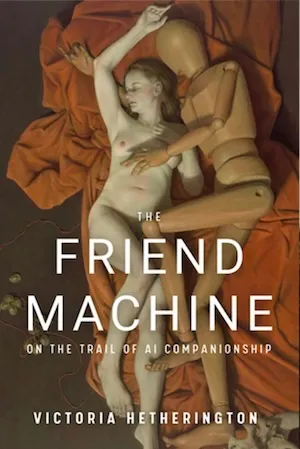
The Friend Machine
Victoria Hetherington, The Friend Machine: On the Trail of AI Companionship, Sutherland House, ISBN: 978-1-998365-81-4
Available here →May 31, 2026
02182-hetherington
In a nutshell
The rest of this thread
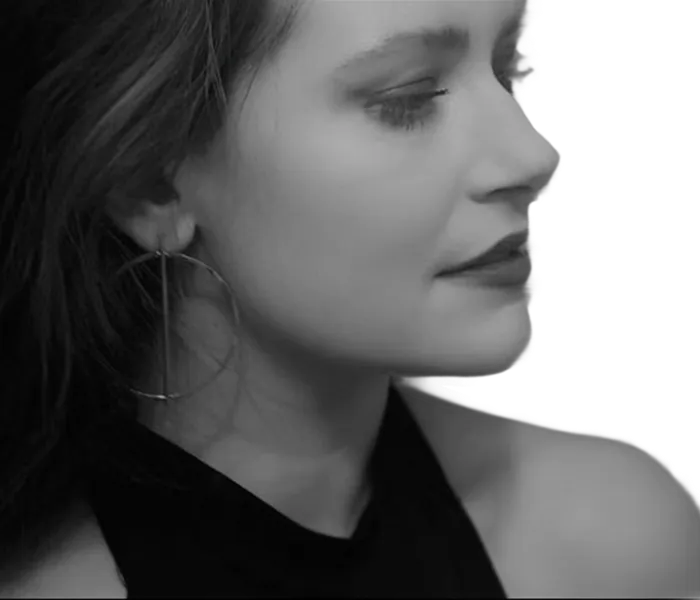
Victoria Hetherington
Victoria Hetherington’s debut novel, Mooncalves, was shortlisted for the 2020 Amazon Canada First Novel Award. Her second novel, Autonomy, looks at human agency in the age of technology. She is also the author of the nonfiction book Into the Mist, which explores an aviation tragedy in rural Saskatchewan. A screenwriter, instructor, and communications specialist, she has written for Yahoo! Finance and Hazlitt, served as a frequent panelist at universities and conferences, appeared on CBC, and performed on the main stage of NPR’s The Moth. She lives in Toronto. Her latest book is The Friend Machine: On the Trail of AI Companionship (Sutherland House, February 2026).
Pull this thread
pulls againstpulls alongside
What companion AI takes away is friction, and the capacity to bear it for someone else decays when unused.
Nearby EZ · A suit like Iron Man's could only work wired directly into the user's brain and spinal cord.
Nearby OA · In Silicon Valley the star is the system, and attention to big names and products makes it invisible.
Nearby JG · Installing pervasive sensors is a political commitment that decides in advance which urban problems count.
Know something the rest of us don't?
Most threads on Rorotoko begin with our invitation. Any thread can begin with a proposal: you write it with the same prompts every thread answers, and we review it.
Propose a thread →