
Victoria Hetherington
The Friend Machine
The Friend Machine sits at the intersection of several conversations that are often kept apart.
There is the technological conversation and the squabbling between those in charge of it (accelerationists vs. de-accelerationists, for example), about large language models and conversational AI. There is the clinical one, about loneliness, depression, and access to care. There is the cultural one, about how we form and sustain relationships in a world of platforms, precarity, and constant mediation. And there is the economic one, which is rarely stated plainly: Connection has become a market opportunity.
We are watching the emergence of what might be called a synthetic intimacy industry. Chatbots that position themselves as companions, therapists, romantic partners. Services that promise presence, understanding, even love. Some of these are explicitly marketed that way. Others drift into that role because of how people use them. Either way, they are filling gaps left by overstretched health systems, fragmented communities, and the erosion of shared social spaces.
My work tries to hold two truths at once. These systems can provide real, immediate relief. They can help someone get through a night, a grief, a moment of crisis. But they are also designed environments. They are optimized to be engaging, affirming, and sticky. That has implications for how we learn to relate, and what we come to expect from one another.
I came to this through a long-standing interest in intimacy and technology. I began, years ago, with a fictional idea about a bot that falls in love with a human. At the time, it felt speculative, almost whimsical. Then I started encountering real people forming attachments to conversational systems, sometimes deeply so. At the same time, loneliness was being named at the level of public health.
The turning point was realizing these were not separate stories. They were the same story.
What happens when a crisis of connection meets a technology that can simulate its cure?
Curator: Bora Pajo
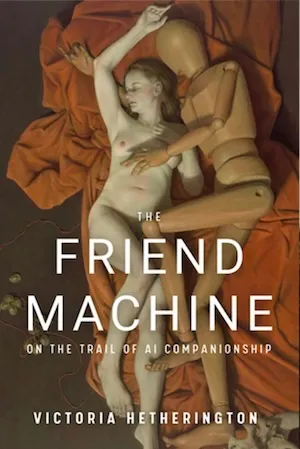
The Friend Machine
Victoria Hetherington, The Friend Machine: On the Trail of AI Companionship, Sutherland House, ISBN: 978-1-998365-81-4
Available here →May 31, 2026
20260531-victoria-hetherington-friend-machine
The wide angle
The rest of this thread
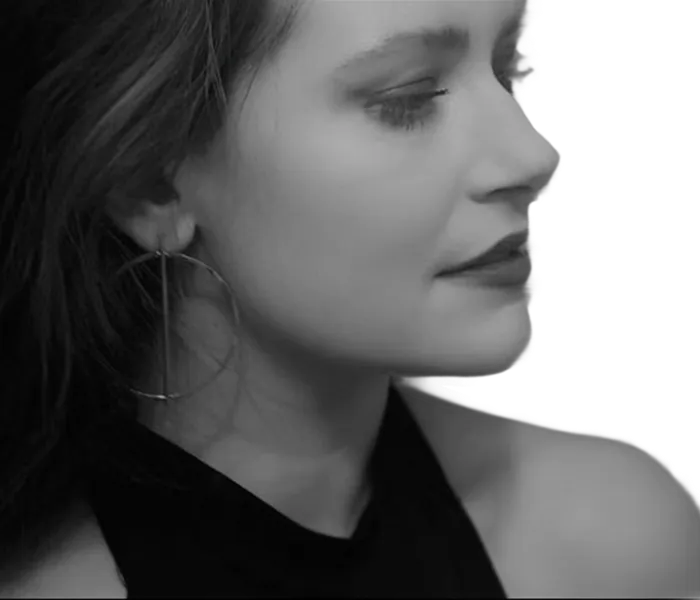
Victoria Hetherington
Victoria Hetherington’s debut novel, Mooncalves, was shortlisted for the 2020 Amazon Canada First Novel Award. Her second novel, Autonomy, looks at human agency in the age of technology. She is also the author of the nonfiction book Into the Mist, which explores an aviation tragedy in rural Saskatchewan. A screenwriter, instructor, and communications specialist, she has written for Yahoo! Finance and Hazlitt, served as a frequent panelist at universities and conferences, appeared on CBC, and performed on the main stage of NPR’s The Moth. She lives in Toronto. Her latest book is The Friend Machine: On the Trail of AI Companionship (Sutherland House, February 2026).
Pull this thread
pulls againstpulls alongside
What companion AI takes away is friction, and the capacity to bear it for someone else decays when unused.
Nearby EZ · A suit like Iron Man's could only work wired directly into the user's brain and spinal cord.
Nearby OA · In Silicon Valley the star is the system, and attention to big names and products makes it invisible.
Nearby JG · Installing pervasive sensors is a political commitment that decides in advance which urban problems count.
Know something the rest of us don't?
Most threads on Rorotoko begin with our invitation. Any thread can begin with a proposal: you write it with the same prompts every thread answers, and we read it.
Propose a thread →