
Mark Fenster
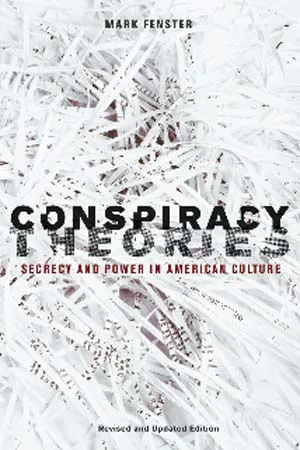
Conspiracy Theories
I make two basic claims in the book. First, I argue that the dominant mode of understanding conspiracy theory is flawed. Academics and journalists have wrongly assumed that conspiracy theories are necessarily a pathological cry from the political and social margins. The notion that they and their adherents are “paranoid” is most frequently associated today with the work of Richard Hofstadter, a preeminent American historian in the 1950s and 1960s, who placed conspiracy theories within what he called the “paranoid style in American politics.” Viewed this way, a conspiracy theory is symptomatic of a larger sickness from which the believers suffer, caused in part by their marginal position within society.
Conspiracy theories are more complex than this simple story tells—historically, politically, and culturally. They have played a key or at least non-trivial role in many of the social movements throughout American history, from the beginnings of the Republic to the present day. Moreover, conspiracy theories remain remarkably popular. In the political world, politicians and partisans disparage their opponents’ beliefs as conspiracy theory while they maintain that those same opponents are engaged in conspiratorial acts. Do I even need to give examples of how widespread conspiracy theories are in popular culture? Or how in our private conversations we frequently describe dealings in the workplace or in the political world as conspiratorial, whether in jest or in all seriousness?
The book’s first claim, then, is critical: we need to rethink the basic conceptual framework by which we understand conspiracy theories.
The second claim suggests an alternative: Conspiracy theory needs to be understood as a subset of populism, which has a long and important tradition in American culture and politics. Fears of conspiracy aren’t necessarily “good” or “bad”—conspiracies do happen, but conspiracy theories frequently chase illusions and have pernicious effects. We need to be careful not to dismiss them out of hand—nor, for that matter, should we embrace them unthinkingly. I argue that this populism emerges in two practices endemic to conspiracy theories: its commitment to interpreting the world to constantly find the traces of power, and its ongoing effort to tell power’s story, to narrate history and the present as a conspiracy.
In fact, I’m fairly skeptical about the possibility of finding a single cause or even an identifiable pool of causes for belief in conspiracy theory.
So my second claim is less an explicit assertion that I have identified a “correct” approach to understanding conspiracy theory and more a commitment to observation and description. It is an effort to damp down the normative posturing that labeling as “pathology” assumes. Conspiracy theories proceed from an assumption that is undoubtedly correct, even banally so: we don’t all have equal access to power and capital. They then seek evidence of the extent to which the system by which those assets are distributed—the state and economy—is both hidden and corrupt, and they construct elaborate stories that explain the conspiracy’s secrecy and villainy.
These steps are shared not only by the most committed conspiracy theorists; political novelists and investigative reporters, for example, also try to explain and narrate a world of unequal power. They do so differently, but they share with conspiracy theorists many of the same interpretive and narrative strategies. The move from a theory of power to interpretive and narrative acts is a part of our cultural and political landscape. To call it “pathology” is to miss its pervasiveness, attraction, and authority in the present day.
Editor: Erind Pajo
Conspiracy Theories
Mark Fenster Conspiracy Theories: Secrecy and Power in American Culture (revised and updated edition) University of Minnesota Press 400 pages, 6 x 9 inches ISBN 978 0816654949
Available here →January 20, 2009
20090120-fenster-mark-on-conspiracy-theories-secrecy-power-american-culture-1-1
In a nutshell
The rest of this thread
Joshua Lukman
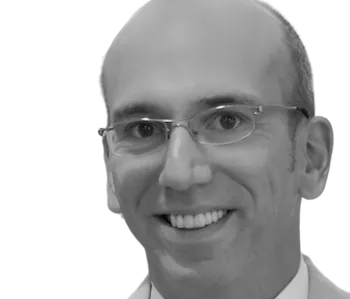
Mark Fenster
Mark Fenster is UF Research Foundation Professor of Law at the University of Florida. He teaches and writes on legal and cultural theory, administrative law and bureaucracy, and property. He received his B.A. from the University of Virginia, his law degree from Yale Law School, and his Ph.D. from the Institute of Communications Research at the University of Illinois at Urbana-Champaign. He is the author of Conspiracy Theories: Secrecy and Power in American Culture (University of Minnesota Press, 2nd rev. ed. 2008) and is in the midst of two book projects: one on the work of the legal realist and New Deal “trustbuster” Thurman Arnold, and the other on the concept of “transparency” in contemporary law, administration, and culture.
Pull this thread
Conspiracy theory is not a fringe pathology but a form of populism.
Know something the rest of us don't?
Most threads on Rorotoko begin with our invitation. Any thread can begin with a proposal: you write it with the same prompts every thread answers, and we review it.
Propose a thread →