
Thomas M. Nichols
Eve of Destruction
I actually did not intend to write a book on preventive war. A lot of people assumed I became interested in the subject because of the 1991 Gulf War, or 9/11, or Operation Iraqi Freedom. Even the U.S. National Security Strategy of 2002, which makes very clear arguments for preventive war, really didn’t get my attention. In the end, it was the Russians who got me interested in the problem.
For most of my career, I studied Russia as my area of regional expertise. I have spent quite a bit of time there. And so I follow their press and defense journals, and over time I was startled at a kind of new aggressiveness I seemed to be finding in their national security debates. Russian leaders were regularly making bold pronouncements that they would not hesitate to strike at any threat to Russia, anywhere, anytime, and so on. This piqued my curiosity, and I started to look at other European nations as well.
I was fairly stunned at what I found. The Russians may have been making the loudest claims about the right to take preventive actions. But they were hardly alone. The more I looked into it, the more I found similar views being voiced—and in official statements and documents—in France, Britain, the EU, Australia… even Japan. I felt I had discovered something going on in the international community, and decided to look at it more systematically.
What I found was that years of intervention—in my view, justified interventions in the name of humanitarian relief—had worn down previous views of the sovereignty of the state. No longer were state borders considered inviolable regardless of what sort of mayhem taking place behind them. By the late 1990s, and especially with the 1999 war over Kosovo, the Western powers had made it clear that the old rules of absolute state sovereignty (sometimes called “the Westphalian system,” after the Peace of Westphalia in 1648) were no longer in force.
From there, it was a short step from arguing that powerful states could intervene in the affairs of smaller states, to arguing that powerful states should intervene, and perhaps even intervene ahead of time, to prevent terrible things from happening—especially if one of those terrible things were, for example, the creation of a weapon of mass destruction by someone who intended the rest of us harm.
Some might well argue that the old rules are too dangerous in this era of new and ever more bizarre threats. I am sympathetic to that concern. But I also argue in the book that we should not simply give up and declare open season on any and all threats. Doing so will result in anarchy, chaos, and a great deal of violence—at various levels and by any number of powerful nations, the United States among them.
Editor: Erind Pajo

Eve of Destruction
Thomas M. Nichols Eve of Destruction: The Coming Age of Preventive War University of Pennsylvania Press 216 pages, 9 x 6 inches ISBN 978 0812240665
Available here →February 24, 2009
20090224-nichols-thomas-eve-of-destruction-2
The wide angle
The rest of this thread
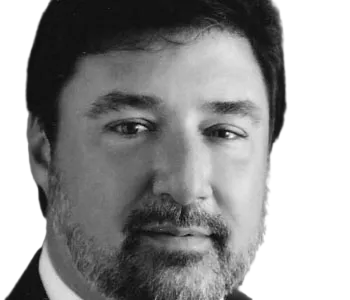
Armor & Martel Photography
Thomas M. Nichols
Tom Nichols is a professor of national security affairs at the U.S. Naval War College. He previously taught international relations and Soviet/Russian affairs at Dartmouth College and Georgetown University. Dr. Nichols served as personal staff for defense and security affairs in the United States Senate to the late Sen. John Heinz of Pennsylvania, and was a Fellow at the Center for Strategic and International Studies in Washington, DC. He is currently a Fellow in the International Security Program and the Project on Managing the Atom at the John F. Kennedy School at Harvard University, where he is working on a book on the reform of nuclear strategy.
Pull this thread
pulls againstpulls alongside
Preventive war is now a general international norm, produced by the humanitarian interventions of the 1990s.
Against KS · Countries that prosecute human rights abusers subsequently show better human rights records, so prosecutions deter rather than destabilize. On: International legal institutions change how states behave
Against DB · A norm's legal bindingness does not depend on the bindingness of the consequences for violating it. On: International legal institutions change how states behave
Against RK · European integration is turning Europe's informal, insider style of regulation into a European version of American adversarial legalism. On: International legal institutions change how states behave
Alongside SB · American control of the development banks comes from America's lack of wholehearted support for them, not its shareholding. On: International legal institutions change how states behave
Alongside EP · States punish violators of international law badly, so they violate it with impunity when benefits exceed costs. On: International legal institutions change how states behave
Alongside PC · National governments are now too small to supply the public goods that make things work, and nothing has taken over. On: International legal institutions change how states behave
Nearby GC · Moral evil starts in certitude, and doubt and hesitancy are positive conditions of good action.
Nearby CD · A victim is believed only insofar as he appears to have mastered his suffering.
Know something the rest of us don't?
Most threads on Rorotoko begin with our invitation. Any thread can begin with a proposal: you write it with the same prompts every thread answers, and we review it.
Propose a thread →