
Donald S. Lopez Jr.
Buddhism and Science
In 1938, a Tibetan scholar named Gendun Chopel (1903-1951)—a poet, painter, and iconoclast—published an article (complete with his own hand-drawn map) in the Tibet Mirror, the only Tibetan-language newspaper of the day. The article was entitled, “The World Is Round or Spherical.” Also in 1938, Hitler annexed Austria; Otto Hahn produced the first nuclear fission of uranium; Howard Hughes, flying a twin-engine Lockheed, set a new record for the circumnavigation of the globe; color television was first demonstrated; the first photocopy image was produced; the ballpoint pen was patented; the first “Superman” episode appeared in Action Comics; Disney’s Snow White and the Seven Dwarfs premiered; Benny Goodman’s orchestra performed “Sing, Sing, Sing” at Carnegie Hall.
In this same year, Gendun Chopel was attempting to prove to his fellow Tibetans that the world is not flat.
He did not go into a lot of scientific detail. He simply said that everybody used to think that the world was flat. Then, some people in Europe began to say that, in fact, the world is round, and they were burned at the stake for their beliefs. Now everyone, including other Buddhist nations such as China, Japan, Burma, and Sri Lanka, knows that the world is round. It is therefore embarrassing that the Tibetans are clinging so stubbornly to their flat world.
In making his claim that the world is round, Gendun Chopel, a former Buddhist monk and a devout Buddhist, did not deny that the omniscient Buddha declared that the world is flat. He explains that the Buddha knew all along that the world is really round; he only said it is flat because no one in ancient India would have believed him if he had said something so contrary to common knowledge.
Some may see the book as an attack on the claims for the compatibility of Buddhism and Science. It is not. Instead, the book derives from the simple conviction that all grand claims have histories, and to understand such a claim, one must understand its history.
To say that Buddhism and Science are compatible, one must specify what one means by “Buddhism” and what one means by “Science.” I try to catalogue the changing meanings of those two terms over the course of a century and a half. The meanings have changed over that time, but the same claim has continued to be made. This fact will cause most readers to conclude that there is much more here than meets the eye, suggesting that the claim for the compatibility of Buddhism and Science is serving some deep cultural need beyond the changing referents of the two terms.
Why is it that we yearn for the teachings of an itinerant mendicant in Iron Age India, even one of such profound insight, to somehow anticipate the formulae of Einstein?
My own view is that the teachings of the Buddha do not and cannot anticipate Einstein, and that much is lost in the claim that they do. Such a claim requires that significant elements of what Buddhists have believed and practiced over the course of more than two millennia be jettisoned. The loss of so much that is magical about Buddhism is not simply an aesthetic loss. It is a domestication of the dharma, a rebuke of the Buddha’s radical critique of the realms of our existence, including the realm ruled by Science.
Editor: Erind Pajo

Buddhism and Science
Donald Lopez Buddhism and Science: A Guide for the Perplexed University of Chicago Press 278 pages, 6 x 9 inches ISBN 978 0226493121
Available here →March 13, 2009
20110511-donald-lopez-on-tibetan-book-of-dead-biography-3
A close-up
The rest of this thread
Myra Klarman
Donald S. Lopez Jr.
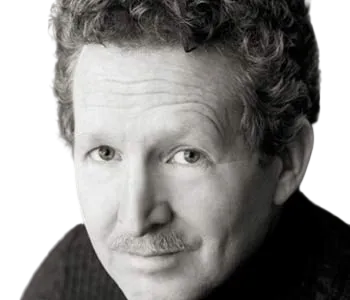
Donald S. Lopez, Jr. is the Arthur E. Link Distinguished University Professor of Buddhist and Tibetan Studies at the University of Michigan, where he serves as chair of the Department of Asian Languages and Cultures and as chair of the Michigan Society of Fellows. Besides the books featured in his two Rorotoko interviews, he is the author of The Story of Buddhism, Prisoners of Shangri-La, The Madman’s Middle Way, and others. Donald Lopez was elected to the American Academy of Arts and Sciences in 2000. He is currently completing a book on the European encounter with the Buddha.
Pull this thread
The claim that Buddhism is uniquely compatible with science is a polemical artifact of the 1870s.
Know something the rest of us don't?
Most threads on Rorotoko begin with our invitation. Any thread can begin with a proposal: you write it with the same prompts every thread answers, and we review it.
Propose a thread →