
Donald S. Lopez Jr.
Buddhism and Science
I am a scholar of Buddhism—we call ourselves Buddhologists—focusing on late Indian Buddhism (roughly from the fifth to twelfth centuries) and on Tibetan Buddhism. My early work was on Indian Buddhist philosophy and doctrine, especially as it was understood in Tibet, something that I continue to study.
But I also have an interest in the history of the European encounter with Buddhism, and what that has meant for European and North American culture, as well as for Buddhism. In the course of this latter work, I have sometimes caught a fleeting glimpse, out of the corner of my eye, of something referred to as “Buddhism and Science.” I initially paid little attention, assuming it was yet another appropriation of Buddhism by the New Age, another product of the 70s, in this case made famous in Fritjof Capra’s unlikely 1975 bestseller, The Tao of Physics. It turns out that I was right about the 70s, but I was off by a century; claims for the compatibility of Buddhism and Science go back to the 1870s.
I found this perplexing.
If people were claiming that Buddhism was compatible with the Science of the late nineteenth century, how could Buddhism also be compatible with the Science of the late twentieth century, two periods, scientifically speaking, that are light years apart? As I read more, I found that the claims made about the compatibility of Buddhism and Science a century and half ago were rhetorically almost identical to the claims being made today.
Except that what people meant by “Buddhism” and what they meant by “Science” back then was quite different from what they mean by “Buddhism” and “Science” today. In the nineteenth century, Buddhism was largely the “original Buddhism” preserved in ancient Sanskrit and Pali texts read by the philologists of Europe, and Science was the mechanistic universe. At the beginning of the twenty-first century, Buddhism is often Tibetan Buddhism (reviled as base superstition by the Victorians) and Science is quantum mechanics and functional Magnetic Resonance Imaging (fMRI). All this seemed rather strange to me, and in the end, I decided to write a kind of cultural history on the topic.
Editor: Erind Pajo

Buddhism and Science
Donald Lopez Buddhism and Science: A Guide for the Perplexed University of Chicago Press 278 pages, 6 x 9 inches ISBN 978 0226493121
Available here →March 13, 2009
20110511-donald-lopez-on-tibetan-book-of-dead-biography-2
The wide angle
The rest of this thread
Myra Klarman
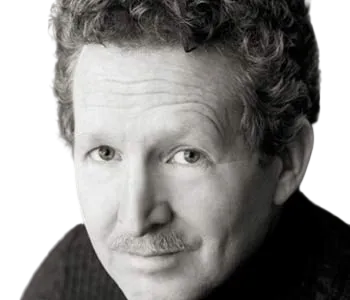
Donald S. Lopez Jr.
Donald S. Lopez, Jr. is the Arthur E. Link Distinguished University Professor of Buddhist and Tibetan Studies at the University of Michigan, where he serves as chair of the Department of Asian Languages and Cultures and as chair of the Michigan Society of Fellows. Besides the books featured in his two Rorotoko interviews, he is the author of The Story of Buddhism, Prisoners of Shangri-La, The Madman’s Middle Way, and others. Donald Lopez was elected to the American Academy of Arts and Sciences in 2000. He is currently completing a book on the European encounter with the Buddha.
Pull this thread
The claim that Buddhism is uniquely compatible with science is a polemical artifact of the 1870s.
Know something the rest of us don't?
Most threads on Rorotoko begin with our invitation. Any thread can begin with a proposal: you write it with the same prompts every thread answers, and we review it.
Propose a thread →