
Bernard Mergen
Weather Matters
Weather, as defined by meteorologists, is the state of the atmosphere as it affects life over a period of a few minutes, or at most a few days. This distinguishes weather from climate, which is the statistical information that describes the weather of a place over a long time period, usually at least thirty years. But weather and climate are much more than temperature, humidity, precipitation, visibility, and wind. For the historian, weather is greater than the sum of its parts. Weather is part of everyday life and our conversations about it. We feel anxious during a violent lightning storm. We express pleasure at the sight of a rainbow.
We complain when we feel it’s too hot or too cold. Weather roots us in a place and contributes to our identities. Readers of this book will probably already be familiar with this idea, but they may be surprised by how deeply weather pervades American culture.
The revolutions in science, medicine, and technology that began to give us greater protection from the rigors of climate and weather also gave us new ways of looking at weather and talking about it. Following European precedent, the United States created a civilian weather bureau in 1891; its mission: to issue forecasts to protect agriculture and commerce. Hundreds of weather stations were established in the continental U.S. and its territories, and twice-daily observations of temperature, barometric pressure, and precipitation were telegraphed to the Weather Bureau, headquarters in Washington, DC. Here maps were prepared, showing local conditions and the general direction of winds, clouds, and potential storms.
As Mr. Dooley, the fictional creation of humorist Finley Peter Dunne, remarked in 1901, there were now two kinds of weather, “human weather an’ weather bureau weather.”
Dooley nailed it, but he could not foresee the creation over the next century of many other kinds of weather and the institutions that describe them. Government weathermen were soon joined by academic meteorologists, private weather-forecasters, radio and television weather personalities, cloud watchers, skyscape artists, storm chasers, and compilers of color-coded indexes of air quality, pollen counts, and ultraviolet rays. Today, weather fanatics clamor for our attention on the Internet.
Editor: Erind Pajo
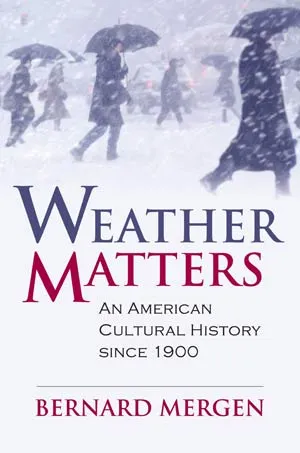
Weather Matters
Bernard Mergen Weather Matters: An American Cultural History since 1900 University Press of Kansas 448 pages, 6 x 9 inches ISBN 978 0700616114
Available here →April 10, 2009
20090410-mergen-bernard-weather-matters-american-cultural-history-1-1
In a nutshell
The rest of this thread
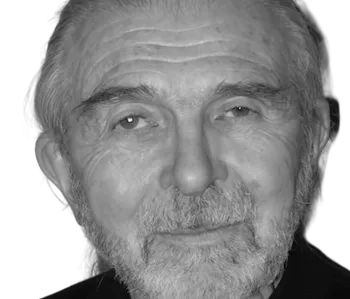
Claudia Spohnholz
Bernard Mergen
Bernard Mergen is Professor of American Studies Emeritus at George Washington University. He has held Fulbright teaching positions at Gothenburg University in Sweden, at the Free University of Berlin in Germany, and at the National University of Mongolia, and has lectured in more than a dozen other countries. From 1980 to 2004 Bernard Mergen was Senior Editor of American Studies International. In addition to Weather Matters and Snow in America, he is the author of more than one hundred articles and reviews on American labor and environmental history, the history of childhood and play, and the history of American Studies. He is currently writing a history of Pyramid Lake Nevada.
Pull this thread
What Americans feel about weather is taught to them by institutions that claim authority to speak on it.
Know something the rest of us don't?
Most threads on Rorotoko begin with our invitation. Any thread can begin with a proposal: you write it with the same prompts every thread answers, and we review it.
Propose a thread →