
Sarah Babb
Behind the Development Banks
One of my favorite sections in the book is about how the Reagan administration disciplined the Inter-American Development Bank (IDB) in the 1980s.
The IDB was founded in 1959 to provide loans to Latin American governments; at that time, American policymakers hoped that such loans would keep Latin American countries out of the Communist bloc. Although the U.S. always had an unusually large voting share in the IDB, for many years, it was also willing to give a lot of leeway to the bank’s Latin American management and regional members.
The Republican revolution of 1980 changed all that. Many Republicans in Congress began to argue that the banks were big useless bureaucracies with socialist tendencies; they became very irritated when the IDB persisted in making loans to the Sandinista government in Nicaragua. In a negotiation over replenishing the IDB’s resources, the Reagan administration demanded that the bank make some big changes. They wanted to alter the voting structure to give the U.S. more power, to put more Americans in the bank’s management, and for the IDB to start its own version of structural adjustment lending for free-market reforms.
The IDB’s president, Antonio Ortíz Mena, didn’t want to be pushed around, and said so. But then the Reagan administration held up the negotiations, and refused to ask Congress for appropriations. Ortíz Mena resigned, and a new president finally negotiated an agreement in which most of the original U.S. demands were met. Among other things, the new replenishment committed the IDB to making policy-conditional loans under the supervision of the World Bank.
Behind the Development Banks is aimed at many audiences—I hope that I’ve made it interesting and accessible not only to academics, but also to policymakers and people interested in economic development more generally.
Most of all, I would like the book to inform the strategies of people who are interested in reforming the banks and their policies. There are a lot of people today talking about making the banks more democratic—to end the disproportionate influence of the G-7 and the overwhelming influence of the U.S.Some of these people have detailed blueprints for reform, and most of them are a lot smarter than I am. But I think my book suggests that they may be barking up the wrong tree.
The banks are set up the way they are for a reason. Like private companies, they attract money by giving their shareholders influence to match their contributions. Even back in the 1950s, developing countries were arguing that development financing should be channeled through the United Nations, which is run on a one-country, one-vote basis. But wealthy countries, particularly the U.S., always felt that if they were putting up the cash, they should be calling the shots.
This has been even more the case since the era of U.S. shareholder activism began in the 1980s. I think it’s clear that Congress would never allow the U.S. to contribute to more democratically-run banks; even now, with such strong American influence, they cut appropriations to the banks every year.
The IDB, as I just described, could perhaps have maintained its strong regional representation by becoming a smaller bank—perhaps an organization more like the U.N. economic agencies that offer advice but don’t have a lot of resources. However, just as the banks respond to shareholder pressures, they also respond to powerful internal interests in the organizations’ perpetuation and growth; ultimately, the IDB was willing to cede more control to donors as a price for more resources.
Organizations, as sociologists have long observed, are primarily in the business of their own survival. The African Development Bank started out in the 1960s with only African members on its board of directors; the tradeoff was that it was perpetually strapped for cash. Over time, the African bank steadily sacrificed more and more regional autonomy for the money it needed to become a significant lending institution.
Instead of trying to make the banks more like the United Nations, I think reformers should focus on making shareholder governments more accountable for the things the banks do. This is essentially the tactic of social movements that have recently been trying, quite successfully, to get the banks and the IMF to forgive the debt of low-income countries.
But to put more pressure on shareholders, we need more transparency. The meetings in which the U.S. and other donors decide on the banks’ policies are secret. Changing this could be a first step in holding the shareholders who ultimately control the banks responsible.
Editor: Erind Pajo
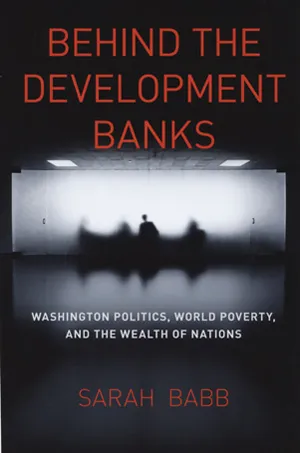
Behind the Development Banks
Sarah Babb Behind the Development Banks: Washington Politics, World Poverty, and the Wealth of Nations University of Chicago Press 336 pages, 9 x 6 inches ISBN 978 0226033648 ISBN 978 0226033655
Available here →August 17, 2009
20090817-babb-sarah-behind-development-banks-washington-world-poverty-3
A close-up
The rest of this thread
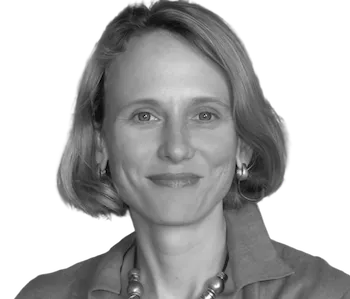
Sarah Babb
Sarah Babb is associate professor of sociology at Boston College. She became interested in international financial institutions as a graduate student living in Mexico in the early 1990s. She is the author of Managing Mexico: Economists from Nationalism to Neoliberalism (Princeton University Press 2001), and has authored and co-authored a number of articles about the relationship between ideas, politics, and economic policy.
Pull this thread
American control of the development banks comes from America's lack of wholehearted support for them, not its shareholding.
Know something the rest of us don't?
Most threads on Rorotoko begin with our invitation. Any thread can begin with a proposal: you write it with the same prompts every thread answers, and we review it.
Propose a thread →