
William Egginton
In Defense of Religious Moderation
The current debate around religion in America has been dominated by fundamentalists and atheists.
The fundamentalists have managed to set a tone for political discourse in America in which no one can be elected without advertising his personal relation to God. The atheists, in turn, have disparaged religious belief in general as the root of all evil.
Neither of these positions adequately represents the beliefs of the majority of Americans: people who identify themselves as Christians, Jews, or Muslims without for a moment believing that those who believe differently are for that reason wrong.
Indeed, fundamentalists and atheists do not even represent truly opposing positions—unlike the moderately religious they are unified by their implicit belief in the code of codes.
Whether one is a fundamentalist does not depend on one’s commitment to a particular religious creed or, in fact, to any religion at all.
Rather, fundamentalist thinking stems from an unconscious belief that the various codes we use to understand the world are all versions of a single, underlying master code, a code of codes that contains the ultimate truth of everything.
Given this understanding of how fundamentalism works, the best way to counter it is not to attack its religious manifestations with anti-religious doctrine. Instead, the most effective remedy for today’s rash of fundamentalist thinking is religious moderation.
That is because moderate religious beliefs question the very idea of the code of codes as a possibility of human knowledge.
It is the moderately religious with their inherent skepticism of any single master code, in other words, who are best suited to protect science, politics, and all other individual codes of knowledge from being commandeered by the fundamentalist logic of the code of codes. By learning to break the code of codes, religious moderates can take a decisive step toward leaving behind the destructive fundamentalist tendencies that have plagued our times.
Editor: Erind Pajo
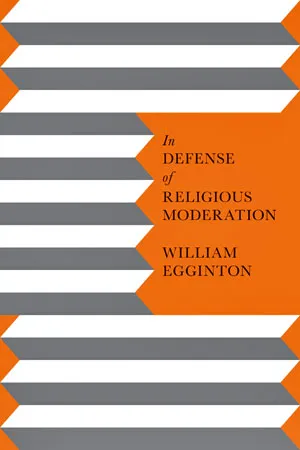
In Defense of Religious Moderation
William Egginton In Defense of Religious Moderation Columbia University Press 176 pages ISBN: 978 0231148788
Available here →July 11, 2011
20091228-william-egginton-on-theater-truth-ideology-neobaroque-aesthetic-1-1
In a nutshell
The rest of this thread
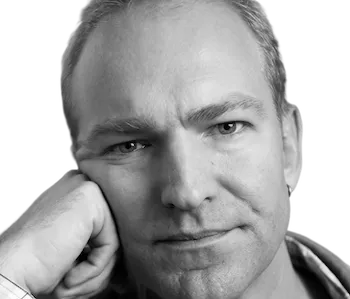
William Egginton
William Egginton is Professor and Chair of German and Romance Languages and Literatures at the Johns Hopkins University, where he teaches courses on Spanish and Latin American literature, literary theory, and the relation between literature and philosophy. He is the author of How the World Became a Stage (SUNY, 2003), Perversity and Ethics (Stanford, 2006), A Wrinkle in History (Davies Group, 2007), and The Philosopher's Desire (Stanford, 2007). He is also co-editor, with Mike Sandbothe, of The Pragmatic Turn in Philosophy (SUNY, 2004), and translator of Lisa Block de Behar's Borges, the Passion of an Endless Quotation (2002).
Pull this thread
Fundamentalism is not a religious creed but a way of believing.
Know something the rest of us don't?
Most threads on Rorotoko begin with our invitation. Any thread can begin with a proposal: you write it with the same prompts every thread answers, and we review it.
Propose a thread →