
William Egginton
The Theater of Truth
In the introduction I draw some close parallels between baroque manipulation of appearances and the control exerted by the Bush administration over the news media. The use of the media to rally support behind policies that would founder without that support is a clear case of a baroque manipulation of appearances for the purpose of political gain. The potential voters and taxpayers who lent their support to "the war on terror" and the war in Iraq in the early years of the twenty-first century did so largely because of their belief in a certain reality projected beyond the appearances.
The Bush representation apparatus, for example, was successful in convincing vast swaths of voters that behind the necessary and lamentable apparatus of representation—the polls and the concocted photo ops, the faked newscasts and the staged “town hall” meetings—President Bush was a man of "character.” Indeed, as was widely reported and fretted about, many Americans cited issues of character and value as the reason they voted for him in 2004.
The paradox is that no one is (or very few are) actually taken in by the performance, in the sense of not realizing that it is a performance; the baroque becomes pertinent when, in the very midst of the performance, the viewer, in full knowledge of its artifice, becomes convinced that the artifice in fact refers to some truth just beyond the camera's glare.
This effect is not limited to outright political representation such as campaign programming or the manipulation of the news media that was so prevalent during the lead up to the Iraq War. The entertainment industry can be counted on to produce content for television and film that coheres with the overall message coming from the centers of political power. As Slavoj Zizek wrote in an article in The Guardian, for instance, the wildly successful Fox series 24, in which Kiefer Sutherland plays a government anti-terrorism agent, abetted in certain, very specific ways the administration's efforts to minimize criticism of its handling of terror suspects.
The show's hook is that it plays in "real" time and that each of the season's 24 hour-long episodes corresponds to an hour of one continuous day in the life of agent Jack Bauer. The show is obviously fiction, and no one among its producers or probably anyone watching it would argue the opposite. Nevertheless, precisely in its function as artifice, Fox’s 24 refers implicitly to a reality that is "out there," beyond representation, independent of its fictitious message. Because everyone can comfortably agree that this is the case, we the viewers end up being force-fed a "neutral" and "independent" reality that is in fact a very specific political version of reality.
In the case of 24, the "real time" of the narrative (which, as Zizek points out, is augmented by the fact that even the time for commercial breaks is counted among the 60 minutes) contributes to the sense of urgency that, for instance, if Jack and his well-meaning colleagues don't get the answers they need—by whatever means necessary—millions of innocent people will die in a catastrophic terrorist attack. Obviously, we have to have some degree of flexibility when it comes to issues like the torture of detainees.
I hope this book will awaken readers, reminding them of the persistent potential of aesthetic experiences to shape our thoughts, our political endeavors, and our sense of self. In short, this book is about the power of an aesthetic form in both a distantly historical manifestation and a very contemporary one. It is about how that aesthetic form can transcend media, cultures, and historical moments to make its force felt. Finally, it is also about how artists, writers, and thinkers can deploy such aesthetic forms in different, and politically volatile ways, whether to further subjugation, or to aid in the revelation and critique of repressive and homogenizing norms.
Editor: Erind Pajo

The Theater of Truth
William Egginton The Theater of Truth: The Ideology of (Neo)baroque Aesthetics Stanford University Press 184 pages ISBN 978 0804769549
Available here →December 28, 2009
20110711-william-egginton-on-in-defense-of-religious-moderation-3
A close-up
The rest of this thread
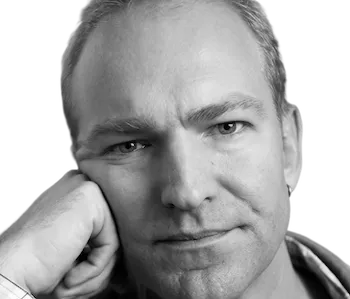
William Egginton
William Egginton is Professor and Chair of German and Romance Languages and Literatures at the Johns Hopkins University, where he teaches courses on Spanish and Latin American literature, literary theory, and the relation between literature and philosophy. He is the author of How the World Became a Stage (SUNY, 2003), Perversity and Ethics (Stanford, 2006), A Wrinkle in History (Davies Group, 2007), and The Philosopher's Desire (Stanford, 2007). He is also co-editor, with Mike Sandbothe, of The Pragmatic Turn in Philosophy (SUNY, 2004), and translator of Lisa Block de Behar's Borges, the Passion of an Endless Quotation (2002).
Pull this thread
Baroque and neobaroque are one continuing strategy, and its ideological value cannot be read off period or geography.
Know something the rest of us don't?
Most threads on Rorotoko begin with our invitation. Any thread can begin with a proposal: you write it with the same prompts every thread answers, and we review it.
Propose a thread →