
William Egginton
The Theater of Truth
The Theater of Truth: The Ideology of (Neo)baroque Aesthetics argues that seventeenth-century baroque and twentieth-century neobaroque aesthetics have to be understood as part of the same complex.
Rather than a return to the stylistic practices of a particular time and place, the neobaroque should be described as the continuation of a cultural strategy. It is produced as a response to a specific problem of thought that has beset Europe and the colonial world since early modernity.
This problem, in its simplest philosophical form, concerns the paradoxical relation between appearances and what they represent. The aim of this book is to explore a series of expressions of this problem in the art and literature of the Hispanic Baroques, new and old.
In seven chapters, I build up a thesis concerning the relation of two baroque strategies, a "major" and a "minor" one, how these strategies emerged in the political and social world of the Spanish Empire, and how they continue to be deployed in the cultural politics of the present.
In short, The Theater of Truth is a book for those interested and engaged in the debates around baroque and neobaroque aesthetics. It offers a unified theory for the relation between these terms and a new vocabulary for distinguishing between their ideological values.
Editor: Erind Pajo

The Theater of Truth
William Egginton The Theater of Truth: The Ideology of (Neo)baroque Aesthetics Stanford University Press 184 pages ISBN 978 0804769549
Available here →December 28, 2009
20110711-william-egginton-on-in-defense-of-religious-moderation-1-1
In a nutshell
The rest of this thread
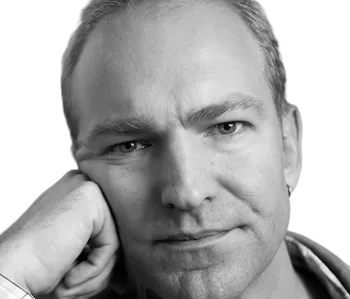
William Egginton
William Egginton is Professor and Chair of German and Romance Languages and Literatures at the Johns Hopkins University, where he teaches courses on Spanish and Latin American literature, literary theory, and the relation between literature and philosophy. He is the author of How the World Became a Stage (SUNY, 2003), Perversity and Ethics (Stanford, 2006), A Wrinkle in History (Davies Group, 2007), and The Philosopher's Desire (Stanford, 2007). He is also co-editor, with Mike Sandbothe, of The Pragmatic Turn in Philosophy (SUNY, 2004), and translator of Lisa Block de Behar's Borges, the Passion of an Endless Quotation (2002).
Pull this thread
Baroque and neobaroque are not two styles but one continuing strategy.
Know something the rest of us don't?
Most threads on Rorotoko begin with our invitation. Any thread can begin with a proposal: you write it with the same prompts every thread answers, and we review it.
Propose a thread →