
Mary Beth Norton
Separated by their Sex
I first realized that the gendered terminology of public and private had a history while I was working on a book about social and political life in early New England and the Chesapeake (published in 1996 as Founding Mothers & Fathers).
Much to my astonishment, I discovered that in those colonies no one used such language; the concepts did not then exist in the form now familiar to us. Until I studied the seventeenth century, I never questioned the divide: it is so commonly used by historians that it has structured many books about the nineteenth, twentieth, and even earlier centuries.
Thus I set out to uncover the origins of our modern notions, so often employed by historians as unproblematic descriptors of the past in a manner I now understand to be erroneous and misleading. Separated by their Sex reports what I learned from several years of research in America and England.
John Dunton was the first man to term the female realm of the household private. Little known today, Dunton was an influential London printer and author whose heyday came in the 1690s when he edited and published the Athenian Mercury, a popular question-and-answer broadsheet that served as the Ann Landers (or Ask Amy) column of its time. Earlier, cultural prescriptions had placed men in direct charge of household affairs. But in the Mercury, and later in a 1702 pamphlet, Dunton promoted the idea that women bore unique responsibility for all matters pertinent to marriage and the family.
The other side of the story involves politics, and it will probably surprise many readers, as it did me, to learn that in the seventeenth century status rather than gender determined the identity of acknowledged political actors.
High-ranking women as well as high-ranking men played important roles in the political life of England and America. For example, in early Maryland, the gentlewoman Margaret Brent served as the chief financial officer of the colony for about eighteen months during a critical period of its existence.
In the book I focus initially on the political activities of Lady Frances Berkeley, the wife and later widow of Virginia’s governor during and after Bacon’s Rebellion in the 1670s. Even though her actions aroused considerable criticism, especially from her husband’s successor (whom she was trying to obstruct), no one argued that her gender identity rendered her acts illegitimate.
By contrast, in 1730s New York, an aristocratic wife of a later governor, Grace Cosby, was harshly censured for very similar actions—and several anonymous authors quickly penned newspaper essays explaining why no woman should ever engage in political activity.
Even though eighteenth-century men succeeded in convincing American women that their lives should be “private” rather than “public,” as I show through references to women’s own letters and diaries, women did not allow men to define private for them.
For men, private meant husband and children; for women, it meant that but also their relationships with female friends (which men told them to forgo).
Around tea tables, in female-dominated rituals denigrated by men, women forged their own definition of private life. They accordingly made their own critical contribution to the creation of the modern cultural norm.
Editor: Erind Pajo
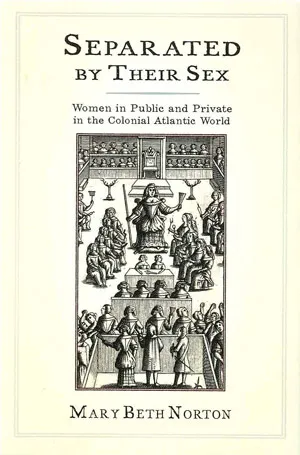
Separated by their Sex
Mary Beth Norton Separated by their Sex: Women in Public and Private in the Colonial Atlantic World Cornell University Press 272 pages, 6 x 9 inches ISBN 978 0801449499
Available here →June 15, 2011
20110615-norton-mary-separate-sex-women-public-private-colonial-atlantic-2
The wide angle
The rest of this thread
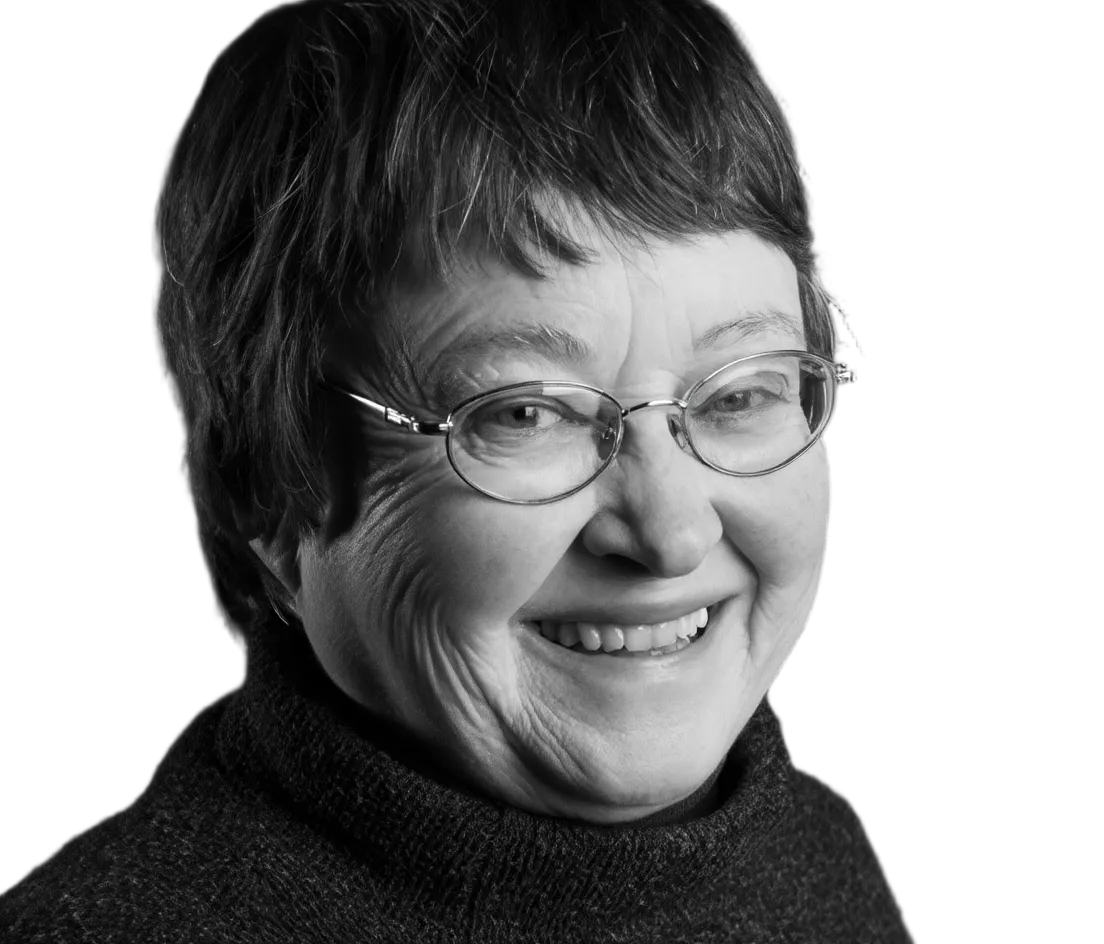
Robert Barker, Cornell University
Mary Beth Norton
Mary Beth Norton is the Mary Donlon Alger Professor of American History at Cornell University. Her previous books have won prizes from the Society of American Historians, the Berkshire Conference of Women Historians, and the English-Speaking Union. Her Founding Mothers & Fathers was a finalist for the Pulitzer Prize in 1997. Mary Beth Norton has held fellowships from the Rockefeller and Guggenheim Foundations, Princeton University, the Huntington Library, and was Pitt Professor of American History at the University of Cambridge in 2005-6. She is an elected member of the American Academy of Arts and Sciences and of the American Philosophical Society.
Pull this thread
The gendered public-private divide was invented in early eighteenth-century England by Dunton, Addison and Steele.
Know something the rest of us don't?
Most threads on Rorotoko begin with our invitation. Any thread can begin with a proposal: you write it with the same prompts every thread answers, and we review it.
Propose a thread →