
Kathy Peiss
Zoot Suit
I hope a browsing reader would start with the epigraphs that open the book, and then turn the page to the introduction. The epigraphs include quotations from such figures as Eudora Welty, Langston Hughes, and Cab Calloway, and they capture the enigmatic quality of the zoot suit to Americans at the time. To one commentator, it was a sign of the “weakness of American civilization,” to another, “the only totally and truly American civilian suit.” On a single page, they show how this style could be simultaneously magical and sensual, mysterious and dangerous, a sign of incipient resistance and a claim to patriotism.
The book’s introduction presents the book’s subject in a way that, I hope, is both enticing and provocative. Through this history, I contend with an intellectual tradition of understanding subcultures and youth style, and demonstrate a more complex way to consider the relationship between cultural style and politics.
At the same time, I want readers to have fun with the book. There are conflicting stories of the origins of the zoot suit, its connections to the world of swing music, jive talk, and wartime popular culture, and the often comical contortions of academics as they tried to interpret a style of clothing.
Zoot Suit encourages readers to consider style as the complex phenomenon it is, neither reducible to politics nor entirely divorced from it.In contemporary society and culture, there is careless conclusion-jumping as to the meaning of style. For example, Goth clothing is seen as a symbol of mental instability (as happened in the case of the Columbine High School gunmen). Hip hop too is the subject of much instant analysis. I hope that reading this book may cause more reflection on the judgments we render of style in our own times.
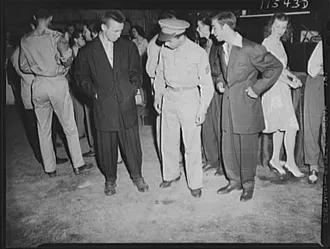
Zoot suiters and soldier at a 1942 Woody Herman concert in Washington, D.C. (Image courtesy of the Library of Congress, Prints & Photographs Division, FSA-OWI Collection, LC-USF34-011543-D DLC.)
Editor: Erind Pajo
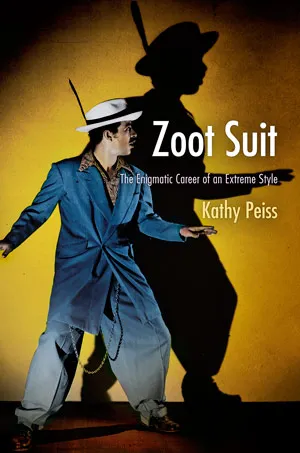
Zoot Suit
Kathy Peiss Zoot Suit: The Enigmatic Career of an Extreme Style University of Pennsylvania Press240 pages, 6 x 9 inches ISBN 978 0812243376
Available here →August 29, 2011
20110829-peiss-kathy-zoot-suit-enigmatic-career-extreme-style-3
A close-up
The rest of this thread

Kathy Peiss
Kathy Peiss is the Roy F. and Jeannette P. Nichols Professor of American History at the University of Pennsylvania, where she teaches courses in 20th century American cultural history and the history of gender and sexuality. Besides Zoot Suit, featured in her Rorotoko interview, her books include Cheap Amusements: Working Women and Leisure in Turn-of-the-Century New York, and Hope in a Jar: The Making of America’s Beauty Culture.
Pull this thread
The evidence that zoot suiters wore the style as a gesture of refusal is slight and ambiguous.
Know something the rest of us don't?
Most threads on Rorotoko begin with our invitation. Any thread can begin with a proposal: you write it with the same prompts every thread answers, and we review it.
Propose a thread →