
Tyler Volk
Quarks to Culture
All scholarship involves being diligent in seeking and finding of patterns. It doesn’t matter what the field is. We might be considering cultural studies, anthropology, botany, chemistry, linguistics: It doesn’t matter. The kinds of patterns, the kinds of relationships, of course differ greatly. That is why there is loads of work to do in all research departments of all universities.
Slightly more than 20 years ago I wrote a book called Metapatterns Across Space, Time, and Mind. I was enthralled with the perception of system dynamics and functionalities that occurred across scales of systems. These functionalities included borders, binaries or two-part systems, the issue of centralization versus decentralization, nestedness of components within systems, and metapatterns of time, such as cycles, arrows, breaks or relatively sudden changes in the structures and behaviors of things. My current book was conceived as a follow-up to Metapatterns, without knowing what I would write. I just knew there was material there waiting to be plucked.
So, I am doing merely what all good scholarship involves. It’s just that I’m taking the field of study to be this lived universe of all things. It might seem a little crazy. But I’ve been teaching metapatterns and writing a few technical articles about them. I was sure that material involving commonalities—really interesting commonalities—was (and still is) there to be found and thought about.
Many of the scholars that I’ve been aware of who do this kind of open scale research use mathematics. I refer to the highly developed forays of mathematics in complexity theory, network theory, fractals, and more. But I’m taking what I like to call an architectural approach. Much has been seen and described, diagrammed and photographed, and understood through the logic of language. In this way, I believe my ideas directly connect to scholarly fields that are not so mathematical.

© Columbia University Press
Editor: Judi Pajo

Quarks to Culture
Tyler Volk Quarks to Culture: How We Came to Be Columbia University Press 280 pages, 6 x 9.1 inches ISBN 978 0231179607
Available here →July 12, 2017
20170712-volk-tyler-on-book-quarks-culture-how-we-came-to-be-2-1
The wide angle
The rest of this thread
Amelia Amon
Tyler Volk
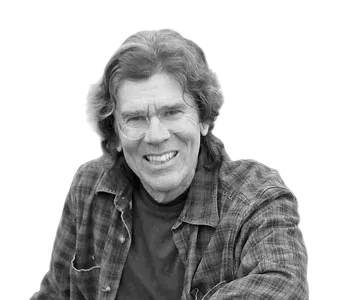
Tyler Volk is Professor of Biology and Environmental Studies at New York University. His research involves the global carbon cycle, world energy, the role of life and evolution in the biosphere, and general systems studies. His newest book is Quarks to Culture: How We Came to Be, featured in his recent Rorotoko interview. Recipient of the NYU All-University Distinguished Teaching Award, Volk lectures and travels widely, communicates his ideas in a variety of media, plays lead guitar for the science-inspired rock band The Amygdaloids, and is an avid outdoorsman. Volk’s previous books include CO2 Rising: The World’s Greatest Environmental Challenge, featured in his earlier Rorotoko interview; Metapatterns Across Space, Time, and Mind; and Gaia’s Body: Toward a Physiology of Earth. As to an overarching theme across all these books, he might say, “systems and their mysterious ways, deeply relevant for human life.”
Pull this thread
A single process, combogenesis, generates everything in the universe in exactly twelve levels from quarks to geopolitical states.
Know something the rest of us don't?
Most threads on Rorotoko begin with our invitation. Any thread can begin with a proposal: you write it with the same prompts every thread answers, and we review it.
Propose a thread →