
Tyler Volk
Quarks to Culture
I recently gave a book talk at a salon held on the first Sunday of every month at the Cornelia Street Café, in New York. (Great jazz there, by the way.) The salon is called “Entertaining Science,” convened by Nobelist in chemistry and all-round amazing man, Roald Hoffmann. Time was very limited because at these Sundays there is also entertainment. I knew I could not go through all the levels to the detail that they really deserve. After all, these levels, I feel, should be—they are—fundamental friends we should all know, in the cosmic sense.I decided to experiment by flashing through 12 crucial diagrams in the book at about five seconds each. I warned the audience beforehand. I said it’s okay to even laugh. What is Volk doing?The message I hoped to get across was the same message that a casual reader paging through my book in a bookstore might notice. “Wow, there are a lot of diagrams that look very much the same.” They differ in words, but if placed on top of each other the essential structures look very much identical. And they are.These diagrams show for each fundamental level how the things of that particular level were made from the merger of prior existing things from the previous level. This is the recurrent pattern or process I noted above, which I have found can take us on a journey of innovation from the simplest things of particle physics to the complexities of culture. I failed to earlier note something I wish now to say. I needed a word for this recurrent process. I am calling it combogenesis. Combogenesis is the genesis of new things from the combination and integration of prior existing things.So, if you were browsing the book, despite its obvious traverse across a vast landscape of different kinds of scholarship and discoveries, you would visually see there is an integrating—architectural, to use that word again—theme in the work. I note here for the skeptical that for this work I reached out to disciplinary experts who voluntarily, skillfully, and kindly, reviewed chapters that involved their specialties.Gosh! I hope to connect people in all walks of life to this extraordinarily lively, creative, full of surprises universe that we find ourselves in and which, frankly, we do not ponder in its fullness often enough. Life has demands. Life has distractions. And it requires stretching of the mind to get into all the levels to at least the degree of detail that I think is useful for expanding our minds and such exercise can lead to exhilaration.I also would like the say in these concluding moments that some of the families of patterns within the 12 fundamental levels can be useful as templates for thinking about the organization of systems that anyone might want to use.For example, I noted earlier the part three of the book. In that part, I discover, shall we say, or make a case for, three families of adjacent levels that I am calling the dynamical realms: physical laws, biological evolution, and cultural evolution. I will leave it to readers to get into that part, and in particular to see how I justify using the word evolution to refer to certain dynamics within cultural systems, from the upper Paleolithic to the geopolitical state. But the implications of the logic indicate that a next level would be some sort of merger of nations into a planetary scale.I have an epilogue exploring what this might mean, which I will not go into here. But let me say I believe that new perspectives on the emerging planetary scale can be gained by studying these templates just referred to. You can think of these templates as ways of combining that have been proven successful more than once in the grand sequence. And therefore the templates might be useful as generalizations for exploring possibilities for the planetary scale. This is crucial to think about right now.

© Columbia University Press
Editor: Judi Pajo

Quarks to Culture
Tyler Volk Quarks to Culture: How We Came to Be Columbia University Press280 pages, 6 x 9.1 inches ISBN 978 0231179607
Available here →July 12, 2017
20170712-volk-tyler-on-book-quarks-culture-how-we-came-to-be-3-1
A close-up
The rest of this thread
Amelia Amon
Tyler Volk
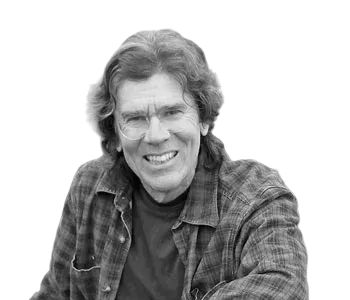
Tyler Volk is Professor of Biology and Environmental Studies at New York University. His research involves the global carbon cycle, world energy, the role of life and evolution in the biosphere, and general systems studies. His newest book is Quarks to Culture: How We Came to Be, featured in his recent Rorotoko interview. Recipient of the NYU All-University Distinguished Teaching Award, Volk lectures and travels widely, communicates his ideas in a variety of media, plays lead guitar for the science-inspired rock band The Amygdaloids, and is an avid outdoorsman. Volk’s previous books include CO2 Rising: The World’s Greatest Environmental Challenge, featured in his earlier Rorotoko interview; Metapatterns Across Space, Time, and Mind; and Gaia’s Body: Toward a Physiology of Earth. As to an overarching theme across all these books, he might say, “systems and their mysterious ways, deeply relevant for human life.”
Pull this thread
A single process, combogenesis, generates everything in the universe in exactly twelve levels from quarks to geopolitical states.
Know something the rest of us don't?
Most threads on Rorotoko begin with our invitation. Any thread can begin with a proposal: you write it with the same prompts every thread answers, and we review it.
Propose a thread →