
Philip Lieberman
The Theory That Changed Everything
Charles Darwin’s 1859 book, On the Origin of Species, is often cited but hardly ever read. My book presents the observations and the concepts that he actually proposed because they continue to guide research in the twenty-first century; and suggest how we should deal with issues of general concern.
Darwin’s explanation of Natural Selection, the key mechanism of his theory, cannot be improved on. Darwin wrote:“[A]ny variation, however slight, and from whatever cause proceeding, if it be in any degree profitable to an individual of any species, in its infinitely complex relations to other organic beings and to its physical conditions of life, will tend to the preservation of that individual, and will generally by inherited by its offspring. The offspring, also, will thus have a better chance of surviving […]. I have called this principle, by which each small variation, if useful, is preserved, by the term Natural Selection. (On the Origin of Species, p. 61)Darwin thought that Natural Selection acted slowly. The facts that demonstrate that it can act rapidly were not then known. However, he knew that abrupt transitions had occurred. His solution was “recycling”: an organ that had evolved for one purpose could be modified to serve a new end. Swim-bladders that allowed fish to hover had turned into lungs. Current studies show that brain mechanisms that evolved for motor control now enhance human cognition and language. Neural structures involved in the early stages of vision play a part in recalling memories.
Darwin borrowed from his grandfather Erasmus the premise that the development of an organism could provide insights on its evolution—the basis for current “Evo-Devo” studies. Although the role of genes was then buried in an obscure journal and DNA was discovered a century later, Darwin proposed that the environment could directly produce heritable effects. “Epigenetic” DNA that does not specify genes, govern the processes that yield brains and bodies. These processes explain why we don’t look like or generally act like chimpanzees though we share almost 99% of our genes. Some epigenetic processes are directly affected by environmental factors; your grandmother’s diet can lower your lifespan by 30 years.
The opening scenes of documentaries showing lions tearing apart their prey have little to do with Darwin’s “struggle for existence.” He devoted chapters to describe how different species profitably interact to enhance survival. Darwin stressed the interplay between ecosystems and biological evolution as well as the unintended consequences of human intervention. And he was one of the first practitioners of the modern “scientific method”—running experiments to confirm, modify, or reject a theory. His pigeon breeding experiment showed that “fancy” pigeons, thought to be distinct species, had descended from the common rock pigeons you see on city streets.
Darwin’s theory will become clear in examples drawn from his work, On the Origin of Species, what’s on the shelves of your supermarket, and current research including my own. And there will no need to google to decipher jargon.

Women working in village field. Inner Dolpo, Nepal. Copyright Philip Lieberman.

Home near Tende. Inner Dolpo, Nepal. Copyright Philip Lieberman.

Bon-Po lama's son, Samling. Inner Dolpo, Nepal. Copyright Philip Lieberman.
Editor: Judi Pajo

The Theory That Changed Everything
Philip Lieberman The Theory That Changed Everything: “On the Origin of Species” as a Work in Progress Columbia University Press 232 pages, 5.8 x 8.8 inches ISBN 978 0231178082
Available here →January 22, 2018
20180122-lieberman-philip-on-book-theory-changed-everything-origin-species-1-1-1
In a nutshell
The rest of this thread
Giorgia Müller
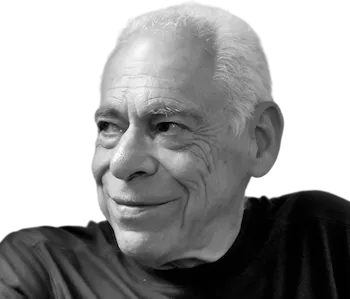
Philip Lieberman
Philip Lieberman was born in New York City in 1934. In high school he was a finalist in both national photography contests and the Westinghouse Science Talent Search. He selected science and has since published eight books and published or presented more than 200 papers. However, he kept up photography. He and his wife, Marcia have enjoyed walking on mountain paths since they were married, which in time brought them to Nepal and an interest in Tibetan culture documented in his photographs and her publications. Many of his photographs have been published and are in museum collections.
Pull this thread
Neanderthals could not produce the vowels that make speech clear, yet they talked, so language was no sudden human event.
Know something the rest of us don't?
Most threads on Rorotoko begin with our invitation. Any thread can begin with a proposal: you write it with the same prompts every thread answers, and we review it.
Propose a thread →