
Philip Lieberman
The Theory That Changed Everything
I was walking down a hall at MIT when I heard an odd sound: two graduate students in Ken Stevens’ laboratory had programed a computer to synthesize a whale belching. Stevens’ research centered on human speech production and computers that could be programmed to produce speech. It was an element of this research program that has produced the now ubiquitous “speech assistants” on smartphones, computers, cars etc. I joined that research program, which soon led to my focusing on the evolution of human speech, language and cognition; and to learning what Charles Darwin had proposed in 1859.
Darwin had noticed that the peculiar human supralaryngeal vocal tract (SVT) increases our risk of choking to death. In all other mammals and newborn humans the tongue rests almost entirely in the mouth and the larynx can lock into the nose. This anatomy yields two separate channels – one directing air into the lungs, and one that directs food to the digestive tract. It takes eight to ten years for children to gradually develop a fully adult-like SVT. The process involves reshaping the skull and tongue and lowering the tongue into the throat, which also gradually lengthens.
Stevens in 1972 answered Darwin’s query; his computer techniques showed that the peculiar human SVT allows us to produce “quantal” vowels (the vowels of the words see, do, and ma) that make speech clearer. It would be possible to talk without these vowels, but it would not be as effective a mean of vocal communication. Studies that are in progress show that mutations on epigenetic factors shaped the unique human SVT. Hence, Natural Selection, which retains even small variations that enhance survival, produced the human SVT.About the same time, I and Edmund Crelin, who had published the first comprehensive anatomical study of newborn humans, showed that Neanderthals’ SVTs were similar to a large human newborn’s. Neanderthals could not produce Stevens’ quantal vowels. However, the archaeological record suggested that Neanderthals possessed language so as to be able to transmit their complex technology. And since talking, then as now, was the primary communication channel of language, we concluded that Neanderthals must have had had brains that allowed them to learn and execute the acrobatic tongue, lip, and jaw movements involved in talking.
Apes who have nonhuman SVTs also could talk, albeit with less clarity, if their brains were capable of learning to talk. Hence my research and other research groups have focused on understanding how brains work and how the human brain evolved. My book describes some of my own studies involving Parkinson disease, monitoring low oxygen levels on Mount Everest, and the genetic studies of the Max Planck Institute in Germany, which support the inference that Neanderthals possessed language and talked.
It’s becoming clear that the evolution of the human brain follows Darwinian principles: structures dating back to before the age of the dinosaurs have been recycled and modified by mutations on genes and epigenetic mechanisms. Stone tools, “hard” archaeological evidence, indicate that the evolution of the human brain involved the interaction of culture and biology. Similar interactions account for the evolution of adult lactose tolerance and being able to survive at extreme altitudes or arctic cold.

Women working in village field. Inner Dolpo, Nepal. Copyright Philip Lieberman.

Home near Tende. Inner Dolpo, Nepal. Copyright Philip Lieberman.

Bon-Po lama's son, Samling. Inner Dolpo, Nepal. Copyright Philip Lieberman.
Editor: Judi Pajo

The Theory That Changed Everything
Philip Lieberman The Theory That Changed Everything: “On the Origin of Species” as a Work in Progress Columbia University Press 232 pages, 5.8 x 8.8 inches ISBN 978 0231178082
Available here →January 22, 2018
20180122-lieberman-philip-on-book-theory-changed-everything-origin-species-2-1
The wide angle
The rest of this thread
Giorgia Müller
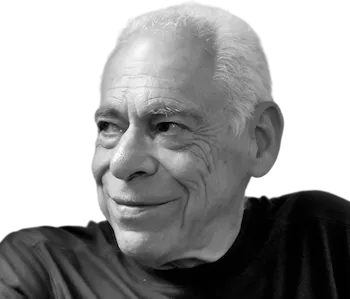
Philip Lieberman
Philip Lieberman was born in New York City in 1934. In high school he was a finalist in both national photography contests and the Westinghouse Science Talent Search. He selected science and has since published eight books and published or presented more than 200 papers. However, he kept up photography. He and his wife, Marcia have enjoyed walking on mountain paths since they were married, which in time brought them to Nepal and an interest in Tibetan culture documented in his photographs and her publications. Many of his photographs have been published and are in museum collections.
Pull this thread
Neanderthals could not produce the vowels that make speech clear, yet they talked, so language was no sudden human event.
Know something the rest of us don't?
Most threads on Rorotoko begin with our invitation. Any thread can begin with a proposal: you write it with the same prompts every thread answers, and we review it.
Propose a thread →