
Ruth DeFries
What Would Nature Do? A Guide for Our Uncertain Times
What Would Nature Do? is unabashedly human-centric. It is about strategies that humans—the big-brained, ingenious animal that we are—can learn from nature’s experience to improve our prospects of prospering on this dynamic planet.
Both life on earth and human civilization are complex systems, meaning that when they are perturbed the repercussions ripple through the system in unpredictable ways. In our modern hyper-connected civilization, as we have seen in this pandemic, for example, a tiny virus in an obscure market can ricochet around the world and bring down the global economy. In nature, when oxygen-producing plants evolved two-and-a-half billion years ago, life could have been doomed. But new forms of life flourished—sponges, corals, and jellyfish followed by insects, reptiles, dinosaurs, and mammals. Life has persisted through asteroids crashing into the earth, wild swings in climate, extinctions, and diseases.
The book’s premise is that nature has a lot more experience than humans do with surviving potentially disastrous, unpredictable shocks. Without intent or pre-planned design, the process of trial-and-error in evolution has led to some key strategies. These strategies might have some applicability to our complex human-created world. As I was researching for the book, I came across many examples where engineers, investors, and businesses have learned that these strategies help their prospects of survival, although they were probably unaware that nature already uses these strategies.
These strategies are: built-in, self-correcting features, a stabilizing strategy pervasive in nature and adopted by the stock exchange to catch a free-falling plunge in the market; diversity, the hallmark of both financial investors and the natural world, to buffer against an unknown future, keep options open, and safeguard valuable knowledge and ideas from coalescing into a homogenous stew of culture, cuisine, and ways of viewing the world; the architecture of ubiquitous networks, patterned on tiny veins in a leaf, to keep the flow of goods, food, information, and ideas safe from cascading failure and, conversely, to prevent lethal diseases from spreading; and leaders who enable decisions based on bottom-up knowledge of local conditions, the way ants and termites build their fabulous structures, rather than top-down impositions from faraway authorities that inevitably backfire. These are nature’s time-tested tactics that maintain life through unknown future.
Editor: Judi Pajo

What Would Nature Do? A Guide for Our Uncertain Times
Ruth DeFries What Would Nature Do? A Guide for Our Uncertain Times Columbia University Press 264 pages, 8 5/8 x 5 3/4 inches ISBN 978 0231199421
Available here →January 27, 2021
20210127-defries-ruth-on-book-what-would-nature-do-guide-our-uncertain-time-1-1-1
In a nutshell
The rest of this thread
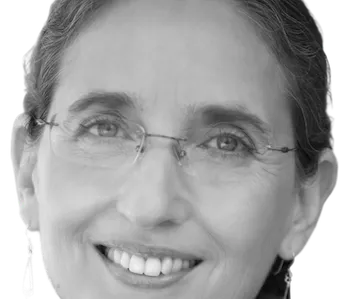
Ruth DeFries
Ruth DeFries is the Denning Family University Professor of Sustainable Development at Columbia University. Her research examines land use changes in the tropics and how it affects climate, biodiversity, and other ecosystem services, particularly in central India. DeFries is a member of the U.S. National Academy of Sciences and received a MacArthur “genius” award among other honors. Her books for popular audiences are The Big Ratchet: How Humanity Thrives in the Face of Natural Crisis and What Would Nature Do? A Guide for Our Uncertain Times, which is featured in her recent Rorotoko interview.
Pull this thread
Ever-greater efficiency is the wrong design goal, and it is what has made modern food, water and supply systems fragile.
Know something the rest of us don't?
Most threads on Rorotoko begin with our invitation. Any thread can begin with a proposal: you write it with the same prompts every thread answers, and we review it.
Propose a thread →