
Ruth DeFries
What Would Nature Do? A Guide for Our Uncertain Times
The motivation for the book comes from the uncertain future that faces humanity. The twentieth century, as I wrote in my previous book, The Big Ratchet, was an extraordinary time of great technological feats. Human ingenuity figured out how to produce copious amounts of food, extract abundant energy from long-buried dead plants and animals, extend life-expectancy, reduce infant mortality, and bring many people out of poverty. We have been lulled into complacency that any problem humanity might face has a technological and efficient solution.
The twenty-first century is proving otherwise. Human societies have never before been as urbanized as today, with more than 70% of the world’s population predicted to live in cities in the coming decades. This urbanization makes us all more intertwined and dependent on faraway places than ever before. Our highly connected world is a new way of living for our species, as big a transition as when people started to farm rather than hunt and forage about twelve thousand years ago. Moreover, climate change brings another layer of uncertainty with unprecedented fires, storms, pests, and unforeseeable outcomes.
As a collective human society, we have no manual or roadmap to navigate this uncertain world. The twentieth-century notion that ever-more efficient ways to produce food, pump water, and get other resources is proving to be a dangerous path. Because the world is so interconnected, human society is more vulnerable to shocks in our food system and disruptions in supply chains.
With these ideas in mind, I started writing this book more than five years ago. I had no inkling that, just at the time I was sending in the final manuscript, the world-changing pandemic would prove the point that human civilization is indeed very vulnerable. And now we can see very clearly that our human institutions are not up to the task of dealing with such unexpected events.
Editor: Judi Pajo

What Would Nature Do? A Guide for Our Uncertain Times
Ruth DeFries What Would Nature Do? A Guide for Our Uncertain Times Columbia University Press 264 pages, 8 5/8 x 5 3/4 inches ISBN 978 0231199421
Available here →January 27, 2021
20210127-defries-ruth-on-book-what-would-nature-do-guide-our-uncertain-time-2-1
The wide angle
The rest of this thread
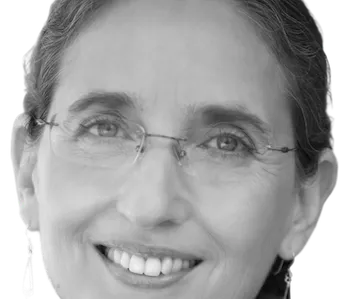
Ruth DeFries
Ruth DeFries is the Denning Family University Professor of Sustainable Development at Columbia University. Her research examines land use changes in the tropics and how it affects climate, biodiversity, and other ecosystem services, particularly in central India. DeFries is a member of the U.S. National Academy of Sciences and received a MacArthur “genius” award among other honors. Her books for popular audiences are The Big Ratchet: How Humanity Thrives in the Face of Natural Crisis and What Would Nature Do? A Guide for Our Uncertain Times, which is featured in her recent Rorotoko interview.
Pull this thread
Ever-greater efficiency has made modern food, water and supply systems fragile.
Know something the rest of us don't?
Most threads on Rorotoko begin with our invitation. Any thread can begin with a proposal: you write it with the same prompts every thread answers, and we review it.
Propose a thread →