
A close-up
March 25, 2026
Prince’s Minneapolis
I hope a reader comes across pages 2, 124, and 155. Each page features captivating, descriptive passages that draw the reader into the story. Page 2 has the book’s first big hook: “This book is a geographic look at the music Prince made famous—the Minneapolis Sound.” Page 124 is the final page of the book’s third section, with a powerful conclusion: “First Avenue & 7th Street Entry were the intersections where the city’s diverse music scene and its sonic geographies of Black and white converged to produce a new sound. That sound, born in the city’s fraught terrain, defined Prince and Minneapolis.” I hope the reader turns to page 155. These sentences are the chapter’s final words. They tap into the color, movie, and album that most people associate with him: “During the tour, band members saw him scribbling ideas in a purple notebook. As the tour concluded in May 1983, he told the band what he’d been writing. To their surprise, it wasn’t a new song or ideas for a new album but a screenplay. Prince told them, “We’re gonna make a movie.”
I also think that readers will be drawn in by the cover art. It’s stunning.
I want people to read this. I wrote Prince’s Minneapolis for a broad audience, not just for my academic field or discipline. This book is for Prince fans, music lovers, and the curious who want to learn about the city that produced arguably the most innovative and talented musician in history. Additionally, given the current siege Minneapolis is enduring by federal agents over immigrants of color, the book offers a historical perspective on European migration and the city’s divided racial history.
Curator: Rachel Althof
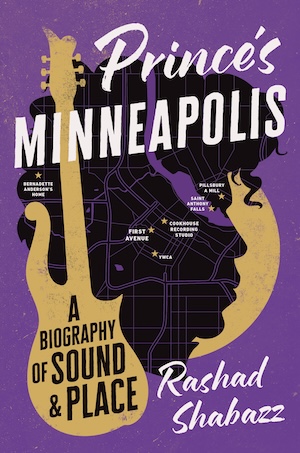
Prince’s Minneapolis
Rashad Shabazz, Prince’s Minneapolis: A Biography of Sound & Place. Chapel Hill, NC: University of North Carolina Press, 2026. ISBN 978-1-4696-9095-7
Get the book →March 25, 2026
20250325-shabazz-rashad-prince-minneapolis
The rest of this thread
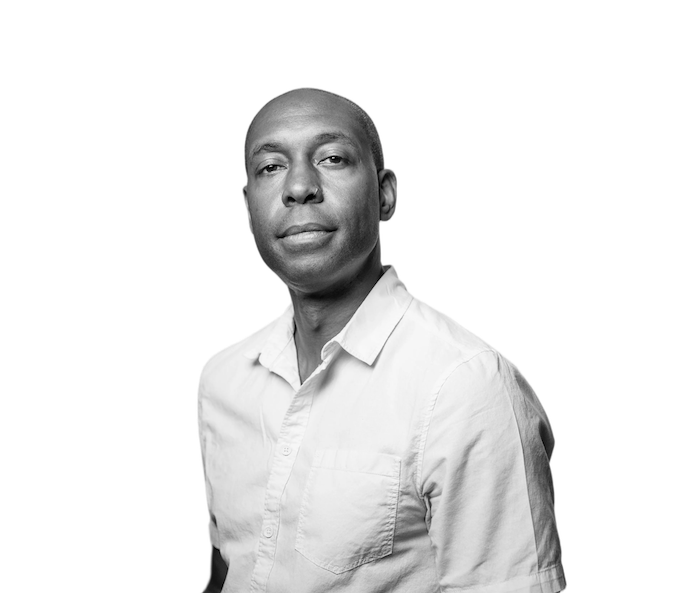
Rashad Shabazz
Rashad Shabazz is a human geographer whose work explores how race, gender, and cultural production are shaped by geography. His first book, Spatializing Blackness (2015), examines how carceral power structured Black Chicago’s urban life, while his recent book, Biography of a Sound—Prince, Place, and the Hidden History of the Minneapolis Sound (UNC Press), traces the historical and geographic roots of the Minneapolis Sound through 1987. His scholarship appears in leading academic journals and public outlets, and he is currently working on a new book about New York City’s built environment.
Feature your book
Publishing with a small press, or on your own?
A Sponsored Thread runs like every other thread on Rorotoko: three parts on three dates, the same editorial review, your own pages in the archive. Marked Sponsored. $199, paid only once accepted.
Feature your book →