
The wide angle
March 25, 2026
Prince’s Minneapolis
I’m a human geographer who researches and writes about cities, race, cultural production, and the built environment. I conduct archival research—I’m a kind of historian. I say “kind of” because I’m not trained as one, but I use history to trace the development of a phenomenon.
In my first book, I examined how prison-like architectural forms and spatial containment were represented on Chicago’s South Side. Prince’s Minneapolis depicts the city’s soundscape. I am currently working on a book that charts the development of New York City’s built environment. This type of history is influenced by the work of French theorist Michel Foucault. His studies of sex, punishment, knowledge, and power — what he called “genealogy,” derived from the German philosopher Nietzsche — shape my approach to this work.
My genealogies are always grounded in and attentive to place. I explore how phenomena—prison-like containment in Chicago, music in Minneapolis, New York’s built environment—are shaped by place and time.
I came to this project because I wanted to use my scholarly tools to examine a musician and a city I love. I earned my undergraduate degree in Minnesota and spent a lot of time in Minneapolis. I lived there briefly and always found the city fascinating because of its politics, population, and culture. It was also the birthplace and home of Prince. I became a true fan of his music while living there, mainly because of my then-girlfriend.
After finishing my first book, I began thinking about my second project and decided that Prince and Minneapolis could be interesting topics. I added a section on Minneapolis and music to an undergraduate class I was teaching on race, culture, and geography. From there, I started doing initial research. Then, in the summer of 2016, I took my first of many research trips to the Minnesota Historical Society in St. Paul and the Hennepin County Library in downtown Minneapolis.
Curator: Rachel Althof
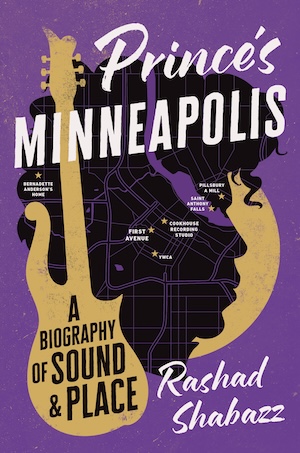
Prince’s Minneapolis
Rashad Shabazz, Prince’s Minneapolis: A Biography of Sound & Place. Chapel Hill, NC: University of North Carolina Press, 2026. ISBN 978-1-4696-9095-7
Get the book →March 25, 2026
20260325-rashad-shabazz-prince-minneapolis
The rest of this thread
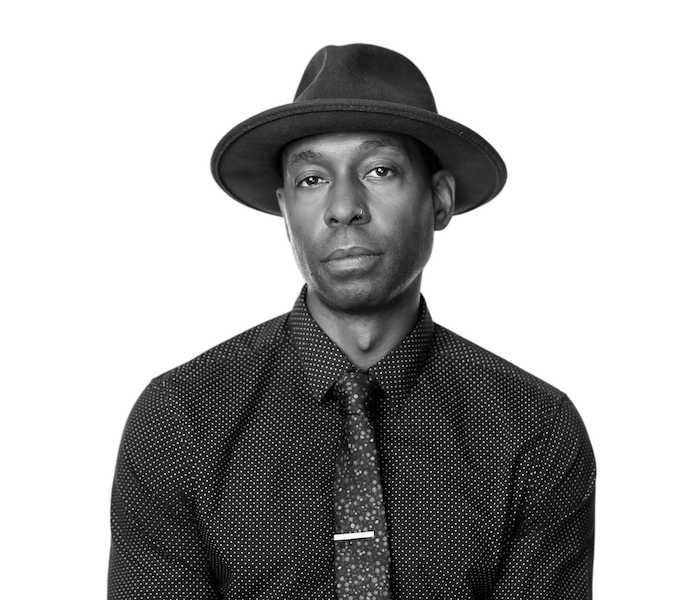
Rashad Shabazz
Rashad Shabazz is a human geographer whose work explores how race, gender, and cultural production are shaped by geography. His first book, Spatializing Blackness (2015), examines how carceral power structured Black Chicago’s urban life, while his recent book, Biography of a Sound—Prince, Place, and the Hidden History of the Minneapolis Sound (UNC Press), traces the historical and geographic roots of the Minneapolis Sound through 1987. His scholarship appears in leading academic journals and public outlets, and he is currently working on a new book about New York City’s built environment.
Feature your book, your art, your project
Publishing with a small press, or on your own?
A Sponsored Thread runs like every other thread on Rorotoko: three parts on three dates, the same editorial review, your own pages in the archive. Marked Sponsored. $199, paid only once accepted.
Get featured →