
In a nutshell
March 25, 2026
Prince’s Minneapolis
Prince’s Minneapolis offers a historical geographic view of the Minneapolis music scene and the unique role Prince played in shaping its sound. The book traces the city's musical birth, growth, evolution, and rise from the mid-19th century until 1987, when Prince released his landmark album, Sign O’ The Times. It demonstrates how various social forces—mass migration, Indian removal, industrialization, music education, racial segregation, suburbanization—were key to shaping the city’s sound. These social forces not only fostered high levels of music literacy but also divided the music scene along racial lines—one white, one Black—each with its own distinct sound. Prince drew from this fractured sonic landscape and blended the Black and white sounds of Minneapolis, creating some of the most innovative and influential popular music ever.
One of the main ideas in this book is that music is connected to geography; it originates from a specific place. The social factors shaping that place—such as poverty, migration, or population—are reflected in the music. In fact, rhythm, harmony, instrumentation, chord progressions, and tempo all affect the sound. While we can certainly hear the place in the lyrics, it becomes even more clear in the music’s sonic qualities.
Prince’s Minneapolis tells the story of the geography of music through the Minneapolis music scene and its most beloved musician, Prince.
Curator: Rachel Althof
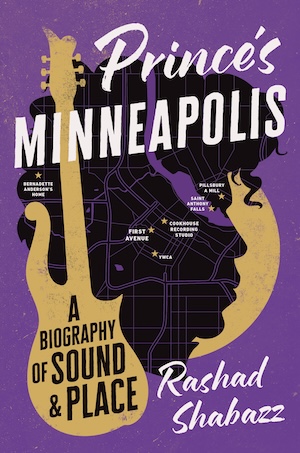
Prince’s Minneapolis
Rashad Shabazz, Prince’s Minneapolis: A Biography of Sound & Place. Chapel Hill, NC: University of North Carolina Press, 2026. ISBN 978-1-4696-9095-7
Get the book →March 25, 2026
20260325-rashad-shabazz-prince-place-sound
The rest of this thread

Rashad Shabazz
Rashad Shabazz is a human geographer whose work explores how race, gender, and cultural production are shaped by geography. His first book, Spatializing Blackness (2015), examines how carceral power structured Black Chicago’s urban life, while his recent book, Biography of a Sound—Prince, Place, and the Hidden History of the Minneapolis Sound (UNC Press), traces the historical and geographic roots of the Minneapolis Sound through 1987. His scholarship appears in leading academic journals and public outlets, and he is currently working on a new book about New York City’s built environment.
Feature your book, your art, your project
Publishing with a small press, or on your own?
A Sponsored Thread runs like every other thread on Rorotoko: three parts on three dates, the same editorial review, your own pages in the archive. Marked Sponsored. $199, paid only once accepted.
Get featured →