
Susanne Paola Antonetta
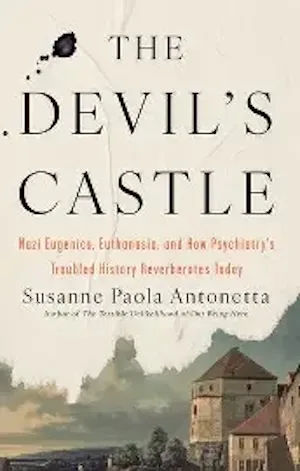
The Devil’s Castle
The prologue to The Devil’s Castle outlines the movements I’m making in this book, from Nazi euthanasia to contemporary psychiatry and the hope offered by current neuroscience. In later chapters, I visit the preserved gas chamber at Sonnenstein asylum and sink into the mud on Wangerooge Island in the North Sea, where Dorothea Buck grew up. I want my books to be experiences, ideas and arguments that arise through readers sharing with me a process of meditation and discovery.
I think my readers are surprised to learn that we, in U.S. psychiatry, follow the lead of a man who trained Nazi doctors—Emil Kraepelin. They’re further surprised to discover, in the story of Philippe Pinel, that psychiatric methods that feel impossibly humane now existed in the late 1700s. And that throughout the intervening period better modalities have arisen for treating mental distress. All involve methods we could use now, and all involve downplaying medication. Pinel wrote that a good psychiatrist needs to understand patients’ “hopes and dreams,” and that the best use of medication is understanding when to forego it.
At the end of the book, I return to the promise of neuroscience and no, this isn’t another treatment modality that’s going to be the new one that fixes everything. Psychiatry has been down that road, with pharmaceuticals and treating distress as a “disease like any other,” with shock treatment, with lobotomy, with genetics. Mental states are far too complex for any one methodology to prevail in this way. Neuroscience embraces an understanding of the natural diversity of the human mind and a sense of wonder at the miracle of consciousness, a process we still don’t understand. It’s a wonderful corrective to the reductive, deterministic theories the field has labored under for far too long.
Curator: Bora Pajo
The Devil’s Castle
Antonetta, Susanne Paola. The Devil’s Castle: Nazi Eugenics, Euthanasia, and How Psychiatry’s Troubled History Reverberates Today. Counterpoint, 256 pages, ISBN-13: 9781640094024
Available here →June 1, 2026
20260601-susanne-paola-antonetta-the-devils-castle
A close-up
The rest of this thread
Susanne Paola Antonetta
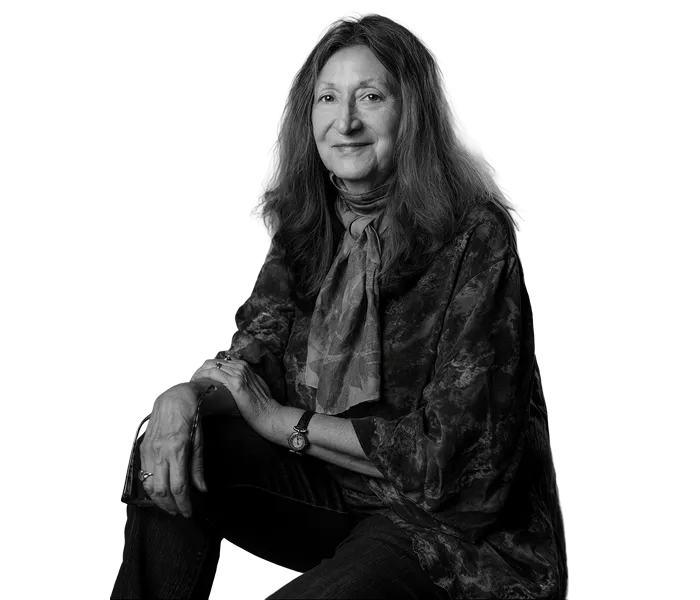
Susanne Paola Antonetta is Professor Emeritus at Western Washington University and a steering committee member of the group Cultural Autism Studies at Yale. Her latest book is The Devil's Castle: Eugenics, Nazi Euthanasia, and How Psychiatry's Troubled History Reverberates Today (Counterpoint, 2025). She is also the author of The Terrible Unlikelihood of Our Being Here, Make Me a Mother, Entangled Objects, Body Toxic, A Mind Apart, and four books of poetry. Her awards include a New York Times Notable Book, an American Book Award, an Amazon Best Memoir of the Year award, and others. Her essays and poems have appeared in The New York Times, Ms., The Huffington Post, The UK Independent, The Hill, Orion, Psychology Today, and The New Republic and have been featured on CNN as well as the CBC Ideas documentary series. She lives in Asheville, North Carolina.
Pull this thread
pulls againstpulls alongside
American biological psychiatry descends by a traceable line from the eugenic tradition that produced the Nazi euthanasia programs.
Against AR · Nihilism is true, because science cannot justify the morality nearly everyone accepts, and it is harmless. On: The researcher's own first-person experience is admissible evidence in scholarly argument
Against DB · Cognitive control, a separate function mapping knowledge onto action, is what lets humans perform tasks they have never done before. On: Psychiatric categories name conditions that exist independently of the classifying practice
Against HL · Real health reform is a universal pool for hospitalization and chronic illness, with income-based subsidies for everything else. On: Targeted medical and technical intervention can substitute for addressing social conditions
Against AG · In research universities the best scholars make the best leaders, and a hospital should be led by a doctor. On: Technical expertise should govern decisions in the domains it covers
Alongside JP · The American Dream is the gateway drug, and meth cooking is a hyperbolic version of coming undone while pursuing it. On: The researcher's own first-person experience is admissible evidence in scholarly argument
Alongside RL · People diagnosed with psychopathy are not meaningfully more violent than other offenders, and the diagnosis should leave legal use. On: Psychiatric categories name conditions that exist independently of the classifying practice
Alongside DD · Schools do not create socioeconomic achievement gaps and modestly narrow them, so school reform is the wrong lever. On: Targeted medical and technical intervention can substitute for addressing social conditions
Alongside HC · There is no scientific method, and invoking one as the guarantor of expertise now does more harm than good. On: Technical expertise should govern decisions in the domains it covers
Know something the rest of us don't?
Most threads on Rorotoko begin with our invitation. Any thread can begin with a proposal: you write it with the same prompts every thread answers, and we review it.
Propose a thread →