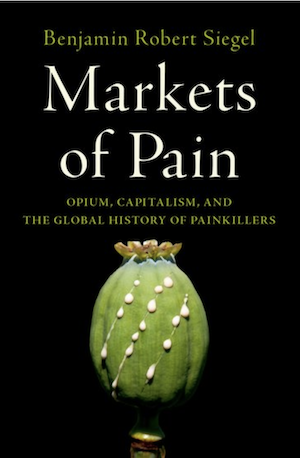
When Americans hear the word "opioids," a familiar story comes to mind. It begins with OxyContin's launch in 1996, and stars the Sackler family and Purdue Pharma. It unfolds in Appalachia and other hollowed-out places, and it ends in overdose and grief. That story is real and harrowing, but it is not the story this book tells—and it is not, I argue, the most meaningful story of opioids in the modern world.
Markets of Pain is a global history of legal opium: the crop that supplied the world's morphine, codeine, and pain pills for more than a century after the age of empire. Long after the notorious opium trades of the nineteenth century collapsed, farmers in India and Turkey kept scoring poppies by hand. Their harvests moved through government monopolies, international treaties, and multinational firms into the medicine cabinets of the West. The book follows that system: the peasants who grew pharmaceutical opium, the bureaucrats who promoted and policed it, the companies that profited from it, and the shifting international rules that governed the world's supply of narcotic pain relief.
There are two things I want a curious reader to notice first.
First: the line between licit and illicit drugs was never as clean as we pretend. It was the same poppy, the same gum, and often the same families, weighing the state's low prices against the smuggler's better ones. What made opium "medicine" in one ledger and "narcotics" in another was the stuff of law, bureaucracy, and power.
Second: the American opioid crisis was the wreckage of a system forged in earlier moments.
Over the twentieth century, an entire global infrastructure was built to stabilize the world's supply of opium for medicine. Then, over the course of a few decades, it came apart. Chemists found synthetic substitutes and peasant production lost its protected status. Mechanized poppy farming on the Australian island of Tasmania captured the world market. The glut and catastrophe that followed in the United States grew directly out of that collapse.
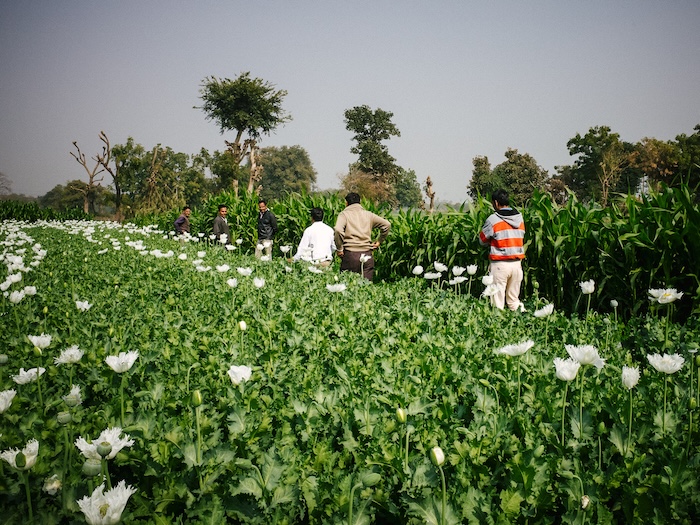
If there is a common misunderstanding to correct, it is that the opioid crisis is a uniquely American story of corporate greed. The greed of companies like Purdue Pharma was very real. But the story of opioids is a story about modern capitalism itself: production in one place, consumption in another, and vast, generally invisible systems linking the two. Those systems shaped how the entire world came to understand and manage pain. Understanding them is the only way to understand the crisis and its larger dynamics.
Ongoing thread. More from Benjamin Robert Siegel to follow.