
Ryan T. Pozzi
The Mess That Made Them: How History's Greatest Artists Failed, Floundered, and Made Something Brilliant Anyway
The Mess That Made Them is a book about what famous creative lives looked like before anyone knew how the story would end.
We usually encounter artists, writers, and composers backward. We know the masterpieces and the reputations. We know which failures became anecdotes and which periods of suffering were later understood as formative or meaningful. The outcome begins to look as though it were inevitable.
But nobody, and certainly no artist, has ever lived that way.
Mary Shelley couldn't have known what Frankenstein would eventually become. James Baldwin had goals and things he wanted to say, but he couldn't have predicted either his early impact on the country or the later dismissal and even hostility he would face. Virginia Woolf, Francisco Goya, Frédéric Chopin, Agatha Christie, Yayoi Kusama, and the other figures in this book lived through periods when the work was uncertain, the future was obscured, and the forces acting on them were often larger than any simple concept of talent or perseverance.
That's the territory I wanted to explore: the long middle before inevitability.
The book is about failure, but I'm suspicious of the idea that failure is secretly good for us. Failure can teach but it can also waste years, damage people, and leave no compensating gift behind. The same is true of illness, grief, rejection, exile, poverty, and isolation.
I wanted to ask a more complicated question. What does making something look like when a life is under pressure? Persistence is part of the story. Creative lives also turn on retreat, compromise, refusal, luck, help from others, and the decision to want something different than you once did. Those messier forces often disappear from the version we tell later, when the solitary genius myth comes in and tidies everything up.
When we turn a creative life into an oversimplified story of talent overcoming adversity, we lose both the depth and the uncertainty that actually defined it. We also make it harder to recognize our own uncertainty and struggle as part of a creative life rather than evidence that we were never meant for one. If our predecessors were untouchable monoliths cosmically selected for greatness, what hope is there for the artist who can't persuade a gallery to show their work or the writer whose manuscript just isn't coming together? Why should they keep going if, as art history sometimes falsely tells us, lasting art is made by people somehow set apart from ordinary uncertainty and constraint?
The Mess That Made Them looks at extraordinary people while their lives and their careers were still unresolved and asks what becomes visible when we stop treating their greatness as destiny and start examining how they actually made their way through creative life.
Ongoing thread. More from Ryan T. Pozzi to follow.
Curator: Bora Pajo
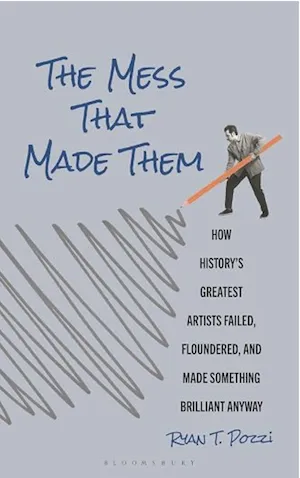
The Mess That Made Them: How History's Greatest Artists Failed, Floundered, and Made Something Brilliant Anyway
Pozzi, R. T. (2026). The mess that made them: How history's greatest artists failed, floundered, and made something brilliant anyway. Bloomsbury Academic.
Available here →September 3, 2026
20260903-pozzi-the-mess-that-made-them-in-a-nutshell
In a nutshell
The rest of this thread
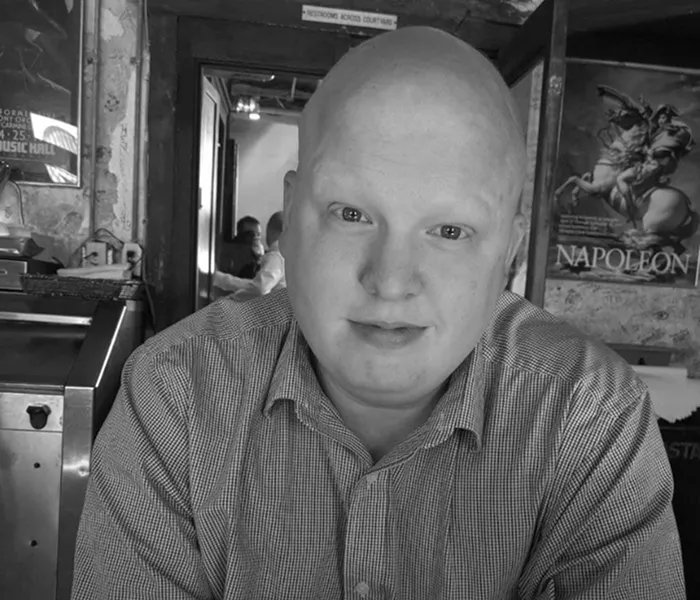
Ryan T. Pozzi
Ryan T. Pozzi is a nonfiction author based in Council Bluffs, Iowa. He has spent much of his career working in arts and literary communities in Nebraska and Iowa, including co-founding the Nebraska Writers Collective and running The Apollon Art Space, a multidisciplinary arts organization in Omaha. His forthcoming book, The Mess That Made Them: How History's Greatest Artists Failed, Floundered, and Made Something Brilliant Anyway, will be published by Bloomsbury Academic in September 2026. Find him at ryantpozzi.com or on social media @ryantpozzi.
Pull this thread
Failure is not secretly good for us.
Know something the rest of us don't?
Most threads on Rorotoko begin with our invitation. Any thread can begin with a proposal: you write it with the same prompts every thread answers, and we review it.
Propose a thread →