After the disastrous premiere of his First Symphony in 1897, Sergei Rachmaninoff stopped composing.
He was twenty-four. The reviews were brutal. One critic suggested that the symphony might have been written for the inhabitants of hell. Rachmaninoff had already built much of his identity around the idea that he would become a composer, and the failure did more than damage his confidence. For several years, he could barely write at all.
We usually tell comeback stories from the other side of the comeback. Because we encounter Rachmaninoff from the far side of his recovery, those years of silence can seem temporary in retrospect. The Second Piano Concerto and everything that followed make it easy to treat the collapse after the First Symphony as one necessary stage in a story already moving toward redemption. He had no way to see it that way at the time. That's the moment that was of real interest to me.
Rachmaninoff eventually sought treatment from the physician Nikolai Dahl, whose methods included hypnosis and repeated suggestions that he would compose again. What matters to me is that the treatment made a return to the work of composing possible without pretending the failure of the First Symphony never happened.
That return is easy to simplify in retrospect. We like to imagine that people begin again once they believe in themselves, as though confidence comes before action. Rachmaninoff's story suggests the opposite. The work often has to happen while doubt is still present and before there is any reason to believe the return will last or lead anywhere.
Rachmaninoff would have to find his way back more than once. After leaving Russia following the revolution, he spent years largely unable to compose again. Exile changed his finances, his routines, and the conditions under which he worked. Persistence still mattered, but continuing no longer meant returning to the same life or the same circumstances.
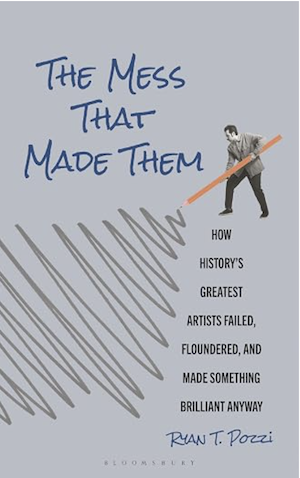
That's one of the questions at the center of The Mess That Made Them. What does persistence look like when failure, illness, exile, grief, or some other rupture has changed the terms of the work?
I'm less interested in reminding readers that successful people fail than in examining what people actually do after failure makes continuation difficult. Rachmaninoff's life shows how persistence can involve interruption, help from others, and the willingness to begin again without knowing whether the new work will take the same form.
I hope the book gives readers a more realistic way to think about their own creative lives. Rachmaninoff's way through was only one possibility among many. Across the book, people survive pressure differently: by persisting, refusing, adapting, retreating, relying on others, changing direction, or beginning again. What matters is recognizing how many forms continuation can take when the life around the work becomes difficult.