
Ryan T. Pozzi
The Mess That Made Them: How History's Greatest Artists Failed, Floundered, and Made Something Brilliant Anyway
The Mess That Made Them argues for creative persistence over the myth of solitary genius.
We tend to talk about major artists as though they were touched or chosen in a way the rest of us will never be. Talent becomes destiny. The finished work seems to confirm that the person who made it was always going to become who they became.
Biography can reinforce that illusion. Once an artist becomes important, their life is often retold in ways that make the achievement seem preordained. Rejection, collapse, and long periods of uncertainty get folded into a story about persistence or recast as necessary turning points. Even circumstances that were miserable or damaging acquire a purpose they didn't have at the time, simply because we know what came later.
I am much more interested in persistence as an ongoing practice than in genius as an explanation. The people in this book kept returning to the work, often for years or decades, while living through criticism, illness, grief, exile, financial pressure, changing ambitions, and periods when they had no reason to believe that what they were doing would ever matter. Persistence was vital, but it never operated in isolation. The ability to keep working could depend on money, health, luck, or the presence of people who offered practical help at the right moment. It could also mean retreating for a time, changing direction, or finding a way to begin again under different conditions. Acknowledging those things doesn't diminish the value of persistence. It makes persistence more real.
I came to the book after spending years working in arts and literary organizations, helping build creative communities and supporting the work of other artists and writers. Eventually, burnout and depression changed my relationship to that work and to my own ambitions. When I returned to writing, I found myself thinking less about talent than about continuation. Why do some people keep making things through long stretches of uncertainty? What allows them to return after failure or interruption? What happens when the work survives but the original dream for the life does not? Those questions changed the way I read biographies.
I started paying more attention to the years between the famous moments, when plans were abandoned, criticism simply hurt, work failed, and other people sometimes made continuation possible by offering money, shelter, encouragement, opportunity, or simply enough company to keep someone from disappearing into isolation. None of that makes persistence less important; it gives us a more honest picture of what persistence can require.
The myth of genius tells us that great artists are fundamentally different from everyone else. Persistence offers a more demanding and, to me, more hopeful idea. Creative lives are built over time by people who continue to work while circumstances change, confidence rises and falls, and the outcome remains unknown.
Ongoing thread. More from Ryan T. Pozzi to follow.
Curator: Bora Pajo
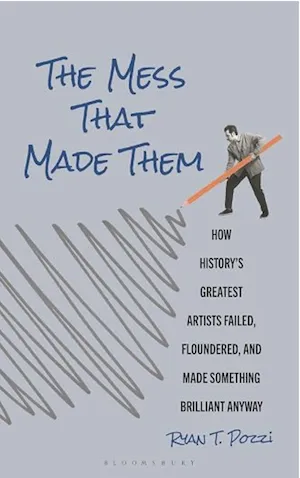
The Mess That Made Them: How History's Greatest Artists Failed, Floundered, and Made Something Brilliant Anyway
Pozzi, R. T. (2026). The mess that made them: How history's greatest artists failed, floundered, and made something brilliant anyway. Bloomsbury Academic.
Available here →September 11, 2026
20260911-pozzi-the-mess-that-made-them-the-wide-angle
The wide angle
The rest of this thread
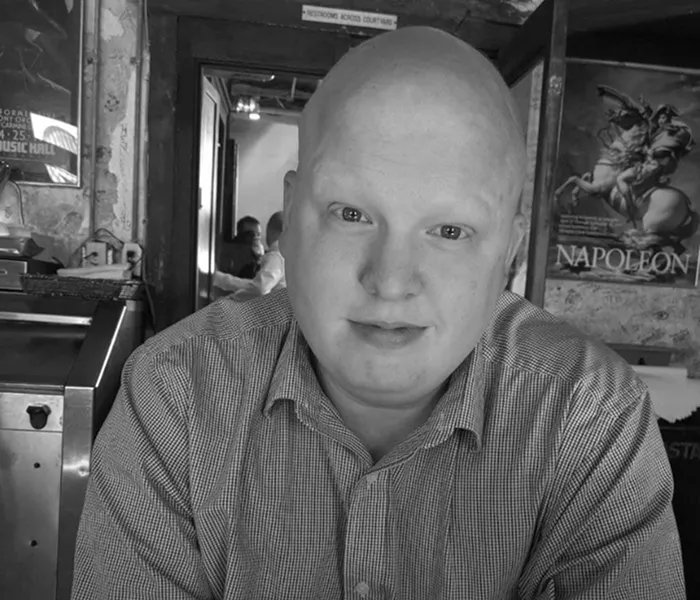
Ryan T. Pozzi
Ryan T. Pozzi is a nonfiction author based in Council Bluffs, Iowa. He has spent much of his career working in arts and literary communities in Nebraska and Iowa, including co-founding the Nebraska Writers Collective and running The Apollon Art Space, a multidisciplinary arts organization in Omaha. His forthcoming book, The Mess That Made Them: How History's Greatest Artists Failed, Floundered, and Made Something Brilliant Anyway, will be published by Bloomsbury Academic in September 2026. Find him at ryantpozzi.com or on social media @ryantpozzi.
Pull this thread
Failure is not secretly good for us, and creative lives are made by continuation, not by talent destined to win.
Know something the rest of us don't?
Most threads on Rorotoko begin with our invitation. Any thread can begin with a proposal: you write it with the same prompts every thread answers, and we review it.
Propose a thread →