
Beryl Satter
Cash on the Block
From the 1960s onward, working-class activists, many of them women, responded to the decay of their communities by forming neighborhood-based organizations to fight governmental policies and institutional practices that damaged their communities. In 1972, National People’s Action (NPA), a coalition of community organizations, was formed. It was led by Gale Cincotta, a white, working-class mother of six. Cincotta also led the Metropolitan Area Housing Coalition (MAHA), a Chicago-area coalition of housing activists. The following excerpts from Cash on the Block give a sense of the activists my book follows, women and men who rejected racist tropes and instead fought for reinvestment based on an understanding of the true causes of neighborhood decline.
“African American women were particularly active in MAHA… as heads of community organizations in some of Chicago’s hardest hit Black neighborhoods. One was Marie Bryan, a former insurance agent. By the early 1970s, her block of 27 single family homes included nine that were abandoned or in foreclosure. She found it impossible to “sit here in our home and watch our community fall apart.” Instead, she founded the New City Organization. …Mary Bates’ trajectory was similar. When she moved to Roseland, a south side Chicago neighborhood, in 1965, it was mostly white and “there were no abandoned homes in Roseland.” By 1975, the neighborhood was mostly Black. Predatory FHA loans had financed the transition, and Roseland was pockmarked with over 500 abandoned buildings. As Bates testified to the U.S. Senate, she had witnessed ‘an almost deliberate and systematic destruction of my community.’ She became the president of the Greater Roseland Organization, and in that capacity joined MAHA in 1973.
…The NPA’s emphasis on grassroots organizing might explain why Black women were so prominent in the organization. The NPA had no barriers to leadership. There were no dues and no officers. … ‘if you want to be a leader, you show up,” one ally recalled. ‘And if you show up often enough and you say things and people respect it, you’re going to be a leader. And if you don’t like it, you just go home. You can’t join. You can’t quit.’ The result could be seen year after year in Disclosure, the NPA’s newspaper, where reports about…Black women activists fill the pages.”
“…[By the mid-1970s], local activism was at full boil…. Anti-redlining activists experienced pushback from those on the receiving end of their protests – and from city and federal authorities. Elevators full of MAHA protestors were turned off between floors. Sign-in sheets from their meetings were stolen so regularly that organizers learned to collect them as soon as names were filled in. Perhaps out of suspicion of interracial movements, the City of Chicago’s “Red Squad” kept close tabs on reinvestment activists. So did the FBI. “Our phones were bugged for four years,” Mary Volpe recalled. “Gale said, ‘Do you have the same Fed watching your family as I have mine?’ It was a status symbol.”
Curator: Bora Pajo
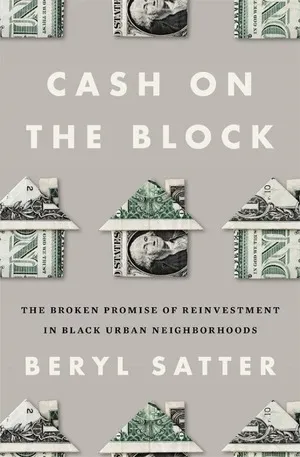
Cash on the Block
Satter, B. (2026). Cash on the block: The broken promise of reinvestment in Black urban neighborhoods. Harvard University Press.
Available here →October 20, 2026
20261020-satter-cash-on-the-block-a-close-up
A close-up
The rest of this thread
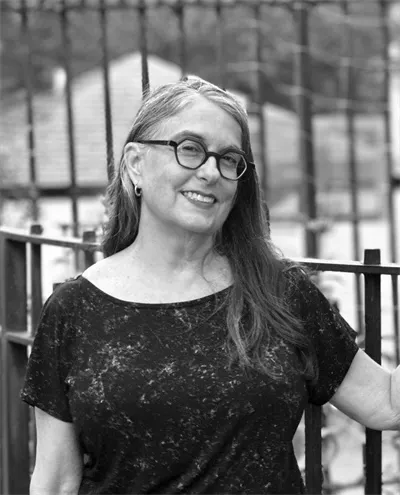
© Kate Levy
Beryl Satter
Beryl Satter is Professor Emerita of History, Rutgers University-Newark. She received a Guggenheim Memorial Fellowship and an Andrew Carnegie Fellowship to work on Cash on the Block: The Broken Promise of Reinvestment in Black Urban Neighborhoods (Harvard University Press, 2026). Her book Family Properties: Race, Real Estate, and the Exploitation of Black Urban America (Metropolitan Books, 2009), won the Liberty Legacy Award for best book in civil rights history and the National Jewish Book Award in History. It was named one of the top ten books of the year by the New York Times and the Washington Post.
Pull this thread
Reinvestment in Black urban neighborhoods failed because it routed public money through outside lenders and never let residents shape it.
Know something the rest of us don't?
Most threads on Rorotoko begin with our invitation. Any thread can begin with a proposal: you write it with the same prompts every thread answers, and we review it.
Propose a thread →