
Matthew Botvinick
AI and Political Freedom: The Risk to Democracy and How to Respond
If we want AI safety, we need to repair democracy
The topic of AI safety has suddenly broken through to public awareness. That’s a good thing. Recent events show clearly that AI can pose real-world dangers, if it is not developed and deployed with exquisite care. And the measures that are needed to ensure AI safety should be decided with input from society at large, rather than by AI labs alone.
That said, there is a crucial dimension of AI safety that the public debate has not yet reached: the importance of democracy. Imagine a version of AI that is completely ‘safe,’ in the narrow sense that it will not launch cyberattacks, will not disclose bioweapons information, and will not seek to evade human control. If such an AI is placed in an authoritarian political setting, it will not be safe. It will predictably be used for surveillance, suppression of dissent, control of information and propaganda, precisely the uses we see already in present-day dictatorships scattered around the world.
The bottom line is this: AI safety absolutely requires constitutional democracy.
Once we take this simple fact on board, the agenda for AI safety suddenly goes beyond technical AI research, and beyond regulation of AI development. It suddenly includes tasks that are aimed not at AI itself, but at our democratic institutions. To guarantee AI safety, in both the short and long term, we need to shore up the foundations of our constitutional order.
In the U.S., this means finally tackling legal reforms that have been needed for some time, but which are now newly urgent. We need to reform our emergency laws, including the National Emergencies Act (NEA), the International Emergency Economic Powers Act (IEEPA), the Insurrection Act, and the Telecommunications Act, so that when AI triggers national security crises, those emergency laws cannot be exploited to expand executive power beyond what genuine rule of law can tolerate. We need to reform our surveillance laws, the Foreign Intelligence Surveillance Act (FISA) in particular, in order to ensure that AI cannot be used to conduct pervasive domestic surveillance. And we need to renovate the processes through which citizens debate issues of public concern, and hold their representatives in government accountable, so that democracy can remain resilient as AI weakens the state’s fiscal dependence on ordinary citizens.
This may not sound like AI safety work, but it is. And the problem is urgent. We must repair our democratic institutions, if we are sincerely concerned about AI safety.
Ongoing thread. More from Matthew Botvinick to follow.
Curator: Bora Pajo
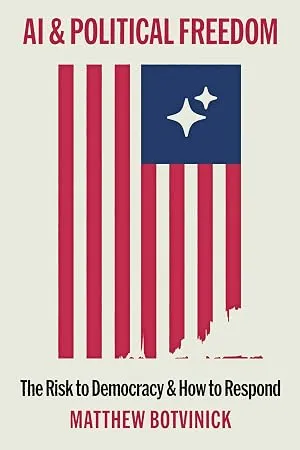
AI and Political Freedom: The Risk to Democracy and How to Respond
Botvinick, M. (2026). AI and political freedom: The risk to democracy and how to respond. Princeton University Press.
Available here →October 26, 2026
20261026-botvinick-ai-and-political-freedom-in-a-nutshell
In a nutshell
The rest of this thread
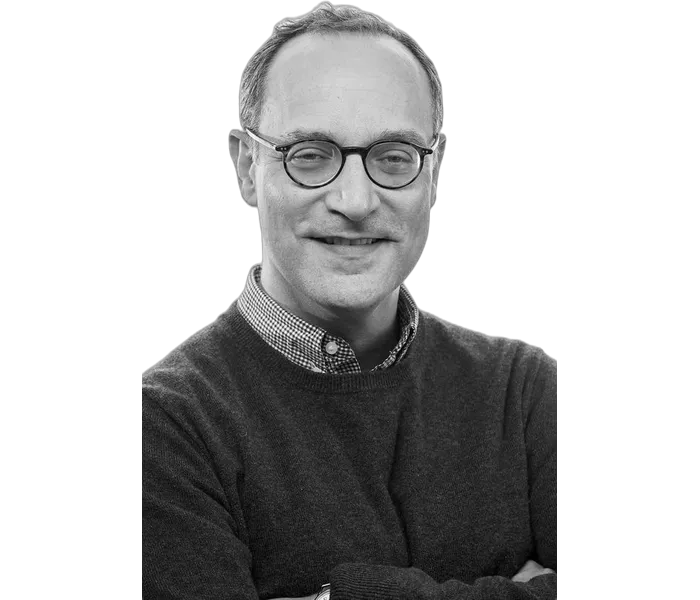
Matthew Botvinick
Matthew Botvinick has spent three decades at the intersection of artificial intelligence and the human mind. Trained as a physician and scientist (M.D., Cornell; Ph.D., Carnegie Mellon), he trained his first neural network in 1993, held faculty positions at Penn and Princeton, and served as Senior Director of Research at Google DeepMind. Troubled by the global democratic recession, he turned to law, earning a J.D. at Yale Law School, where he is a Senior Fellow. He now leads the AI and Rule of Law team at Anthropic. AI and Political Freedom is his first book.
Pull this thread
AI safety requires constitutional democracy.
Know something the rest of us don't?
Most threads on Rorotoko begin with our invitation. Any thread can begin with a proposal: you write it with the same prompts every thread answers, and we review it.
Propose a thread →