
Matthew Botvinick
AI and Political Freedom: The Risk to Democracy and How to Respond
The era of AI populism has begun. It could be politically dangerous.
Something remarkable took place this past September 15. At a meeting in Washington, focusing on societal impacts of AI, back-to-back speeches were delivered by Bernie Sanders and Steve Bannon. It was striking that the topic of AI was one that could put such politically opposed figures on stage together, but also striking that the speakers delivered messages that aligned on several core points. Both Bannon and Sanders argued, essentially, that ordinary Americans are being dragged against their will into a future chosen by a small cadre of unaccountable AI oligarchs, and it is time to fight back.
Sanders’s and Bannon’s pairing stands as an indicator that we have entered a new political era, defined by a newly emerging political movement: AI populism. The movement can also be seen in rising opposition to AI data centers, and demonstrations outside the frontier AI labs.
On its surface, there is nothing objectionable about this emerging political movement. After all, AI really is threatening to eliminate jobs, to increase energy usage, and potentially to concentrate wealth and power. In a democratic society, it is fitting that political leaders should give voice to public anxiety around such prospects, and to campaign for publicly sanctioned remedies.
However, at the same time, we should be on our guard. Populist appeals have historically often led to authoritarian governance, a pattern classically seen in Weimar Germany and Fascist Italy, and then more recently Hungary, Poland, and Turkey. The connection between populism and authoritarianism is not purely incidental. Populism divides people into the “real” citizens and corrupt interlopers, dividing the public and making it easy to reject pluralist arguments. Because populism also typically argues that the system has been hijacked by corrupt elites, it reserves the right to disregard standard legal processes, and gives itself permission to coopt business interests, including media operations.
As AI generates widespread societal anxiety, it is right and proper that public discussion should reflect that anxiety and channel it into collective action. However, we must be vigilant to the possibility that AI populism may make people, in the U.S. and elsewhere, susceptible to populist authoritarian appeals. The risks of populism have always haunted democratic governments. The Ancient Greeks worried about it, as did the American founders. AI populism is, in this sense, just another instance of an age-old problem. At the same time, however, AI raises the stakes. For if an authoritarian government is able to establish itself in a country like the U.S., the availability of AI will make it much easier than ever before for that government to entrench itself, using AI-powered surveillance, information control, and administrative coordination. As AI engineer Ilya Sutskever once remarked, AI holds the potential to produce “infinitely stable dictatorships.” We must ensure that AI populism leads to democratically legitimate reforms, and avoid the political trap into which populism has often historically led.
Ongoing thread. More from Matthew Botvinick to follow.
Curator: Bora Pajo
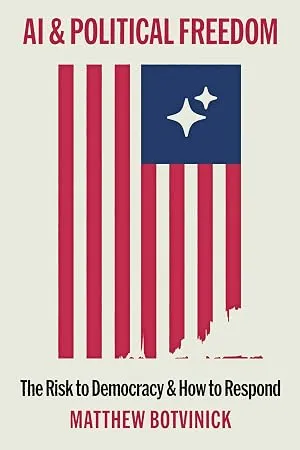
AI and Political Freedom: The Risk to Democracy and How to Respond
Botvinick, M. (2026). AI and political freedom: The risk to democracy and how to respond. Princeton University Press.
Available here →October 26, 2026
20261026-botvinick-ai-and-political-freedom-the-wide-angle
The wide angle
The rest of this thread
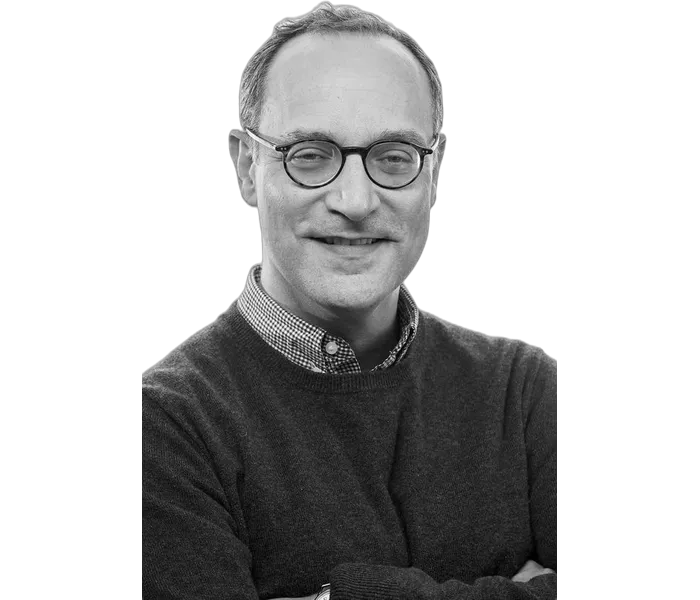
Matthew Botvinick
Matthew Botvinick has spent three decades at the intersection of artificial intelligence and the human mind. Trained as a physician and scientist (M.D., Cornell; Ph.D., Carnegie Mellon), he trained his first neural network in 1993, held faculty positions at Penn and Princeton, and served as Senior Director of Research at Google DeepMind. Troubled by the global democratic recession, he turned to law, earning a J.D. at Yale Law School, where he is a Senior Fellow. He now leads the AI and Rule of Law team at Anthropic. AI and Political Freedom is his first book.
Pull this thread
AI safety requires constitutional democracy, so repairing democratic institutions is AI safety work.
Know something the rest of us don't?
Most threads on Rorotoko begin with our invitation. Any thread can begin with a proposal: you write it with the same prompts every thread answers, and we review it.
Propose a thread →