Archie Brown
The Cold War: A Rorotoko Weave - Part II
I’m not sure that much thought is given in Western countries now to life under Communist regimes. However, the stereotype, when people do think about it, is of totalitarian control and absolute conformism, a handful of brave dissidents apart.
The controls and the oppression were very real, but only some Communist states at particular times came close enough to total control from above to meet criteria that make it reasonable to call them totalitarian rather than authoritarian. Cases in point are Stalin’s Soviet Union between the early 1930s and his death in 1953 (though some historians – wrongly, in my view – reject the totalitarian label even for those years), Enver Hoxha’s Albania and Nicolae Ceaușescu’s Romania.
Within the broader spectrum of totalitarian and authoritarian regimes, Communist states had enough in common in their ideology, political institutions and economic structures and operating principles to represent a distinctive category of system. However, in the post-Stalin years, political scientists, who studied what became known as ‘Comparative Communism’, found the differences among them, both over time and from one country to another, as significant as the institutional features they had in common. Thus, during the Communist era, the Catholic Church became so linked with Poles’ sense of national identity that Poland, for a time, had the highest incidence of church attendance in Europe. In Albania, in contrast, there was a complete ban on the public practice of religion.
In the Soviet Union, in the post-Stalin years, it was eminent dissidents, such as Alexander Solzhenitsyn and Andrei Sakharov (whose own views diverged radically), who attracted most Western attention. Overt dissidents often welcomed the opportunity to speak with Western journalists to make their criticisms known to the outside world and to have them broadcast back into the USSR, bringing them to the attention of more of their fellow-citizens. Some of them felt also that a higher profile in the West made the Soviet authorities more wary about how they mistreated them.
However, there was a far larger body of Soviet citizens, for whom Western attention to the unorthodoxy of their views was the last thing they wanted. They talked freely and critically within a family circle and especially with trusted friends, but they were not prepared to pay the high price of arrest and imprisonment for overtly challenging the authorities. Moreover, many members of the CPSU of reformist inclination believed that truly significant change could come only from within the ruling party, and that attempts to achieve change from below were doomed to failure. The way fundamental change did happen after Mikhail Gorbachev succeeded Konstantin Chernenko as General Secretary in March 1985 suggests that they had a point. It was only after systemic change, instigated by Gorbachev and the reformist wing of the party leadership, had occurred by 1989 that movements from below, especially nationalist movements, destabilized the Soviet state. This was very different from Poland where in 1980-81 a massive social movement, Solidarity, shook the foundations of the Communist system. It was for several years suppressed by the imposition of martial law, but there was a vast difference between the strength of society vis-à-vis the state in Poland and in the Soviet Union.
Curator: Bora Pajo
The Cold War: A Rorotoko Weave - Part II
Available here →October 31, 2026
20261031-archie-brown-cold-war-part-two
The wide angle
The rest of this thread
Archie Brown
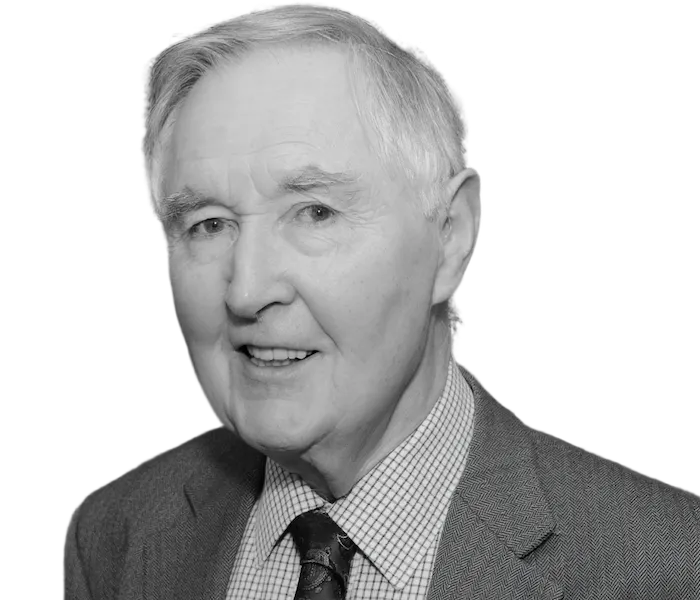
Archie Brown is Emeritus Professor of Politics at the University of Oxford, a Fellow of the British Academy, and an International Honorary Member of the American Academy of Arts and Sciences. His books include The Gorbachev Factor (1996), Seven Years that Changed the World: Perestroika in Perspective (2007), The Rise and Fall of Communism (2009), The Myth of the Strong Leader: Political Leadership in the Modern Age (2014), and The Human Factor: Gorbachev, Reagan, and Thatcher, and the End of the Cold War (2020).
Pull this thread
More in Books
Know something the rest of us don't?
Most threads on Rorotoko begin with our invitation. Any thread can begin with a proposal: you write it with the same prompts every thread answers, and we review it.
Propose a thread →