
Archie Brown
The Cold War: A Rorotoko Weave - Part III
The term, Cold War, is a figurative way of describing the reality of political, economic and military struggle for supremacy – by all means short of full-scale hot war – between Western democracies and the Communist states of the Soviet Union and Eastern Europe. (From 1948, China was a significant player in the Cold War, but its Communist regime had independent standing and, especially in the 1960s, ’70s and ’80s an often tense relationship with Moscow, in which Beijing challenged the Soviet claim to leadership of the International Communist Movement.) In spite of spasmodic regional proxy wars, in which the two main antagonists, the US and the USSR, avoided direct conflict between their armed forces, the Cold War was not the kind of confrontation whose ending can be pinned down to a day the guns fell silent and no missiles were launched.
However, the most important manifestation of the Cold War was the existence of Communist states in East-Central Europe. The US and Britain, allies of the Soviet Union in World War II from 1941 to 1945, accepted the notion of a Soviet sphere of influence in Eastern Europe, but not the imposition of Soviet-type Communist regimes whose leaderships were subordinate to Moscow and dependent on the continuing support of their Soviet overlords. Prior to the perestroika era, any attempt by an East-Central European country to pursue an independent path brought Soviet-led reprisals, all the way up to military invasion in Hungary in 1956 and Czechoslovakia in 1968.
It is the end of 1989 which should be regarded as marking also the end of the Cold War. In the course of that year, one country after another in Central and East Europe removed its Communist leaders and became non-Communist and independent, Poland, Hungary and (in late December) Czechoslovakia prominent among them. The Gorbachev leadership in Moscow acquiesced in these profound changes, and Soviet troops remained in their barracks, as they did when the Berlin Wall was opened (and subsequently demolished) in November 1989, signalling the beginning of the end of East Germany’s Communist regime and presaging German unification in 1990.
Ideologically, the Cold War was essentially over by the end of 1988. In a major speech to the United Nations in New York on 7 December that year, Gorbachev said that the people of every country had a right to decide for themselves what kind of political and economic system they wished to live in. That he was not excluding the Warsaw Pact countries of Eastern Europe from that declaration became clear the following year when his words were put to the test. In calling, in that same UN speech, for a “deideologization of interstate relations”, Gorbachev departed fundamentally from Marxism-Leninism, as he did with a plea for priority to be given to those values that united all of humanity as distinct from those of any one class, nation, or group. The outgoing US Secretary of State George Shultz viewed Gorbachev’s speech as a declaration that the Cold War per se had ended, and he was “apprehensive” that the incoming team of President George Bush, “did not accept or understand that the cold war was over” [George P. Shultz, Turmoil and Triumph: My Years as Secretary of State, Scribner’s, New York, 1993, p. 1138.]
But what was known in the West as East Europe – a political concept rather than geographical description, since several of those Communist states were in Central Europe – still had in the early months of 1989 Communist governments. These regimes depended, ultimately, on Soviet support, and the threat of Soviet intervention, to remain in power. Thus, it was only after the Soviet leadership accepted systemic change in their European client states during 1989 that the Cold War ended politically and militarily as well as ideologically.
In the Soviet Union itself in 1989, ‘democratic centralism’ (a Marxist-Leninist euphemism for unquestioning obedience of lower rungs of the party to those above them in this strictly hierarchical organization) was abandoned. Members of the CPSU, holding fundamentally different views, competed against one another in a March election for a new legislature with real powers that replaced its purely decorative, rubber-stamping predecessor. The new tolerance within the Soviet Union, with vigorous debate and the legitimacy of different political views embraced by the radically reformist wing of the political leadership, made a big impression in the West. It led Western leaders, even some long noted for their hard-line anti-Communism and deep suspicion of Soviet intentions (Margaret Thatcher in the UK among them), to accept that the Soviet Union had changed fundamentally.
In his 1988 UN speech, Gorbachev, mindful of Western concern about the Warsaw Pact’s Soviet superior strength in conventional manpower, announced that the Soviet army would be reduced by 500,000 over the following two years, and Western defence experts were impressed by these cuts taking place especially in the forces that would be deployed in rapid offence operations into Western Europe. In the previous year, notwithstanding strong opposition from within the military-industrial complex, Gorbachev also agreed a unilateral cut of an entire category of Soviet missiles (the SS-23s) that fell below the threshold the Soviet military leadership believed was required under the terms of the Intermediate-Range Nuclear Forces (INF) Treaty signed by Gorbachev and President Ronald Reagan in Washington on 8 December 1987.
Within the Soviet defence establishment, including Secretary of the Central Committee Oleg Baklanov who oversaw military industry and Marshal Sergei Akhromeyev, Chief of the General Staff from 1984 to 1988, there was deep and growing disquiet at what they regarded as an excessively conciliatory foreign and defence policy being pursued by Gorbachev and his allies in the political leadership. Their disquiet was compounded when the rise of nationalist movements led republics of the USSR, the Balts in the first instance, to take inspiration from the example of the East European countries and demand their own independent statehood.
Until Gorbachev became leader of the CPSU in March 1985, early in Reagan’s second term, the response of the Soviet leadership to the Reagan challenge had been a determination to match the United States militarily, to tighten domestic discipline, and to step up their anti-American propaganda. Reagan’s SDI announcement in March 1983, and his description in the same month of the Soviet Union as an “evil empire”, had made the Cold War colder.
It was the combination of Gorbachev’s different mindset from that of his predecessors and the great institutional power and authority of the office he had acquired that made his role indispensable. Only the General Secretary could promote change of Soviet foreign and defence policy. But the Cold War would not have ended if Reagan had refused to talk with his Soviet counterpart. The American president, however, was ready to engage, encouraged to do so by Secretary of State Shultz. There were other senior members of the Reagan administration who believed that no good could come from talking to a Soviet leader, and the less the US had to do with the “evil empire”, the better. When Reagan and Gorbachev met in Geneva in November 1985, this was the first meeting between an American president and a Soviet leader since 1979. Following Geneva, the American president, whether Reagan or Bush, met Gorbachev at least once annually until the dissolution of the Soviet state in December 1991.
A willingness on both sides to engage was, then, one important element in bringing the Cold War to an end through dialogue and negotiation. Until Gorbachev became General Secretary of the CPSU, the Soviet leadership believed that the peace component of Reagan’s ‘Peace through Strength’ policy was there simply to please domestic and international opinion and that it was only military strength he truly believed in. However, by 1988, when Reagan paid his first-ever visit to the Soviet Union for his last full-scale summit meeting with Gorbachev, his benevolent manner achieved more than his earlier belligerence in temporarily silencing Gorbachev’s domestic critics and in persuading the Soviet public that the world had become a safer place.
Ideas were fundamentally important. It was in the Soviet Union they had to change most if the Cold War was to be ended – and change they did. Specialists on international affairs in Soviet research institutes had been developing elements of what became the ‘new thinking’ long before Gorbachev took charge in the Kremlin. It was only then, however, that their ideas were empowered. Gorbachev appointed an exceptionally open-minded CPSU International Department official, Anatoly Chernyaev, as his main foreign policy adviser. Both Chernyaev and Gorbachev accepted the view of think-tank advocates that Soviet defence required a ‘reasonable sufficiency’ of weaponry, as distinct from maintaining complete parity with the United States. This was not only because Gorbachev wished to cut military spending, but because he took seriously the possibility of continued Cold War leading to all-out nuclear war as a result of human error, misperception of the other side’s intentions, or technical malfunction.
In the convergence of political views in the last few years of the USSR, it was the Soviet Union that did most of the ‘converging’. But the belief that this ideational and institutional change was something any Soviet leader would have had to embrace is baseless. The views of alternative candidates to Gorbachev in the pre-perestroika Politburo are well known. None would have pursued similar policies to his, whether the pluralization of the political system; the willingness to eschew the use of force and allow the East European client states to achieve independence; taking on the most powerful institutional interest within the Soviet state, the military-industrial complex; or signing major arms reductions agreements with the United States, bolstered by unilateral Soviet concessions.
An extraordinary degree of human trust was built up between the former Cold War antagonists, whether Gorbachev and his American and West European counterparts or Eduard Shevardnadze and successive US Secretaries of State Shultz and James Baker (and between Shevardnadze and the Foreign Ministers of Western Europe). That painstakingly established mutual trust survived until the end of the Soviet Union.
However, the seeds of a new Cold War, this time between post-Soviet Russia and ‘the West’ (the political ‘West’ now expanded to include the states of ‘East Europe’), began to be sown in the 1990s. In the 21st century, and particularly since the Russian invasion of Ukraine in 2022, trust between Russia’s personalistic autocratic regime and Western democracies has unsurprisingly vanished. Different in fundamental respects from the old Cold War though the new confrontation is, antagonists on both sides find it all too easy to slip back into dangerously stereotypical ways of thinking.
Curator: Bora Pajo
The rest of this thread
The Cold War: A Rorotoko Weave - Part III
Available here →November 15, 2026
20261115-archie-brown-cold-war-part-three
A close-up
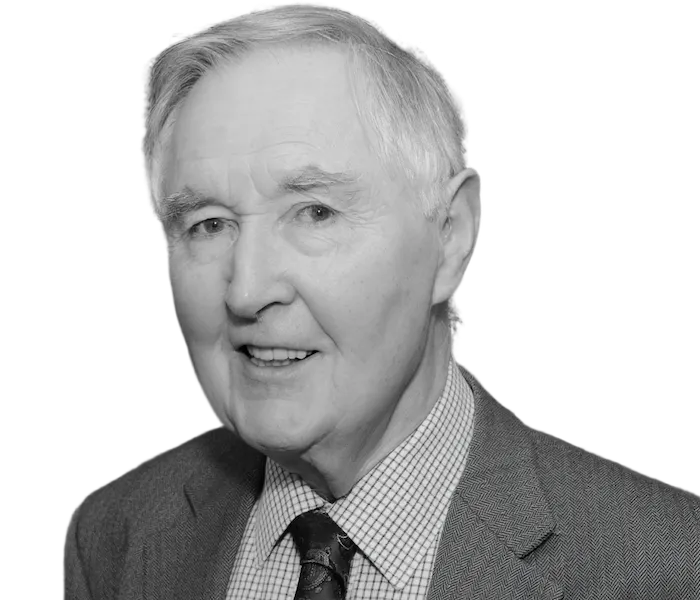
Archie Brown
Archie Brown is Emeritus Professor of Politics at the University of Oxford, a Fellow of the British Academy, and an International Honorary Member of the American Academy of Arts and Sciences. His books include The Gorbachev Factor (1996), Seven Years that Changed the World: Perestroika in Perspective (2007), The Rise and Fall of Communism (2009), The Myth of the Strong Leader: Political Leadership in the Modern Age (2014), and The Human Factor: Gorbachev, Reagan, and Thatcher, and the End of the Cold War (2020).
More in Books
Know something the rest of us don't?
Most threads on Rorotoko begin with our invitation. Any thread can begin with a proposal: you write it with the same prompts every thread answers, and we review it.
Propose a thread →