
The Cold War: A Rorotoko Weave
Part III
In your view, did the Cold War truly end — and if so, what brought it to an end?
November 15, 2026


1
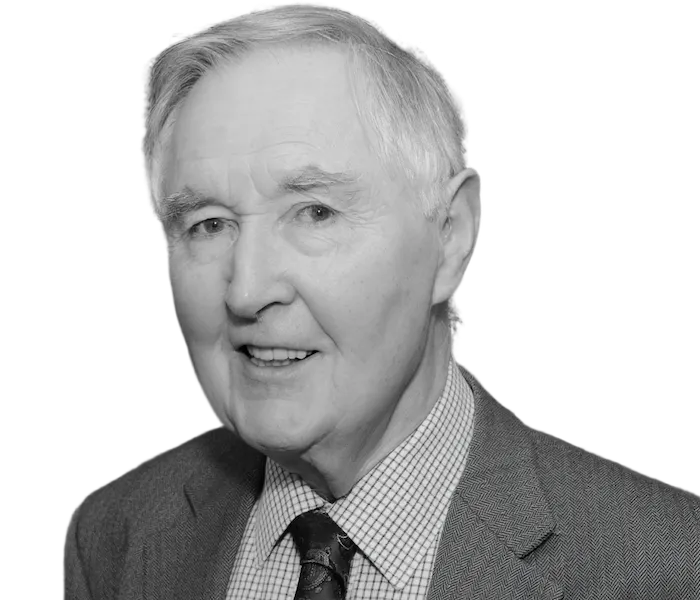
Archie Brown
The term, Cold War, is a figurative way of describing the reality of political, economic and military struggle for supremacy – by all means short of full-scale hot war – between Western democracies and the Communist states of the Soviet Union and Eastern Europe. (From 1948, China was a significant player in the Cold War, but its Communist regime had independent standing and, especially in the 1960s, ’70s and ’80s an often tense relationship with Moscow, in which Beijing challenged the Soviet claim to leadership of the International Communist Movement.) In spite of spasmodic regional proxy wars, in which the two main antagonists, the US and the USSR, avoided direct conflict between their armed forces, the Cold War was not the kind of confrontation whose ending can be pinned down to a day the guns fell silent and no missiles were launched.
However, the most important manifestation of the Cold War was the existence of Communist states in East-Central Europe. The US and Britain, allies of the Soviet Union in World War II from 1941 to 1945, accepted the notion of a Soviet sphere of influence in Eastern Europe, but not the imposition of Soviet-type Communist regimes whose leaderships were subordinate to Moscow and dependent on the continuing support of their Soviet overlords. Prior to the perestroika era, any attempt by an East-Central European country to pursue an independent path brought Soviet-led reprisals, all the way up to military invasion in Hungary in 1956 and Czechoslovakia in 1968.
It is the end of 1989 which should be regarded as marking also the end of the Cold War. In the course of that year, one country after another in Central and East Europe removed its Communist leaders and became non-Communist and independent, Poland, Hungary and (in late December) Czechoslovakia prominent among them. The Gorbachev leadership in Moscow acquiesced in these profound changes, and Soviet troops remained in their barracks, as they did when the Berlin Wall was opened (and subsequently demolished) in November 1989, signalling the beginning of the end of East Germany’s Communist regime and presaging German unification in 1990.
Ideologically, the Cold War was essentially over by the end of 1988. In a major speech to the United Nations in New York on 7 December that year, Gorbachev said that the people of every country had a right to decide for themselves what kind of political and economic system they wished to live in. That he was not excluding the Warsaw Pact countries of Eastern Europe from that declaration became clear the following year when his words were put to the test. In calling, in that same UN speech, for a “deideologization of interstate relations”, Gorbachev departed fundamentally from Marxism-Leninism, as he did with a plea for priority to be given to those values that united all of humanity as distinct from those of any one class, nation, or group. The outgoing US Secretary of State George Shultz viewed Gorbachev’s speech as a declaration that the Cold War per se had ended, and he was “apprehensive” that the incoming team of President George Bush, “did not accept or understand that the cold war was over” [George P. Shultz, Turmoil and Triumph: My Years as Secretary of State, Scribner’s, New York, 1993, p. 1138.]
But what was known in the West as East Europe – a political concept rather than geographical description, since several of those Communist states were in Central Europe – still had in the early months of 1989 Communist governments. These regimes depended, ultimately, on Soviet support, and the threat of Soviet intervention, to remain in power. Thus, it was only after the Soviet leadership accepted systemic change in their European client states during 1989 that the Cold War ended politically and militarily as well as ideologically.
In the Soviet Union itself in 1989, ‘democratic centralism’ (a Marxist-Leninist euphemism for unquestioning obedience of lower rungs of the party to those above them in this strictly hierarchical organization) was abandoned. Members of the CPSU, holding fundamentally different views, competed against one another in a March election for a new legislature with real powers that replaced its purely decorative, rubber-stamping predecessor. The new tolerance within the Soviet Union, with vigorous debate and the legitimacy of different political views embraced by the radically reformist wing of the political leadership, made a big impression in the West. It led Western leaders, even some long noted for their hard-line anti-Communism and deep suspicion of Soviet intentions (Margaret Thatcher in the UK among them), to accept that the Soviet Union had changed fundamentally.
In his 1988 UN speech, Gorbachev, mindful of Western concern about the Warsaw Pact’s Soviet superior strength in conventional manpower, announced that the Soviet army would be reduced by 500,000 over the following two years, and Western defence experts were impressed by these cuts taking place especially in the forces that would be deployed in rapid offence operations into Western Europe. In the previous year, notwithstanding strong opposition from within the military-industrial complex, Gorbachev also agreed a unilateral cut of an entire category of Soviet missiles (the SS-23s) that fell below the threshold the Soviet military leadership believed was required under the terms of the Intermediate-Range Nuclear Forces (INF) Treaty signed by Gorbachev and President Ronald Reagan in Washington on 8 December 1987.
Within the Soviet defence establishment, including Secretary of the Central Committee Oleg Baklanov who oversaw military industry and Marshal Sergei Akhromeyev, Chief of the General Staff from 1984 to 1988, there was deep and growing disquiet at what they regarded as an excessively conciliatory foreign and defence policy being pursued by Gorbachev and his allies in the political leadership. Their disquiet was compounded when the rise of nationalist movements led republics of the USSR, the Balts in the first instance, to take inspiration from the example of the East European countries and demand their own independent statehood.
Until Gorbachev became leader of the CPSU in March 1985, early in Reagan’s second term, the response of the Soviet leadership to the Reagan challenge had been a determination to match the United States militarily, to tighten domestic discipline, and to step up their anti-American propaganda. Reagan’s SDI announcement in March 1983, and his description in the same month of the Soviet Union as an “evil empire”, had made the Cold War colder.
It was the combination of Gorbachev’s different mindset from that of his predecessors and the great institutional power and authority of the office he had acquired that made his role indispensable. Only the General Secretary could promote change of Soviet foreign and defence policy. But the Cold War would not have ended if Reagan had refused to talk with his Soviet counterpart. The American president, however, was ready to engage, encouraged to do so by Secretary of State Shultz. There were other senior members of the Reagan administration who believed that no good could come from talking to a Soviet leader, and the less the US had to do with the “evil empire”, the better. When Reagan and Gorbachev met in Geneva in November 1985, this was the first meeting between an American president and a Soviet leader since 1979. Following Geneva, the American president, whether Reagan or Bush, met Gorbachev at least once annually until the dissolution of the Soviet state in December 1991.
A willingness on both sides to engage was, then, one important element in bringing the Cold War to an end through dialogue and negotiation. Until Gorbachev became General Secretary of the CPSU, the Soviet leadership believed that the peace component of Reagan’s ‘Peace through Strength’ policy was there simply to please domestic and international opinion and that it was only military strength he truly believed in. However, by 1988, when Reagan paid his first-ever visit to the Soviet Union for his last full-scale summit meeting with Gorbachev, his benevolent manner achieved more than his earlier belligerence in temporarily silencing Gorbachev’s domestic critics and in persuading the Soviet public that the world had become a safer place.
Ideas were fundamentally important. It was in the Soviet Union they had to change most if the Cold War was to be ended – and change they did. Specialists on international affairs in Soviet research institutes had been developing elements of what became the ‘new thinking’ long before Gorbachev took charge in the Kremlin. It was only then, however, that their ideas were empowered. Gorbachev appointed an exceptionally open-minded CPSU International Department official, Anatoly Chernyaev, as his main foreign policy adviser. Both Chernyaev and Gorbachev accepted the view of think-tank advocates that Soviet defence required a ‘reasonable sufficiency’ of weaponry, as distinct from maintaining complete parity with the United States. This was not only because Gorbachev wished to cut military spending, but because he took seriously the possibility of continued Cold War leading to all-out nuclear war as a result of human error, misperception of the other side’s intentions, or technical malfunction.
In the convergence of political views in the last few years of the USSR, it was the Soviet Union that did most of the ‘converging’. But the belief that this ideational and institutional change was something any Soviet leader would have had to embrace is baseless. The views of alternative candidates to Gorbachev in the pre-perestroika Politburo are well known. None would have pursued similar policies to his, whether the pluralization of the political system; the willingness to eschew the use of force and allow the East European client states to achieve independence; taking on the most powerful institutional interest within the Soviet state, the military-industrial complex; or signing major arms reductions agreements with the United States, bolstered by unilateral Soviet concessions.
An extraordinary degree of human trust was built up between the former Cold War antagonists, whether Gorbachev and his American and West European counterparts or Eduard Shevardnadze and successive US Secretaries of State Shultz and James Baker (and between Shevardnadze and the Foreign Ministers of Western Europe). That painstakingly established mutual trust survived until the end of the Soviet Union.
However, the seeds of a new Cold War, this time between post-Soviet Russia and ‘the West’ (the political ‘West’ now expanded to include the states of ‘East Europe’), began to be sown in the 1990s. In the 21st century, and particularly since the Russian invasion of Ukraine in 2022, trust between Russia’s personalistic autocratic regime and Western democracies has unsurprisingly vanished. Different in fundamental respects from the old Cold War though the new confrontation is, antagonists on both sides find it all too easy to slip back into dangerously stereotypical ways of thinking.
Archie Brown is Emeritus Professor of Politics at the University of Oxford, a Fellow of the British Academy, and an International Honorary Member of the American Academy of Arts and Sciences. His books include The Gorbachev Factor (1996), Seven Years that Changed the World: Perestroika in Perspective (2007), The Rise and Fall of Communism (2009), The Myth of the Strong Leader: Political Leadership in the Modern Age (2014), and The Human Factor: Gorbachev, Reagan, and Thatcher, and the End of the Cold War (2020).
2
Julie Newton
The Cold War did indeed end. Its structural conditions were removed by 1989: the Berlin Wall fell, Soviet forces voluntarily withdrew from Eastern Europe, the Warsaw Pact was dismantled, Germany reunified within NATO with Soviet consent, and in 1991 the Soviet Union itself dissolved peacefully with relatively little bloodshed. The struggle for Europe, which had been at the core of the Cold War since 1947-48, was over.
To deny this ending — and to insist that the Cold War merely paused, transformed, or never really stopped — is to ignore the ideational (by which I mean the role of ideas, values, beliefs, and identity) and structural changes that Gorbachev unleashed, and that the US and USSR concluded together. At the ideational level, Gorbachev's "New Thinking" (novoye myshleniye) constituted a genuine ideological rupture: the explicit rejection of Marxism-Leninism's class struggle as the basis of Soviet foreign policy; the embrace of "all-human values" over systemic ideological cleavage; the re-conceptualisation of security as mutual rather than zero-sum. Without this prior shift in thinking, without the willingness to relinquish the ideological framework that had justified Soviet imperial control over Eastern Europe, the peaceful structural transformations of 1989-1990 are impossible to explain satisfactorily. The Wall did not fall when and how it did because of material pressures (economic, systemic, or external) alone. Those pressures interacted with Gorbachev's embrace of "new thinking," his conviction that the use of force to preserve the Soviet empire was illegitimate, to produce a transformation that neither set of factors could have brought about on its own.
What followed was not the continuation of the Cold War but the failure to consolidate the peace that ended it. That failure had Russian and Western sources, material and ideational, external and internal, that interacted over time in ways that progressively closed off alternative, cooperative (and, for Russia, democratic) pathways and eroded the Russia-US honeymoon of the early post-Cold War years.
Russian causes included: Yeltsin's "market Bolshevism" that left millions impoverished and discredited democratic reforms; Yeltsin's attack on Parliament in 1993; the subsequent centrist-nationalist consolidation in foreign policy; and the Russian leadership's related reversion to coercion and blackmail towards neighbouring states.
Western causes included inappropriate US economic advice to Russia and, most consequentially, NATO's rapid enlargement without parallel construction of a substantive Russian place in European security architecture: slower alternatives such as the Partnership for Peace were sidelined, and compensatory measures such as the 1997 Russia-NATO Founding Act and the Permanent Joint Council proved, from Moscow's perspective, palliative rather than substantive. Underlying all of this was an American unwillingness to recognise Russia's status claims and any of its growing security concerns or interests in Europe and Eurasia as legitimate.
The interaction of these Russian and Western causes produced gradual but consequential shifts, both material and ideational, inside Russia and in Russia-West relations. Just as ideational change played an important role in ending the Cold War, ideas and emotions have also shaped, albeit less visibly, the confrontation that has since returned. As liberal democratic values were progressively delegitimated inside Russia, discredited by the chaos of the 1990s and actively displaced by collective emotions of resentment, humiliation, and grievance against the West alongside Putin's emerging statist nationalism, a new framework of ideas took shape that positioned Russia as culturally and civilisationally distinct from the West. This framework drew on long historical threads in Russian strategic culture and identity, threads that had always coexisted alongside Russia's European aspirations, but which by Putin’s third term hardened into something approximating a rival ideological programme, based on sovereign democracy, civilisational conservatism, renewed great-power nationalism. Whether this constitutes a genuine ideology in the full sense, a coherent and systematised worldview with universal aspirations, is a legitimate question. I would argue it does not quite reach that threshold. It is better understood as an amalgam of ideas, grievances, and collective memories — rooted in deep cultural, historical, and identity reserves — that approximates ideology without fully constituting one, and that serves as a legitimating narrative in the eyes of Russian society and elites. But it is not merely instrumental: as these ideas and emotions hardened in and around the Kremlin, cooperative alternatives became less imaginable on the Russian side, and the deterioration of Russia-West relations became self-reinforcing.
These interacting ideational and material drivers closed door after door, gradually undoing the Russia-West partnership until 2014, when Russia's annexation of Crimea returned both sides to cold war conditions.
The renewed confrontation that emerged from this process is real, but it is not the continuation of the twentieth-century Cold War. Today is better understood as a return to the conditions of cold war: the Manichean rhetorical framing on both US and Russian sides, the mutual attribution of blame to the other, the absence of will to cooperate except in narrow, compartmentalised sectors, the resort to harsh punishments across multiple domains, and the renewed US-Russian contest over security in the heart of Europe. What it is not is a resumption of the same ideological, systemic, and bipolar contest that essentially ended in 1989.
Treating the current confrontation as anything less than cold-war conditions ignores the scale of the challenge and threat we face; but treating it as a mere extension of the twentieth-century Cold War ignores or diminishes the distinctly post-1991, multidimensional causes of the current confrontation, especially its complex and contingent ideational dimension, and thus misleads policymakers about the particular steps that could help mitigate it.
This trajectory was not predetermined. There were Russian voices in the early 1990s, realist-minded liberals drawn largely from research institutes of the Russian Academy of Sciences and from a small number of official positions, who articulated an alternative grounded in respect for Russian neighbours' sovereignty, multilateral mechanisms for managing post-Soviet conflicts, and a cooperative European security architecture that meaningfully included Russia. There were Western counterparts, diplomats, defence officials, and scholars, who advocated approaches that might have sustained that alternative. Both sets of voices lost to other forces. The point of remembering them is not nostalgia but analysis: the loss was contingent, and how it happened bears directly on what is possible now.
Dr Julie Newton is the Principal Investigator of the University Consortium (UC), a ten-year interregional initiative based at St Antony’s and funded by the Andrew Carnegie Foundation, New York. She is also a Research Fellow at the Russian and Eurasian Studies Centre, St Antony's College, University of Oxford (where she received her DPhil), and a Visiting Professor of Russian foreign policy at Colorado College. She was previously an Associate Professor in the Politics and History Department at the American University of Paris for 15 years. Her research centres on Russia-West relations, Russian foreign policy, and the intellectual networks of Russian foreign policy elites. She has co-edited Institutions, Ideas, and Leadership in Russian Politics with Bill Thompson (Palgrave Macmillan, 2010) and authored Russia, France, and the Idea of Europe (Palgrave Macmillan, 2003), along with numerous journal articles. Current and forthcoming work includes the chapter "Russia's Alternative Voices of the early 1990s: Missed Opportunities for a New Multilateral Security Order in Europe and Eurasia" in The Euro-Russian Entente: Brussels and Moscow between Convergence and Divergence (1985–1999), edited by Elena Dundovich and Simone Paoli (Routledge, 2026), and "The Kremlin and Foreign Policy Elites: 'De-Putinization' or Continued Cold War?" (with Robert English) in a special edition of Problems of Post-Communism, 2026.
3
Matthew Evangelista
The political-ideological Cold War ended with the exhaustion of Soviet-style state socialism, but the apparent victory of market-oriented democracy was short-lived. Elite-led globalization and neoliberalism proved antithetical to genuine democratic practice and contributed to vast disparities in wealth and income. The result for domestic politics was not the flourishing of democracy that some observers heralded, but almost a convergence of political systems into hybrid electoral autocracies with quasi-market economies run by corrupt oligarchs—far from the vision of the reformers and activists who promoted the end of the ideological Cold War.
The geopolitical and military Cold War in Europe seemed to end with the fall of the Berlin Wall, the peaceful overthrow of communist regimes in Eastern Europe, the unification of Germany, the withdrawal of Soviet military forces, the breakup of the Warsaw Pact, and the disintegration of the Soviet Union itself. From the vantage point of a quarter century, it now seems more that the geopolitical-military divide just shifted East. Contrary to the aspirations of the Soviet reformers, members of the European Nuclear Disarmament movement, and many East European human-rights activists, there was no mutual dissolution of military blocs to make Europe whole, free, and peaceful. Instead NATO expanded, both geographically in Europe, and globally with its involvement in US-led wars in the Middle East and Afghanistan. Russia’s interference in Ukraine and annexation of Crimea in 2014 sought to reestablish the sphere of influence that Mikhail Gorbachev voluntarily gave up. The full-scale invasion of Ukraine in February 2022 ignited a war in central Europe that has already outlasted the Nazi-Soviet war of 1941-1945. Renewed emphasis on nuclear weapons even among non-nuclear members of NATO, combined with Putin’s nuclear saber-rattling, has made the military situation in Europe as dangerous as during the darkest days of the Cold War—or more so, since Russia’s aggressive expansionism has been demonstrated, whereas the Soviet Union’s was mainly imagined.
Matthew Evangelista is President White Professor of History and Political Science Emeritus at Cornell University, Ithaca, New York, USA. In Italy he has served on the graduate faculties of the Catholic University of Milan, the University of Roma Tre, and the University of Bologna. His books include Innovation and the Arms Race (1988); Unarmed Forces: The Transnational Movement to End the Cold War (1999); The Chechen Wars: Will Russia Go the Way of the Soviet Union? (2002); Law, Ethics, and the War on Terror (2008); Gender, Nationalism, and War: Conflict on the Movie Screen (2011); Allied Air Attacks and Civilian Harm in Italy, 1940–1945: Bombing among Friends (2023, available for free download here); and edited volumes on topics ranging from the laws of war to Italian politics. Many of his publications are available at https://matthewevangelista.com
4
Know something the rest of us don't?
Most threads on Rorotoko begin with our invitation. Any thread can begin with a proposal: you write it with the same prompts every thread answers, and we review it.
Propose a thread →