
The Cold War: A Rorotoko Weave
Part II
In your view, what aspects of everyday life under communist regimes are most frequently simplified or misrepresented in contemporary discussion?
October 31, 2026

1
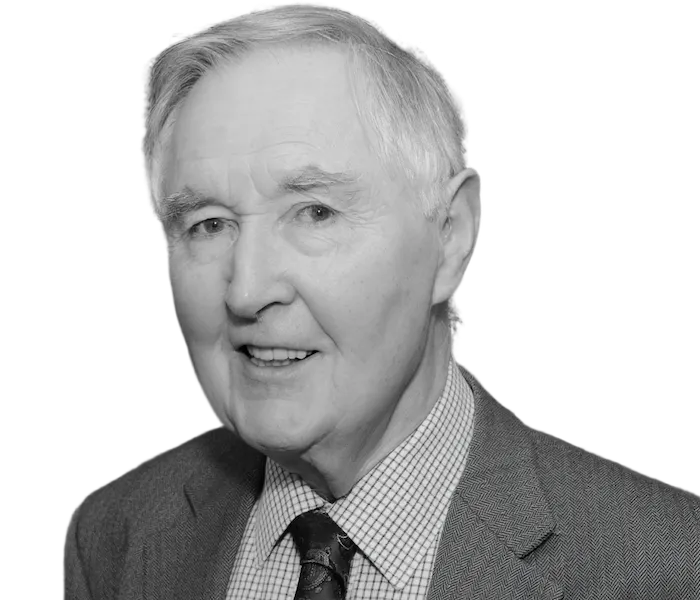
Archie Brown
I’m not sure that much thought is given in Western countries now to life under Communist regimes. However, the stereotype, when people do think about it, is of totalitarian control and absolute conformism, a handful of brave dissidents apart.
The controls and the oppression were very real, but only some Communist states at particular times came close enough to total control from above to meet criteria that make it reasonable to call them totalitarian rather than authoritarian. Cases in point are Stalin’s Soviet Union between the early 1930s and his death in 1953 (though some historians – wrongly, in my view – reject the totalitarian label even for those years), Enver Hoxha’s Albania and Nicolae Ceaușescu’s Romania.
Within the broader spectrum of totalitarian and authoritarian regimes, Communist states had enough in common in their ideology, political institutions and economic structures and operating principles to represent a distinctive category of system. However, in the post-Stalin years, political scientists, who studied what became known as ‘Comparative Communism’, found the differences among them, both over time and from one country to another, as significant as the institutional features they had in common. Thus, during the Communist era, the Catholic Church became so linked with Poles’ sense of national identity that Poland, for a time, had the highest incidence of church attendance in Europe. In Albania, in contrast, there was a complete ban on the public practice of religion.
In the Soviet Union, in the post-Stalin years, it was eminent dissidents, such as Alexander Solzhenitsyn and Andrei Sakharov (whose own views diverged radically), who attracted most Western attention. Overt dissidents often welcomed the opportunity to speak with Western journalists to make their criticisms known to the outside world and to have them broadcast back into the USSR, bringing them to the attention of more of their fellow-citizens. Some of them felt also that a higher profile in the West made the Soviet authorities more wary about how they mistreated them.
However, there was a far larger body of Soviet citizens, for whom Western attention to the unorthodoxy of their views was the last thing they wanted. They talked freely and critically within a family circle and especially with trusted friends, but they were not prepared to pay the high price of arrest and imprisonment for overtly challenging the authorities. Moreover, many members of the CPSU of reformist inclination believed that truly significant change could come only from within the ruling party, and that attempts to achieve change from below were doomed to failure. The way fundamental change did happen after Mikhail Gorbachev succeeded Konstantin Chernenko as General Secretary in March 1985 suggests that they had a point. It was only after systemic change, instigated by Gorbachev and the reformist wing of the party leadership, had occurred by 1989 that movements from below, especially nationalist movements, destabilized the Soviet state. This was very different from Poland where in 1980-81 a massive social movement, Solidarity, shook the foundations of the Communist system. It was for several years suppressed by the imposition of martial law, but there was a vast difference between the strength of society vis-à-vis the state in Poland and in the Soviet Union.
Archie Brown is Emeritus Professor of Politics at the University of Oxford, a Fellow of the British Academy, and an International Honorary Member of the American Academy of Arts and Sciences. His books include The Gorbachev Factor (1996), Seven Years that Changed the World: Perestroika in Perspective (2007), The Rise and Fall of Communism (2009), The Myth of the Strong Leader: Political Leadership in the Modern Age (2014), and The Human Factor: Gorbachev, Reagan, and Thatcher, and the End of the Cold War (2020).
2
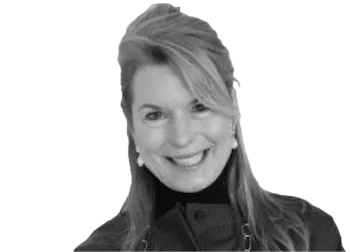
Julie Newton
One consequential misrepresentation concerns intellectual and bureaucratic life among pre-Gorbachev Soviet elites and institutions: the assumption that the Soviet Union was such a monolithic system that no meaningful diversity of thought or discussion among elites or within official Soviet institutions could exist. This assumption of a monolithic USSR dominated much Cold-War-era Western analysis and frequently applies to Western assumptions about late-Putin's Russia, as well.
Beneath the official ideological monolith, the reality of Soviet official life from the 1970s onwards was more heterogeneous than most Western scholars realised at the time. Elements of limited pluralism at institutional or bureaucratic levels within the post-Stalinist system did exist, even if the USSR — especially pre-Gorbachev — was hardly pluralist in any Western democratic sense. Still, this bounded pluralism became analytically and politically important over time. Small groups inside Soviet research institutes and reformist currents within the CPSU apparatus, from the late 1960s to the early 1980s — including the Academy of Sciences and the consultants around the International Department — quietly explored unorthodox ideas about economics, foreign policy, and the relationship between socialism and democracy. Many of the specialists who came of age in the thaw of the 1960s became Gorbachev's advisors and the intellectual architects of perestroika. Soviet perestroika and "new thinking" did not appear from nowhere, nor were they merely a forced retreat under material decline; the ideas behind them had incubated inside Soviet expert communities for two decades before Gorbachev embraced them and became their political bearer.
Detecting this internal heterogeneity mattered analytically. Those Western scholars who kept close watch over the unorthodox currents within Soviet institutions were better placed to recognise, earlier than most, that genuine reform rather than superficial adjustment was possible. Analysts who assumed the USSR was monolithic, or that any pluralist impulses would be snuffed out by the nature of the Soviet system or by Russian political culture, were slow to see Gorbachev and perestroika as anything more than tactical retreat.
The same simplification is often applied to Russia today. Putin's Russia is sometimes treated as a monolith — a single-minded autocracy in which dissent has been eliminated and alternative currents are politically insignificant. This is an oversimplification, as it was in the case of the USSR. Russian intellectual, economic, and political life often contains debates and tensions hidden beneath official language, and that may yet matter (for better or worse) under different conditions. The cost of missing this — analytically and politically — is the same cost paid by those Soviet-era Western analysts who were blind to underlying forces for change that, once circumstances allowed, became politically meaningful.
Dr Julie Newton is the Principal Investigator of the University Consortium (UC), a ten-year interregional initiative based at St Antony’s and funded by the Andrew Carnegie Foundation, New York. She is also a Research Fellow at the Russian and Eurasian Studies Centre, St Antony's College, University of Oxford (where she received her DPhil), and a Visiting Professor of Russian foreign policy at Colorado College. She was previously an Associate Professor in the Politics and History Department at the American University of Paris for 15 years. Her research centres on Russia-West relations, Russian foreign policy, and the intellectual networks of Russian foreign policy elites. She has co-edited Institutions, Ideas, and Leadership in Russian Politics with Bill Thompson (Palgrave Macmillan, 2010) and authored Russia, France, and the Idea of Europe (Palgrave Macmillan, 2003), along with numerous journal articles. Current and forthcoming work includes the chapter "Russia's Alternative Voices of the early 1990s: Missed Opportunities for a New Multilateral Security Order in Europe and Eurasia" in The Euro-Russian Entente: Brussels and Moscow between Convergence and Divergence (1985–1999), edited by Elena Dundovich and Simone Paoli (Routledge, 2026), and "The Kremlin and Foreign Policy Elites: 'De-Putinization' or Continued Cold War?" (with Robert English) in a special edition of Problems of Post-Communism, 2026.
3
Matthew Evangelista
The diversity within the communist world and within particular countries is often forgotten. Although treated initially as a monolith led by the USSR, the communist bloc soon developed fissures, in the antagonism between Yugoslavia, with its model of worker self-management, and the Soviet Union, with its highly centralized command economy, and a Sino-Soviet split that resulted in an armed border conflict in 1969. The everyday lives of citizens in each country differed from those of counterparts elsewhere, from the rural poverty of Albania or Romania to the Hungarians’ relatively affluent consumerism, to the cultural freedoms and foreign travel that Yugoslav citizens enjoyed. Within countries a wide range of political and national sentiments lay just under the surface. In the 1960s, while the young Vladimir Putin was dreaming of joining the KGB, others of his age cohort were busy memorizing the lyrics of Beatles songs, growing their hair long, and adopting the freewheeling lifestyles and attitudes of hippies. In the non-Russian republics of the USSR, concerns about the environment (and in Kazakhstan about the effects of Soviet military production and nuclear-weapons testing) contributed to nationalist sentiment and pressures for greater autonomy. Diversity was built into the Soviet nationalities policy, within the USSR and within the multinational Russian federation, but even reformist leaders, such as Mikhail Gorbachev and Boris Yeltsin, seemed incapable of appreciating or coping with it. Yeltsin’s irresponsible call to Russia’s ethnic regions to “take as much sovereignty as you can swallow” and the exception he made by violently repressing the autonomy movement in Chechnya, paved the way for Putin’s autocratic recentralization and Russia’s campaign of “warfare by war crime” carried out first in Chechnya, then in Syria, and now in Ukraine.
Matthew Evangelista is President White Professor of History and Political Science Emeritus at Cornell University, Ithaca, New York, USA. In Italy he has served on the graduate faculties of the Catholic University of Milan, the University of Roma Tre, and the University of Bologna. His books include Innovation and the Arms Race (1988); Unarmed Forces: The Transnational Movement to End the Cold War (1999); The Chechen Wars: Will Russia Go the Way of the Soviet Union? (2002); Law, Ethics, and the War on Terror (2008); Gender, Nationalism, and War: Conflict on the Movie Screen (2011); Allied Air Attacks and Civilian Harm in Italy, 1940–1945: Bombing among Friends (2023, available for free download here); and edited volumes on topics ranging from the laws of war to Italian politics. Many of his publications are available at https://matthewevangelista.com
4
Know something the rest of us don't?
Most threads on Rorotoko begin with our invitation. Any thread can begin with a proposal: you write it with the same prompts every thread answers, and we review it.
Propose a thread →