
Benoît Loiseau
The Death of the Clinic: Radical Experiments in the Art of Medicine
While I see this book as, first and foremost, a work of literary nonfiction, it also contributes to the fields of medical humanities, comparative literature, and gender and sexuality studies. The title, The Death of the Clinic, of course, nods to Michel Foucault’s 1963 book The Birth of the Clinic, in which he argued that, at the end of the eighteenth century, modern medicine shifted from abstract conceptualizations of disease to empirical modes of observation through what he calls the “medical gaze.” Taking up Paul B. Preciado’s call “to put Foucault on the crip-queer diet and write The Death of the Clinic” (2020), I wanted to trace a history of social and community-led medicine in the twentieth century, one that is patient-centred, queer, personal, anecdotal – all of the human qualities that modern medicine has strove to exclude in the name of objective empiricism. I was influenced by the feminist thinker Jane Gallop’s concept of “anecdotal theory” (2002) and the medical philosopher Kirsti Malterud’s call for an art of medicine “defined as the successful interrelationship between the biomedical and the humanistic perspectives in clinical practice” (1995).
Ongoing thread. More from Benoît Loiseau to follow.
Curator: Bora Pajo
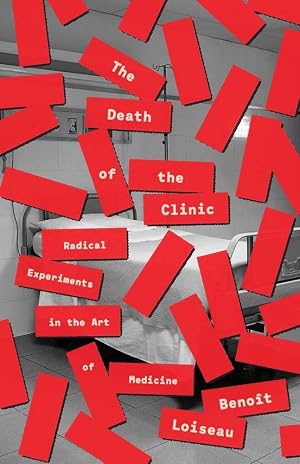
The Death of the Clinic: Radical Experiments in the Art of Medicine
Loiseau, B. (2026). The death of the clinic: Radical experiments in the art of medicine. Yale University Press.
Get the book →October 7, 2026
20261007-loiseau-the-death-of-the-clinic-the-wide-angle
The wide angle
The rest of this thread
Benoît Loiseau
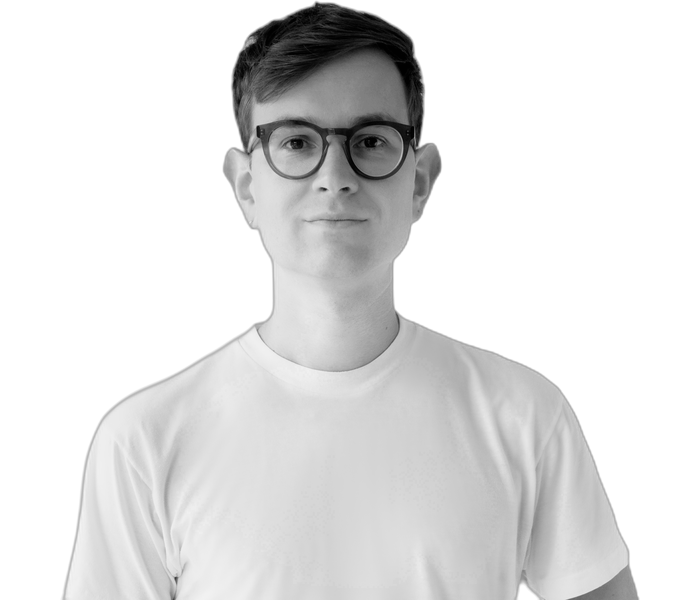
Benoît Loiseau is a Marie Skłodowska-Curie Actions (MSCA) Postdoctoral Fellow at University Paris 8 | Vincennes – Saint-Denis and NYU’s Department of French Literature, Thought, and Culture. His research explores gender and sexuality through the lenses of medical humanities, contemporary philosophy, and aesthetics. His first book, The Death of the Clinic: Radical Experiments in the Art of Medicine, is out with Fitzcarraldo Editions in the UK, and Yale University Press in the US. His next book, The Queer of Autofabulation: Disobedient Self-Fictions After HIV/AIDS, is forthcoming with NYU Press.
Know something the rest of us don't?
Most threads on Rorotoko begin with our invitation. Some begin with a proposal. Both use the same prompts and the same editing, with your own pages in the archive. Proposed threads carry a small Sponsored label and a fee.
Propose a thread →