
Sine Plambech
Rescue
A very powerful woman's story
The first night before we sailed out, there was a huge storm coming. I hadn't been sailing before, so of course I was nervous. What would that mean? And how would we be able to film?
When you are on a rescue ship with Doctors Without Borders, you actually feel very safe. But you are invited on board to document human rights violations, so I also felt a strong obligation to make sure to do that if we witnessed a violation. I had a few days where I thought: “I'm in the middle of nowhere. That was how I felt at sea. Who is going to rescue the rescuers and the film team if something happens?” But you're reminded all the time that the most dangerous situation is for the refugees, the people in these small boats. So their situation was my main concern.
I have worked in anthropology for many years, and my focus has always been on migration. I come from a union family, a feminist family, so in my childhood I had all these discussions about human rights, labor rights, women's rights. How far do you go back to explain how you became the person you are, with the view that you have? But I will often say that this shaped the way I worked when I started with Thai women migrating to the Danish labor market in rural Denmark. It was very local, in my own country, but these dynamics continue to shape things.
The bridge between anthropology and filmmaking is that we get access to so many human lives and stories, and to the generosity of people trusting us and telling their stories. So I always had an urge to make sure that the stories they tell don't just end in the academic office, that they come out and become part of the local and global discussions about the time we share, the time we live in. Filmmaking is very strong at doing that, because you have images, you have music, you have different tools, so you can have emotions, stories, images. You get to know people.
When people have seen Rescue, they feel that they know Hani and Roro in a way that would never happen with an academic paper. When we have screened the film, people ask: “what's happening to them now? How can I support them? Can I send money to them?” People engage. You never get these messages when you write an academic article, and you don't engage with your readers in the same way. When you make a film, you're standing there with the audience, and you get a direct response. So I feel that the mix between documentary and anthropology is very powerful. This is my sixth film, and definitely the most brutal one. But storytelling is something very dear to me.
It was also the most difficult film ethically, because she was kidnapped while we were filming. The powerlessness you feel as a European film team. Even with what we tried to do behind the scenes, contacting UNHCR and all kinds of agencies: “there's a woman, the wife of a man I'm filming, who is now in Libya, can you please do something?” And still not being able to.
Then, when I met her in Germany, she wanted her story to be told. How do you protect her while she's telling her story, while also acknowledging that you cannot take her agency away from her? If she wants to tell her story, and her husband wants to tell the story, I cannot take that away. On the rescue ship, too, I never met so many people who wanted to tell their story in front of my camera. They were like, “I will tell my story”. So ethically, you're filming people who on the one hand are struggling and on the other hand want to tell their story, and you have to make sure that they are protected when they tell it. And you cannot just say, okay, let me tell the story in five years. It's now that these things are happening.
So every day you have debates with yourself about how to solve this in the best way: with my film people, with lawyers, with Roro and Hani. Is there anything we need to take out? When you are documenting real-life human rights violations, there are a lot of ethical discussions every day. And here you cannot anonymize people. You cannot just say "person X said this and that" in a paper that few people read. This is going to be in many places.
Ongoing thread. More from Sine Plambech to follow.
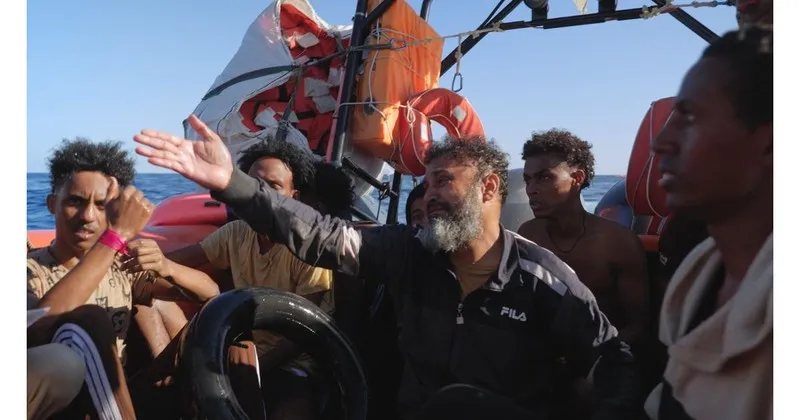
© Troels N’Koya-Jensen
Curator: Bora Pajo
Rescue
Available here →October 30, 2026
20261030-plambech-rescue-the-wide-angle
The wide angle
The rest of this thread
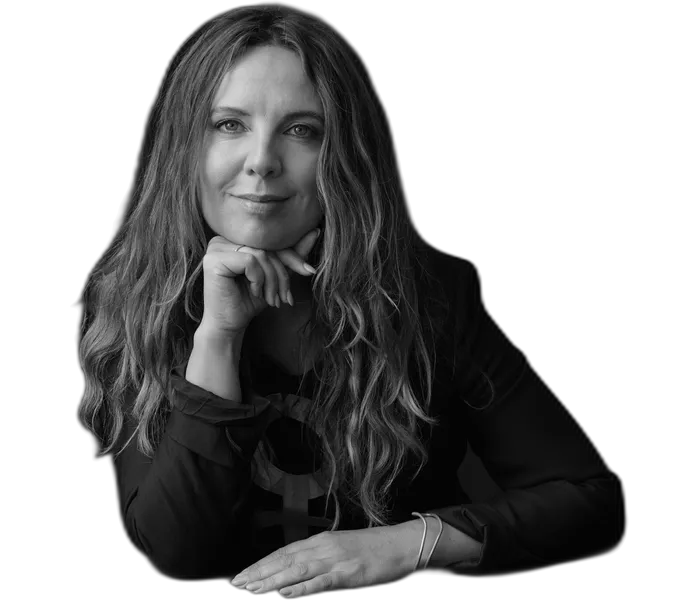
© Mirjam Kluka
Sine Plambech
Dr. Sine Plambech is an anthropologist, author, film director, and Senior Researcher at the Danish Institute for International Studies. Sine specializes in the areas of migration, smuggling, trafficking, and the sex industry. She works and films in migrant communities, border areas, red-light districts, and along migrant routes in West Africa, Asia, Europe’s southern border, and Denmark. With the multi-award-winning films, Heartbound and Fra Thailand til Thy, Sine Plambech stepped firmly onto the international documentary film scene. She dedicates her time to research, filmmaking, and social justice movements on the rights of migrants, women, and sex workers.
Pull this thread
European money sent to stop migrants in Libya feeds a militia trade in kidnapping and ransom.
More in Arts
More in Books
Know something the rest of us don't?
Most threads on Rorotoko begin with our invitation. Any thread can begin with a proposal: you write it with the same prompts every thread answers, and we review it.
Propose a thread →