
Miguel Moraes Cabral
Radiant Mountain
A mountain of waste and birds becomes a monument to our times.
Radiant Mountain is set around a gigantic mountain of waste in the Alentejo, Portugal, a region that also holds the largest concentration of megalithic monuments on the Iberian Peninsula: several hundred menhirs, cromlechs and dolmens, more than 7,000 years old, left by the first settled farming societies. The film explores a part of this territory, following archaeologists, waste workers and ornithologists, each searching for or sorting through fragments: in the soil, on the surface, or in the sky. Little by little, the storks stop migrating, the landscape changes at a dizzying speed and the mountain keeps growing. These different activities, which seemingly had nothing to do with one another, begin to echo each other, bringing out new meanings and questions. Through the storks’ changing habits, the monuments of the Neolithic societies, the amount of waste we produce and a transforming landscape, the film offers a contemporary look at the region and prompts a reflection on today’s society and the vestiges we will leave behind.
My parents have lived in the Alentejo for about ten years. From Lisbon, it takes me an hour by road to reach them, a route I take fairly often. So I already knew the region, without ever having thought of making a film there. It took several encounters for the spark to happen. I was already drawn to the gently rolling landscapes of cork oaks and to the many mysterious megalithic monuments that define the region. With the lowest population density in Portugal, it is common to come across neither a house nor a single person over long distances. Then, fairly quickly, new, neatly symmetrical lines appeared in the landscape with the hyper-intensive olive and almond plantations and the fields of photovoltaic panels. These vast new farms now cover tens of thousands of hectares. After a great deal of research and wandering, I discovered the largest landfill in the area, set in the middle of a land full of monuments built by the first settled societies. It felt like another kind of monument, and that is when the idea of the film began to germinate.

I don't necessarily want to show things that have never been seen or heard. I think cinema is interesting when it takes a point of view. I have often read that there are not many stories, but there are many ways of telling them, and I completely agree. For my part, I first need to stay attentive to the first sensations that made me want to go and film, because the aim is to imbue the film with them. So as not to forget them, I jot them down in my notebook. That way, I can think about how to film: from what angle, at what moment, with whom. I had never been to a landfill before, and I was deeply struck by the sheer volume of our waste, the number of birds, the different kinds of work carried out there, the trucks coming and going. But this film is not about a landfill: it uses this striking place to set it in dialogue with other activities such as archaeology and ornithology. This is how I express my point of view, that is, my way of telling this story, through this visual and sonic dialogue. It is also how the film raises questions about the meaning of our actions, about what we are as a society and about where we are heading. I try to make the Neolithic stones rhyme and resonate with the mountain, as if it were a monument condensing our present-day footprint, seen through the eyes of archaeologists of the future. My way of telling the story also involves a tone of my own: absurd and, at the same time, tragicomic, which changes the way we usually look at things: we are never quite sure whether we should laugh or cry. A satellite crosses the sky, a dog walks into the frame, a ringing phone interrupts the scene. I try to bring the viewer into this way of looking at the world, without judging it straight away, in order to build a line of thought about the questions the film raises. I try to show waste in a beautiful way, to invite reflection on it, rather than in a repulsive way that would shut that reflection down.
Ongoing thread. More from Miguel Moraes Cabral to follow.

The Radiant Mountain: The Stork’s Eye, Alentejo. © Miguel Moraes Cabral
Curator: Bora Pajo
Radiant Mountain
Available here →November 15, 2026
20261115-moraes-cabral-radiant-mountain-in-a-nutshell
In a nutshell
The rest of this thread
© Hugo Santos
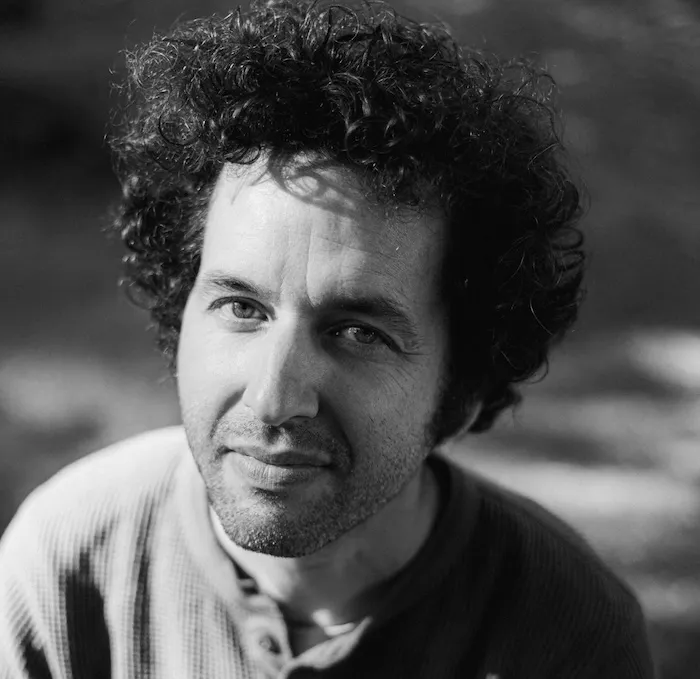
Miguel Moraes Cabral
Miguel Moraes Cabral is a filmmaker and sound engineer whose work moves between documentary and fiction. He studied at the Escola Superior de Teatro e Cinema in Portugal and went on to specialise in sound at the École Louis-Lumière in Paris. Alongside his own films, he has built an extensive career in sound, working as a location sound recordist and sound editor with many directors. His filmography includes Os Caminhos de Jorge (Honorable Mention, DocLisboa 2013); O Homem de Trás-os-Montes (Official Selection, Locarno Film Festival); il Sogno Mio d'Amore (co-directed); and As Lágrimas de Adrian (Special Mention, IndieLisboa 2023).
Pull this thread
A landfill crowded with storks is a monument to our society, as megaliths were to the first farmers.
More in Arts
More in Books
Know something the rest of us don't?
Most threads on Rorotoko begin with our invitation. Any thread can begin with a proposal: you write it with the same prompts every thread answers, and we review it.
Propose a thread →