
Julia Prével
Myology of the Horse – Muscle by Muscle
Sometimes, to understand the whole horse, you need to see one muscle at a time.
Learning anatomy, one muscle at a time
Knowing where a muscle attaches is not the same as being able to picture it. For someone learning equine anatomy, this difference can be surprisingly important. A set of anatomical landmarks, however precise, does not automatically reveal the three-dimensional form that connects them.
Traditional anatomical atlases are indispensable. They show the relationships between structures, including overlapping muscular layers and deeper tissues revealed through dissection. Yet the abundance of information can make it difficult for a beginner to follow one particular muscle. We may learn its name, locate its attachments and even memorise its action without being able to recognise its overall shape. That was the gap I wanted to make smaller.
My approach is to give the eye one structure to follow at a time. When a muscle is represented individually, its course becomes easier to trace. The viewer can begin at its origin, follow its body and its fibres, and find its insertion. Changing the viewing angle or moving closer to a region can sometimes make those relationships more understandable than a familiar, whole-body perspective. The aim is not to suggest that one viewpoint is universally better, but to choose a viewpoint that clarifies what is being studied.
I also wanted to treat illustration and written explanation as two parts of the same learning experience. An image may help us recognise a form; the accompanying text should explain what we are seeing. I tried to make the descriptions more approachable without removing the anatomical essentials: origins and insertions, functions, innervation and vascularisation. Simplifying a sentence is useful only if the information it contains remains meaningful and as accurate as possible.
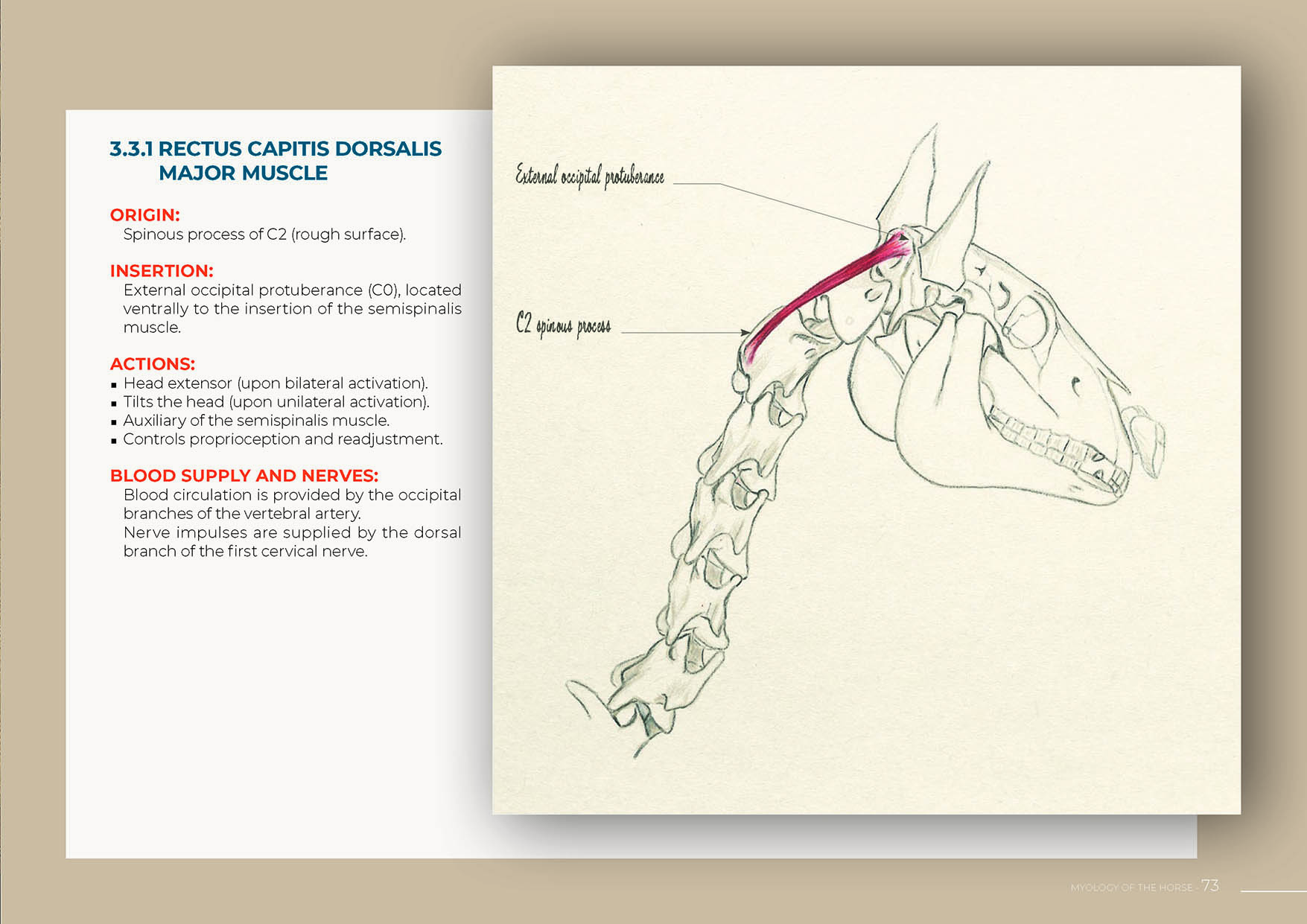
There is an important distinction here. Isolating a muscle on a page does not mean that it works alone in the horse. Real movement emerges from relationships among muscles, tendons, bones and other tissues. An isolated illustration is a learning step, not a complete account of the living animal. Ideally, once a reader can recognise one muscle, the complex atlas plates become more intelligible rather than less necessary.
This way of presenting anatomy grew into Myology of the Horse – Muscle by Muscle, a book with 169 muscles illustrated individually. It was created for people who want a different entrance into an intricate subject: learners, horse professionals and curious readers willing to spend time looking closely. Its value, I hope, is not in replacing the established anatomical literature, but in helping people approach it with greater confidence and more precise questions.
For me, learning anatomy is partly a matter of learning how to look. A labelled point is useful. A muscle whose path you can begin to imagine can become something you truly understand.
Ongoing thread. More from Julia Prével to follow.
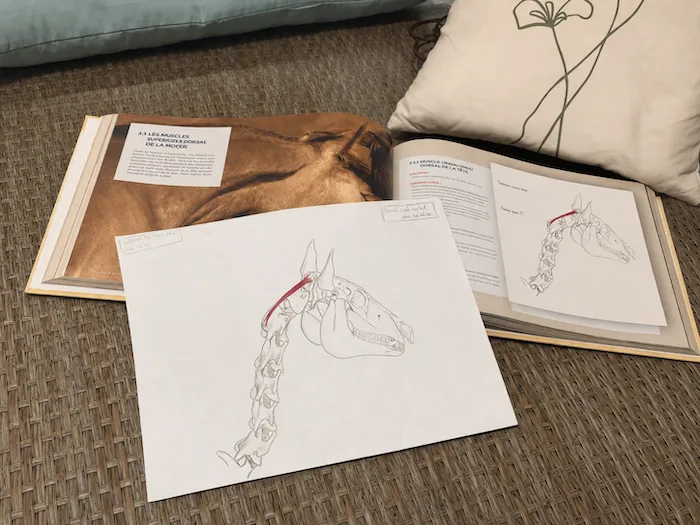
Learning anatomy, one muscle at a time © Julia Prével
Curator: Bora Pajo
Myology of the Horse – Muscle by Muscle
Available here →November 14, 2026
20261114-prevel-myology-of-the-horse-muscle-by-muscle-in-a-nutshell
In a nutshell
The rest of this thread
Julia Prével
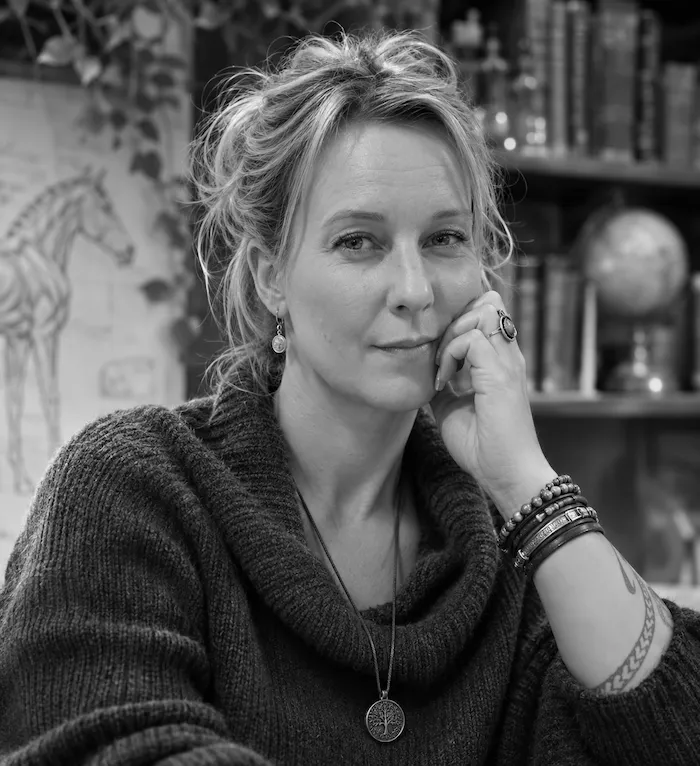
Julia Prével is a French author and illustrator with a background in equine studies, including training in equine massage and osteopathy. She began drawing muscles over skeletal diagrams to help herself understand horse anatomy. Over four years, this personal study method became Myologie du cheval – muscle par muscle, a 240-page book of individually illustrated muscles published through Camaya in 2022. The first French print run of 1,000 copies sold out. She is now preparing the first English edition and sharing updates on www.camaya.fr ahead of future pre-orders.
Pull this thread
Illustrating one muscle at a time helps learners picture anatomy that full atlas plates obscure.
More in Arts
More in Books
Know something the rest of us don't?
Most threads on Rorotoko begin with our invitation. Any thread can begin with a proposal: you write it with the same prompts every thread answers, and we review it.
Propose a thread →