
Arts
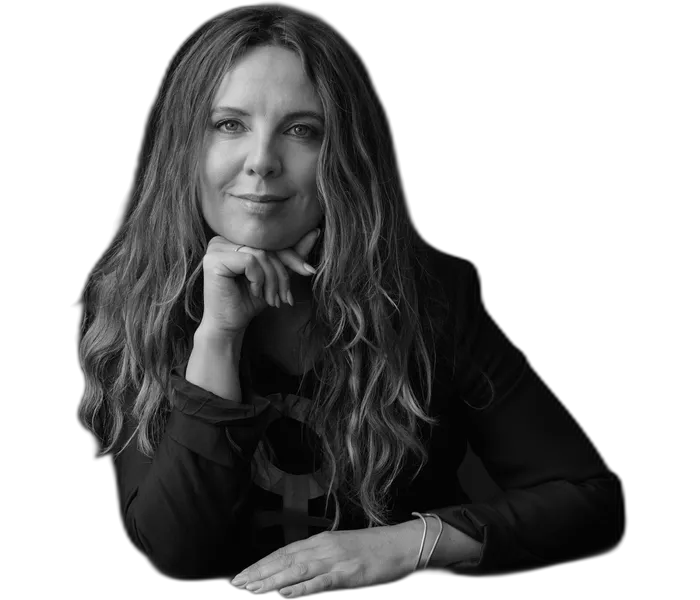
Tarik O'Regan

Testament

Who has the words?

There is a moment near the beginning of Testament that contains, for me, much of the opera in miniature.

We are at the tomb of Lazarus.

Martha is begging for her brother to be brought back to life. We know this story. Lazarus is raised from the dead. In the Christian tradition it is a miracle, and a sign of what is to come.

But imagine actually being there.

That was the useful question.

What would it be like to watch somebody you knew had died walk out of a tomb?

The answer might not be joy. It might be horror.

In Testament, the raising of Lazarus is not treated as a neat theatrical miracle. Martha pleads for her brother, and he comes out of the tomb. But what has happened to him? He has died once already, and now he is destined to die again. The boundary between life and death, which everyone had assumed to be fixed, has apparently broken, yet death has not gone away.

Photo Credit: Patrick Redmond and Irish National Opera. Testament had its world premiere at Galway International Arts Festival.

Mary watches what is happening and understands something else too. Her son is attracting attention. People are beginning to tell stories about what they have seen, and those stories may leave out what Lazarus himself must live through. Later, when the men ask Mary to see her own son’s death as part of a greater story, she will resist that same move: the promise of meaning does not erase what happened to a person.

This is where one of the opera’s central questions begins to emerge: “Who has the words?”

I love that question because it sounds so simple.

Words are power in Testament. Paul, Marcus and John have words. They write things down. They compare accounts. They are trying to create something stable from events that were anything but stable.

Mary has words too.

But hers do not necessarily lead to the same story.

Musically, I wanted the audience to feel that instability rather than simply be told about it. The opera begins before it quite seems to have begun. There is an environmental soundscape from which the live music gradually emerges. Sounds recur later in altered forms. Material is recognisable without necessarily being identical.

That is close to how I experience memory. We very rarely replay an event exactly. Something returns because another sound, smell or image has triggered it, but it comes back changed.

The whole performing space behaves like that.

There is no pit containing an orchestra safely separated from the action. The instrumentalists are visible. The ensemble can be a crowd, witnesses, individual characters or simply a collection of bodies occupying Mary’s mental landscape.

Photo Credit: Patrick Redmond and Irish National Opera. Testament had its world premiere at Galway International Arts Festival.

A person can emerge from that landscape and then disappear back into it.

That is why the raising of Lazarus mattered so much to me as an opening. Before anyone can call it a miracle and explain what it signifies, there are people standing at a grave trying to understand what they have just seen.

Mary is among them. What stays with her is not simply that Lazarus came out of the tomb, but the unease of that moment and the danger gathering around her son.

That changes everything.

The question is no longer simply, “Did a miracle happen?” The more interesting question is, “What did it feel like to the person standing there?”

And then: “What did she think it meant at the time?”

And finally: “What does she think it means now?”

Those answers may all be different.

By the end of Testament, the stakes have become much greater. Mary’s memories of the crucifixion are being transformed by the men around her into a story of redemption. They can see what the story might become. Mary remains stubbornly attached to what it cost.

The opera does not ask us to dismiss what Mary witnessed so that the men’s account can take its place. It asks how her account of suffering becomes their story of redemption, and who has the authority to make that change.

I hope it does something more uncomfortable.

Photo Credit: Patrick Redmond and Irish National Opera. Testament had its world premiere at Galway International Arts Festival.

Mary remembers the crucifixion in its physical detail. Smoke rises, people go about their day, and the world does not stop. She also remembers leaving before her son died. Those are difficult things for her to say, and they resist the consoling shape the men want to give them.

In Testament, for a little while, we get to stand with Mary before that story has settled.

And listen to people arguing about what the story is going to be.

‍

Read the full thread →
Tarik O'ReganTestament

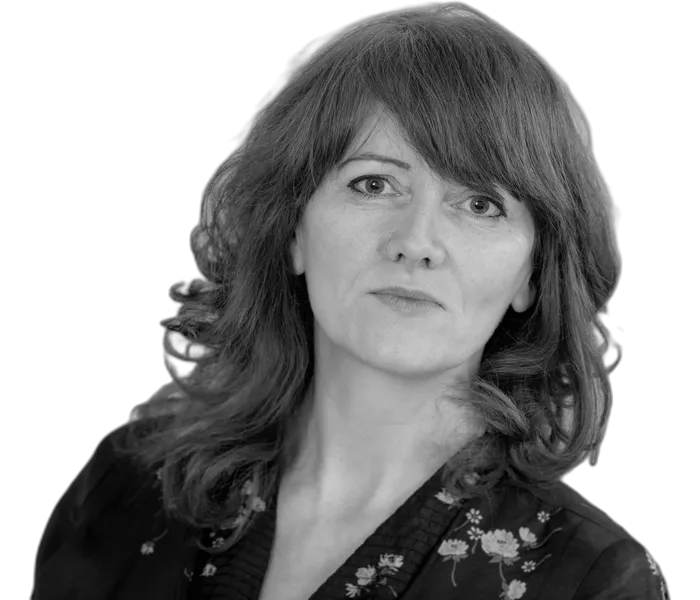
Benoît Loiseau

The Death of the Clinic: Radical Experiments in the Art of Medicine

Throughout the book, I often turn to literature or film – works that bear direct significance to the clinics I chronicle – to illustrate the stakes of healthcare models on display. This is a short passage from my chapter on La Borde, introduced by a description of the film Every Little Thing:

In the opening scene of Nicolas Philibert’s documenta­ry film Every Little Thing (1996), a middle-aged woman with short brown hair paces around a forested estate. She wears baggy pink shorts and a khaki green vest. Shaded by trees, she bends her arms, her palms turned upward to the sky, like a Christian orant. Nothing equals my sorrow, she hums in a high-pitched voice, I am succumbing to my pain. In the next shot, a man wanders through an endless park. His steps are hesitant, uneven, as though he is per­petually forgetting and relearning how to walk. In the background appears the off-white façade of the nine­teenth-century château that, since 1953, has been home to the experimental psychiatric clinic of La Borde, in Cour-Cheverny, 125 miles south of Paris. All around it, bodies move about quietly, like planets orbiting a sun.

Made in the summer of 1995, Every Little Thing documents the making of La Borde’s annual theatre performance. That year, it was Operetta: the 1964 satiri­cal play by Polish writer Witold Gombrowicz. Set in the first half of the twentieth century – though deliberately blending temporal references – the play follows a cast of deluded aristocrats struggling to retain their sense of identity. In the wake of social upheaval, they fear that the normalization of nudity might expose their commonness and strip them of privilege. The play serves as a critique of social conventions – an absurdist take on the perfor­mance of status….

Read the full thread →
Benoît Loiseau

This week's threads

All the threads →
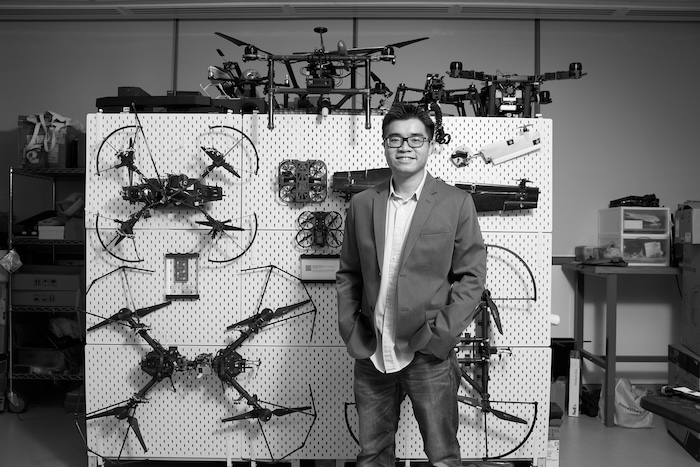
S. Jonathan Wiesen
From the archive ·
March 21, 2011

Creating the Nazi Marketplace

S. Jonathan Wiesen
I came to this subject through an earlier project concerning business complicity under National Socialism. Companies such as Siemens (electronics), Krupp (steel), and the automotive firms BMW, Volkswagen, and Daimler Benz,...
Read the thread

Know something the rest of us don't?

Most threads on Rorotoko begin with our invitation. Some begin with a proposal. Both use the same prompts and the same editing, with your own pages in the archive. Proposed threads carry a small Sponsored label and a fee.

Propose a thread →

No paywalls. No selling your data.

Support this awesome independent project.

or shop the merch →