
What is the RORO Thread? One sharp micro-interview. Cutting-edge of scholarship. The art we love.

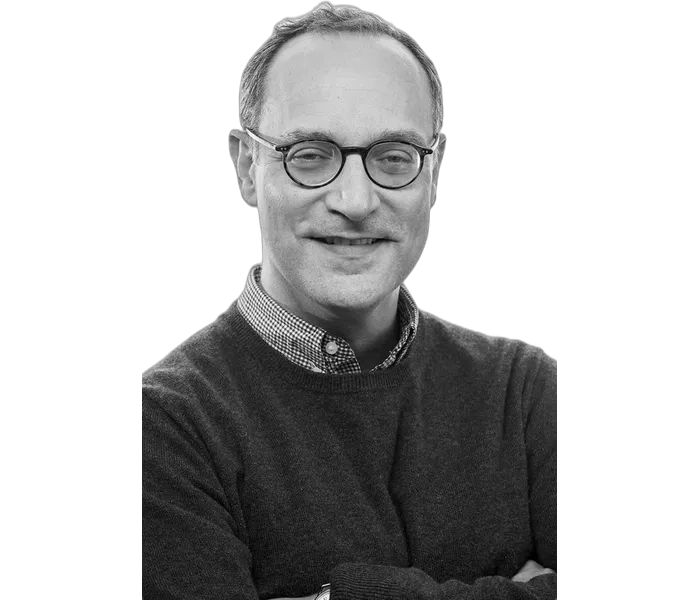
Max Dosser

July 31, 2026

Nostalgic Futures - The wide angle

I had a very windy path in my studies. I started college as a chemistry major and a biology minor, because I was going to be pre-med. Around my junior year I decided that everyone who's pre-med is science major, science minor, so I'd add a music minor to make myself stand out. And in doing that I realized, I love music, and I don't really like chemistry. But the sunk-cost fallacy, so I'll just get a double major. In the process, I had to stay an extra semester, so I ended up taking a class on screenwriting, which at Wake Forest, where I went to undergrad, was housed within the communication department. My professor said, hey, you're really good at this, you should stay here for your master's program — and we'll make movies together. We did not do that, but I did stay there for my master's in communication.

So I was studying chemistry, then I was playing Renaissance music on the recorder, then writing scripts, then I moved into writing about true crime documentaries, and then I got my PhD at Pitt. In my PhD program, I started off writing about the communicative role of film and television music. Then I took a Proseminar class at the end of each of the four units, we had to pose questions based on the readings to other people. The other students had to choose one and write a short paper in response to it. Someone posed this question about melancholy and anger, which really reminded me of PuppyGate.

PuppyGate is a controversy that happened at the Hugo Awards, which is basically the Oscars for science fiction and fantasy literature. There were two groups — the Sad Puppies and the Rabid Puppies — who wanted to restore "popular" literature to a place of prominence by awarding it Hugo Awards instead of what had been winning, which they described as the "affirmative action awards." These campaigns got huge support from a lot of more reactionary fans, to the point that the Hugo Awards changed the way people could vote because the Puppies were flooding the nomination slates. So I wrote this really short paper about PuppyGate, the Sad Puppies, and the Rabid Puppies, and then I moved on to writing about other things.

Then the storming of the Capitol happened on January 6th. I realized, listening to people talking about the rhetoric of these insurrectionists, that it mirrored my paper — that the things I was talking about with these fandoms of sci-fi and fantasy were actually connected to this broader reactionary movement, Trumpism and MAGA. So I went back to the paper and tried to expand it to see where these connections might lie. I turned that 5-page paper into a 35-page paper, and then I cut it back down because it was way too long. My professor at that point said, oh, this is really interesting, you should pursue this if you want. So that turned into my dissertation, and my dissertation was the seed for this book.

A key goal of mine is to use these seemingly marginal controversies and the seemingly frivolous activity of fandom over the seemingly pulp genre of speculative fiction to really examine what's happening on this broader cultural scale.

On sci-fi and the question of prediction

There's this idea that science fiction, and speculative fiction in general, is predicting the future. Like Neuromancer, which kind of predicted the way we use the internet. And people had basically cellphones in Star Trek in the 60s. So there does seem to be a predictive quality. But I don't think that's what it's meant to do. As I mentioned with Kim Stanley Robinson earlier, he wasn't trying to predict what we would be doing in 2026 — he was commenting on the present.

You can see this a lot with AI. When you look at so many different stories with AI, just from the 60s onward, it's very often an evil force — predicting that things are going to be more negative under AI. I just watched Wall-E with my daughter, and the AI in that is a bad guy. It's basically HAL from 2001: A Space Odyssey. But there are some newer things — like Matt Dinniman's Dungeon Crawler Carl and his other book, Operation Bounce House, and even a young adult series by Neal Shusterman called Arc of a Scythe — that take a very different perspective on AI. Dungeon Crawler Carl and Dinniman's other book were written while ChatGPT existed — not saying he's used ChatGPT to write them, but that it was a presence in the culture. Arc of a Scythe, I think, was a bit before. They're taking more of a nuanced approach, which I think is what happens a lot in the genre. Early on, everyone does something the same way — like light-speed travel, or faster-than-light travel — and they just say, okay, we'll do that. Early on, AI was kind of seen as this negative boogeyman, and they just said, this is bad. That persisted, and now that we're seeing a world where AI is becoming more real, we're having more of these nuanced takes — about ways it could be helpful, and ways it could be even worse than we imagined before.

That's really what the genre's role is. It's not trying to tell us, hey, if you do this, this bad thing's going to happen. It's saying, here's a technology that may or may not exist in the future — what are the ways we can deal with that? One of the best authors to do this kind of storytelling is Ted Chiang, who writes short stories where there's this technology, this novum, this thing dropped into the world. The story isn't really about that — it's about people interacting with it. He'll present people who are very positive about it and people who are very negative. So they're really these sociological takes on how the world is different because of this technology. That's what sci-fi is really, really good at: providing us different ways to think about what could happen.

Curator: Bora Pajo
this thread

Support this awesome media project

We don't have paywalls. We don't sell your data. Please help to keep this running!