
In a nutshell
August 11, 2026
He Has the People: Abraham Lincoln and the Election of 1860
Everyone on the planet knows Abraham Lincoln. But as a historian of antebellum U.S. politics (politics before the Civil War), I've always been struck by how…ahistorical we become when we teach and write about his election to the presidency in 1860. Of course that fully self-realized boy born in that Kentucky log cabin would make it to the White House at the moment of the nation's severest crisis! Of course he would, against considerable odds, prevail in a Civil War and prevent government "of the people, by the people, for the people" from perishing from the earth! Yet even chance occurrences at pivotal moments can (and do) affect large historical forces and yield momentous consequences. This is part of what makes history so inherently interesting: one never knows what twists and turns will turn a humdrum story on its head. Emphasizing the contingency of events can help historians return human agency, free will, and decision-making to a central place in the writing and teaching of history.
So my project starts with the presupposition that all historical events contain a considerable amount of contingency: ways things could have gone in a completely different direction. I also wanted to write a narrative history of a "pivotal moment" – in this case, a long-ago election – for a general reader. We historians have ceded so much of what we are trained to do (tell stories, explain "why" something happened the way it did, and not just the "what" happened) to non-professionals, that I wanted to see if I could make cutting-edge history vivid and entertaining for the reader.
Ongoing thread. More from Jonathan Earle to follow.
Curator: Bora Pajo
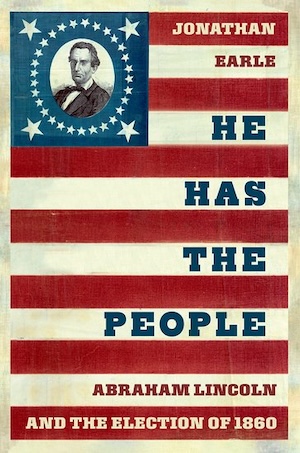
He Has the People: Abraham Lincoln and the Election of 1860
Earle, J. (2026). He Has the People: Abraham Lincoln and the election of 1860. Oxford University Press.
Get the book →August 11, 2026
20260811-earle-he-has-the-people-in-a-nutshell
The rest of this thread

Jonathan Earle
Jonathan Earle is the Donald Cecil Delaune Professor and Dean of the Roger Hadfield Ogden Honors College at Louisiana State University, where he is also a professor of History and African & African American Studies. He is the author of Jacksonian Antislavery and the Politics of Free Soil, which won the James Broussard First Book Prize from the Society of Historians of the Early American Republic; John Brown's Raid: A Brief History with Documents; and editor (with Diane Mutti Burke) of Bleeding Kansas, Bleeding Missouri: The Long Civil War on the Border. He lives in Baton Rouge and New Orleans. www.abrahamlincoln1860.com
Feature your book, your art, your project
Publishing with a small press, or on your own?
A Sponsored Thread runs like every other thread on Rorotoko: three parts on three dates, the same editorial review, your own pages in the archive. Marked Sponsored. $199, paid only once accepted.
Get featured →