In a nutshell
August 15, 2026
Action in Artwork
I'm an immigrant — I came to the United States when I was five. My parents started working in a dry cleaning store, where my mom did the alterations as a seamstress. So textiles, sewing, thread, and fabric were familiar from the beginning — and so was the way they link to immigration and immigrant identity.
For a long time these two things stayed separate: my interest in immigration policy and immigrant justice on one side, and sewing and making art at home on the other. When they finally came together, in my twenties, it made so much sense. Here was a medium that represents the immigrant community in so many ways, and I could use it to fight for immigrant justice.
On the West Coast in the early '90s, there was so much more garment industry work, much of it done by Asian American and Latinx immigrants, especially immigrant women. Seeing that shaped my work and my practice. And we come from cultures with rich textile traditions, which plays into the garment work people do here as immigrants.
I've known how to sew since I was six. It's funny because I can't draw anything, but I can embroider it. In that way it's second nature.
Growing up in the Central Valley, I'd hear people talk about immigrant labor as invisible labor, but it's not. It's visible everywhere, especially in farmland: the work is visible, the conditions are visible. What's invisible is the inequality. I was always interested in immigration and immigrant justice. I even studied immigration policy.
My practice, especially the community-based projects, is about creating a space where people can come, where impacted people in particular feel safe and welcome, and are centered. People gather around a point of connection such as being immigrants, not being able to vote, and others. And we create together.
That kind of space tends to be calm. Not always; sometimes it's chaotic, and there's a real joy in that chaos, that high energy. But textile work is slow, so there's a lot of sharing stories and asking each other questions. People can also opt out of that. Someone can say, no, I'm just going to sew in silence, and that's fine too.
And it isn't just about making art together. These spaces can become cathartic, even therapeutic, in how people connect. People tell stories they've never told anyone. Families make something together, start talking, and tell me they've discussed things they never had as a family. Art can do that. It opens up conversations we haven't been able to have. One nonggi participant could never ask her parents about their immigration story without them shutting down. But through the artwork, explaining it, asking them to contribute. They shared so much she'd never known.
.jpg)
For years I've taught a class in the art therapy department at the School of the Art Institute, on sewing practices. There's a lot of evidence that fiber techniques such as sewing, weaving are therapeutic. They're good for our health.
The other thing that matters in my projects is that they don't end with making the art. The art gets made, and then it gets used. That creates another space where community, sometimes different communities, comes together to use it: for activism, organizing, movement building, for immigrant, racial, and economic justice. People are proud their work is being used, or that they get to use someone else's. It's a different kind of investment. There's action in the artwork.
.jpg)
Success means something different to everyone. But to me, a lot of this work succeeds in many ways. It's been effective for community building. Thousands of people have taken part over the years. When I started, I made projects that needed participation without knowing whether anyone would show up or care, so it still surprises me how many people do. These projects take years to build momentum, because community work can't be fast. The Protest Banner Lending Library has been going for ten years now. It shifts year to year, but it's still alive. People are still making banners and still using them. In that project alone, over 4,000 banners have come out of the workshops. That's success to me. And then people check them out, like a library, and carry them when they're able to protest. They're in constant use.
.jpg)
This matters. I get frustrated when I see artists run community-based projects and then can't even name the people who participated. I know how much work it takes collecting contact info, keeping people updated, but it's essential. It's how you work ethically, and there's such a lack of that these days.
Ongoing thread. More from Aram Han Sifuentes to follow.
Protest Banner Lending Library, 2016 - ongoing. Installation photo credit:©eedahahm
Protest Banner Lending Library, 2016 - ongoing. Parade: at Zeeuws Museum, photo credit: © Viorella Luciana
Protest Banner Lending Library, 2016 - ongoing. Citizenship for all photo credit: © OffThaRecord x Steer
Curator: Bora Pajo
Action in Artwork
Get the book →August 15, 2026
20260815-aram-han-sifuentes-action-in-artwork-in-a-nutshell
The rest of this thread
© Sarah Whyte
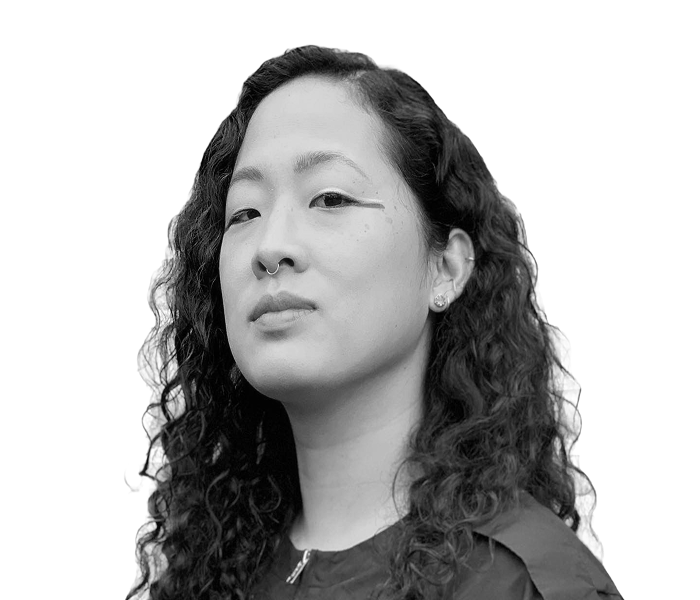
Aram Han Sifuentes
Aram Han Sifuentes (she/they) is a social practice and fiber artist, writer, and educator. Informed by her experiences as an immigrant and the daughter of garment workers, her work examines race, labor, borders, citizenship, voting, and protest in the United States. Through participatory projects, she interrogates the structures that shape civic life — immigration systems, bureaucracies, and electoral processes — reworking, reimagining, and at times dismantling them altogether.
Propose a thread
Know something the rest of us don't?
Most threads on Rorotoko begin with our invitation. Some begin with a proposal. Both use the same prompts and the same editing, with your own pages in the archive. Proposed threads carry a small Sponsored label and a fee.
Propose a thread →