
Sophie Mills
The Image of Classics and Classicists in Modern Fiction: Seducers, Slayers, and Survivors
From monopoly to royalty to option to cut: Classics is a discipline like no other.
The Secret History has sold over 5 million copies. Though it is set in the late 1980s, Donna Tartt ignores every development in classical pedagogy over the last few decades, and marks the discipline as irredeemably elitist, especially socially, reflecting older ideas that most contemporary practitioners continually attempt to counter. The opposition of Classics to the real world is especially heightened. It is inimical to everything ordinary: intriguing, stimulating and individualistic, but also exclusive, cold and impractical. Additionally, familiar tropes of decline and ending are intensified in its portrayal as actively destructive.
The book focuses on a group of Classics students – Henry, Francis, and the twins Charles and Camilla - and their enigmatic and fascinating tutor Julian Morrow, at Hampden College, an elite liberal arts college. Influenced by Morrow’s teaching, they recreate a Dionysiac ceremony which causes the murder of a local farmer. When Bunny Corcoran, one of the group who had no part in it, learns what happened, he torments the murderers until they murder him.
Hampden students are an elite, and the classicists are an elite within this elite: Francis, Henry and the twins are their own elite within the group. Henry wears English suits and always carries an umbrella; Francis wears pince-nez and has an “almost British” accent. They also have no financial concerns. Henry receives a monthly allowance so large that $2000 is nothing to him; Francis has a trust fund, and even the twins’ alleged poverty has no apparent effect on them. Outsider Richard, the narrator of the story needs generous financial aid and a job after graduation.
Tartt lovingly describes extravagant dinners throughout the novel, and her classicists’ lives are imbued with a Dionysiac trio of alcohol, violence and occasionally deviant sexuality. Julian’s private income enables him to be “very particular” about his students, unlike any Classics professor that I have ever met: these six Greek students are apparently his only ones, in a world very different from contemporary academia. The implication is clear: Classics is for those who do not need to consider financial banalities. Intellectual, social and financial elitism are inextricably entwined in the core group. Bunny Corcoran and Richard Papen remain outside the inner circle because they are poorer. Social and financial deficits are reflected in their command of Greek. Richard is a good scholar, but he was not born to Greek or privilege. He was previously a pre-med major and took Greek purely to fulfil a humanities requirement. Bunny’s clothes are the right type but unkempt, and his Greek mirrors his combination of material aspiration and lack of means to support it. He has been learning Greek since he was 12, but still barely knows that it has no ablative.
Elite people easily believe that conventional moral principles need not apply to them. Henry considers the murder “a minor thing. An accident,” and asserts that it let him “live without thinking” and get more in touch with himself. Francis calls the murder “terrible” but qualifies it: “I mean, this man was not Voltaire we killed.” Richard is also seduced into scorning supposedly ordinary people, but his outsider status saves him. He alone progresses to normal life outside Hampden, renouncing Classics for English. Henry kills himself. Francis attempts suicide unsuccessfully. After a long period of alcoholism, Charles ends up washing dishes in a diner.
Most professional classicists remain ambivalent about Tartt’s vision of our discipline. The book is gripping and it may even have lured some students into exploring classical languages. But its portrayal of the discipline is ultimately deeply unflattering, even as it reflects a stubbornly persistent and unrealistic vision of what it means to be a classicist in the modern world.
Curator: Bora Pajo
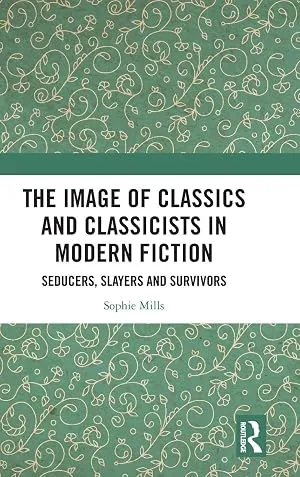
The Image of Classics and Classicists in Modern Fiction: Seducers, Slayers, and Survivors
Mills, S. (2026). The image of classics and classicists in modern fiction: Seducers, slayers, and survivors. Routledge.
Available here →November 11, 2026
20261111-mills-the-image-of-classics-and-classicists-in-modern-fiction-a-close-up
A close-up
The rest of this thread
This is a proposed thread.

Sophie Mills
Sophie Mills is an award-winning teacher of Greek and Roman literature who has taught at UNC Asheville for over 30 years. She works on Greek tragedy, especially Euripides, Athenian imperialism, and has an abiding interest in classical reception – how literature 2700 years old continues to shape and be shaped by contemporary culture. Her most recent book is The Image of Classics and Classicists in Modern Fiction: Seducers, Slayers, and Survivors (Routledge, 2026).
Pull this thread
Modern fiction keeps alive an elitist image of Classics that real Classics departments have worked to leave behind.
More in Books
Know something the rest of us don't?
Most threads on Rorotoko begin with our invitation. Any thread can begin with a proposal: you write it with the same prompts every thread answers, and we review it.
Propose a thread →