
Matthew Olm
Prehistoric global migration of vanishing gut microbes with humans
Many gut microbes co-migrated with humans out of Africa and across the globe- then industrialization wiped them out.
The bacterium Treponema succinifaciens is shaped like a long, thin, spiraling corkscrew. It makes its living breaking down the tough fibrous parts of plants that human enzymes can’t. It is common in pigs and in people who eat a lot of unprocessed plant material. The Hadza have it, the Tsimane have it, but you will essentially never see it in Americans. When we compare the Hadza strains to the Tsimane strains, the rate of recent strain sharing between them is zero. Not a single pair of lineages from the two populations shares a common ancestor within the last five thousand years or so. That species is not alone. Out of 636 species we could analyze carefully, 545 showed no recent strain sharing between the two populations at all.
Escherichia coli has a different story. This species is in everybody. When we ran the same analysis on it, the Hadza and Tsimane strains looked about as related to each other as strains within each population. E. coli moves around the world now, and species that behave this way also turn out to have close relatives in Europe, Asia, and North America, which suggests they reached both the Hadza and the Tsimane through relatively recent contact with other human populations.
So the data contain two kinds of microbes sitting side by side in the same stool sample. One kind has been handed down, person to person, since before anyone crossed into the Americas. The other arrived far more recently.
The first implication of this is that it stops being reasonable to think of your microbiome as entirely a lifestyle outcome; something you manage with diet the way you manage cholesterol. A large part of it is an inheritance. You received it from the people who held you, and you will pass on whatever you have to whoever you hold.
The second follows from the first, and it’s where my own lab works. If these microbes are inherited, then the critical window in which they’re being lost is infancy. Babies acquire their microbes over the first few years of life, and by the time they’re three they have a stable, adult-like microbiome. A baby born in Colorado is assembling a gut ecosystem from the microbes available in her immediate world, and the species her great-great-grandparents would have handed over are, in many cases, no longer in the room.
A clear limitation of this work is that we have not shown these microbes are good for us. We’ve shown they’re old, and that they’re rare or absent in industrialized populations. Whether getting them back would help anyone is the next experiment. And if that experiment ever happens, it will depend on the communities who still carry these organisms. The Tsimane and Hadza control how their data and biosamples are used, as is right, and any future where industrialized babies get these microbes back has to be one in which those communities agree to and benefit from sharing their microbial inheritance.
Curator: Bora Pajo
Prehistoric global migration of vanishing gut microbes with humans
Available here →December 9, 2026
20261209-olm-prehistoric-global-migration-of-vanishing-gut-microbes-with-humans-a-close-up
A close-up
The rest of this thread
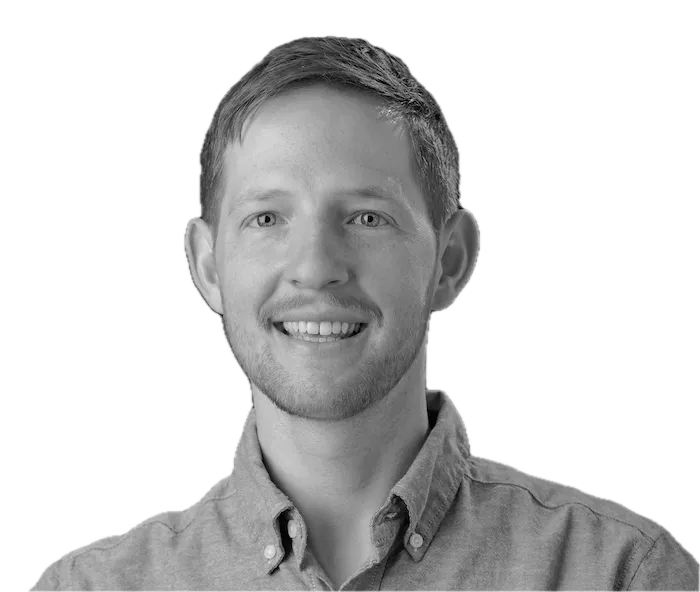
Matthew Olm
Matthew Olm is an Assistant Professor of Integrative Physiology at the University of Colorado Boulder, where he directs the Integrative Microbiome Research Laboratory. His research uses strain-resolved metagenomics and immunological tools to study how the infant gut microbiome assembles, how that process differs between industrialized and non-industrialized populations, and what it means for immune disease. He received his Ph.D. from UC Berkeley and trained at Stanford before joining CU Boulder.
Pull this thread
Many human gut microbes are inherited from person to person rather than picked up from the environment.
More in Research
More in Books
Know something the rest of us don't?
Most threads on Rorotoko begin with our invitation. Any thread can begin with a proposal: you write it with the same prompts every thread answers, and we review it.
Propose a thread →