
All the threads
Every work on Rorotoko since 2008, newest first.

Darren Hudson Hick
Books /
Darren Hudson Hick
Analog's inefficiency, bulk and fussiness are the source of its appeal, not its cost.
Why do inefficient, fragile, expensive things — vinyl, board games, used paperbacks — keep winning us back in an age of frictionless digital everything? A personal, argument-free investigation that trades abstract philosophy for a bottom-up hunt through one collector's own shelves, and lands on three values hiding inside the objects we choose to keep.
The Love of Analog: Meditations on Value
Read the thread →
In a nutshell
The Love of Analog: Meditations on Value
Why do inefficient, fragile, expensive things — vinyl, board games, used paperbacks — keep winning us back in an age of frictionless digital everything? A personal, argument-free investigation that trades abstract philosophy for a bottom-up hunt through one collector's own shelves, and lands on three values hiding inside the objects we choose to keep.
September 19, 2026
September 30, 2026
October 9, 2026
Philosophy & Ideas, Media & Pop Culture

Neil Van Leeuwen
Books /
Neil Van Leeuwen
Religious credence is a form of imagining, continuous with children's make-believe, and its imperviousness to evidence is the job.
A charismatic "prophet" speaks in tongues, overcome by the Holy Spirit—then opens his eyes to check his watch. That small gesture, drawn from an ethnography of Vineyard churches, opens a window onto how the mind runs two maps at once: one tracking the sacred, the other quietly keeping time.
Religion as Make-Believe: A Theory of Belief, Imagination, and Group Identity
Read the thread →
A close-up
Religion as Make-Believe: A Theory of Belief, Imagination, and Group Identity
A charismatic "prophet" speaks in tongues, overcome by the Holy Spirit—then opens his eyes to check his watch. That small gesture, drawn from an ethnography of Vineyard churches, opens a window onto how the mind runs two maps at once: one tracking the sacred, the other quietly keeping time.
August 26, 2026
September 6, 2026
September 18, 2026
Religion & Belief, Mind & Brain, Philosophy & Ideas

Renée M. Jones
Books /
Renée M. Jones
Forty years of deregulation, not excessive regulation, shrank the public markets and delayed IPOs.
The collapse of a $32 billion crypto empire in a matter of days exposed a company with no CFO, no reliable audits, and not a single investor on its board. This close-up shows how a "founder-friendly" financing model and super-voting shares let the people in charge escape accountability — and why the same governance failures keep recurring across today's most celebrated startups.
Untamed Unicorns
Read the thread →
A close-up
Untamed Unicorns
The collapse of a $32 billion crypto empire in a matter of days exposed a company with no CFO, no reliable audits, and not a single investor on its board. This close-up shows how a "founder-friendly" financing model and super-voting shares let the people in charge escape accountability — and why the same governance failures keep recurring across today's most celebrated startups.
August 8, 2026
August 29, 2026
September 17, 2026
Economics & Business, Law & Justice

James C. Nieh
Books /
James C. Nieh
Bee communication is as much about restraint as about recruitment.
Bees don't just tell one another where to go — they also signal where not to go, mark flowers with scent, and even eavesdrop on rivals. This is a tour of communication as evolution actually built it: waggle dances, stop signals, and warnings shaped by predators, competitors, and spies. An invitation to follow very small animals into a world dense with messages we usually miss.
The Language of Bees
Read the thread →
In a nutshell
The Language of Bees
Bees don't just tell one another where to go — they also signal where not to go, mark flowers with scent, and even eavesdrop on rivals. This is a tour of communication as evolution actually built it: waggle dances, stop signals, and warnings shaped by predators, competitors, and spies. An invitation to follow very small animals into a world dense with messages we usually miss.
September 16, 2026
September 24, 2026
October 1, 2026
Science & Nature, Language & Linguistics

Jobert E. Abueva
Books /
Jobert E. Abueva
New Year's resolutions fail because of sequence, since no goal holds without an honest accounting of the year behind you.
Opening The Janus Plan at random, Jobert E. Abueva would want a reader to land on Step One: Ponder the Past, and its disarming question—what did this year actually try to teach you? He shares the book's core passage on Janus's two doors, and the "Stitch Notes" and rituals that give a serious practice its lightness and play.
The Janus Plan: A No-Resolutions Path to Begin Your Year with Intention
Read the thread →
A close-up
The Janus Plan: A No-Resolutions Path to Begin Your Year with Intention
Opening The Janus Plan at random, Jobert E. Abueva would want a reader to land on Step One: Ponder the Past, and its disarming question—what did this year actually try to teach you? He shares the book's core passage on Janus's two doors, and the "Stitch Notes" and rituals that give a serious practice its lightness and play.
September 15, 2026
September 15, 2026
September 15, 2026
Mind & Brain, Everyday Life & Anthropology
Jobert E. Abueva
Books /
Jobert E. Abueva
New Year's resolutions fail because of sequence, since no goal holds without an honest accounting of the year behind you.
Jobert E. Abueva places The Janus Plan at the crossroads of behavior-change psychology, the world's threshold traditions (teshuvah, Japan's Oosoji, Ethiopia's Enkutatash), and his own burnout at the peak of a Fortune 500 career. His insight: burnout was a sequencing problem—charging forward year after year without ever honestly looking back.
The Janus Plan: A No-Resolutions Path to Begin Your Year with Intention
Read the thread →
The wide angle
The Janus Plan: A No-Resolutions Path to Begin Your Year with Intention
Jobert E. Abueva places The Janus Plan at the crossroads of behavior-change psychology, the world's threshold traditions (teshuvah, Japan's Oosoji, Ethiopia's Enkutatash), and his own burnout at the peak of a Fortune 500 career. His insight: burnout was a sequencing problem—charging forward year after year without ever honestly looking back.
September 15, 2026
September 15, 2026
September 15, 2026
Mind & Brain, Everyday Life & Anthropology
Jobert E. Abueva
Books /
Jobert E. Abueva
New Year's resolutions fail because of sequence, not content.
Most New Year's resolutions are gone by February—and Jobert E. Abueva argues the problem is the approach, not the goals. The Janus Plan, named for the two-faced Roman god of thresholds, insists you cannot design a meaningful future without first taking an honest look at your past. Built around a six-step framework and the metaphor of weaving, it is a book meant to be read slowly.
The Janus Plan: A No-Resolutions Path to Begin Your Year with Intention
Read the thread →
In a nutshell
The Janus Plan: A No-Resolutions Path to Begin Your Year with Intention
Most New Year's resolutions are gone by February—and Jobert E. Abueva argues the problem is the approach, not the goals. The Janus Plan, named for the two-faced Roman god of thresholds, insists you cannot design a meaningful future without first taking an honest look at your past. Built around a six-step framework and the metaphor of weaving, it is a book meant to be read slowly.
September 15, 2026
September 15, 2026
September 15, 2026
Mind & Brain, Everyday Life & Anthropology

David M. Henkin
Books /
David M. Henkin
Baseball has no inherent character and captures nothing essential about the United States.
Was the game really transformed overnight when the data nerds took over, and has money only recently corrupted a once-pristine sport? A closer look at two durable myths, and the long history of numbers, commerce, and complaint that shows how much of "what's ruining the game" has actually been there all along.
Out of the Ballpark: How to Think About Baseball
Read the thread →
A close-up
Out of the Ballpark: How to Think About Baseball
Was the game really transformed overnight when the data nerds took over, and has money only recently corrupted a once-pristine sport? A closer look at two durable myths, and the long history of numbers, commerce, and complaint that shows how much of "what's ruining the game" has actually been there all along.
August 18, 2026
September 2, 2026
September 14, 2026
Sports & Games

Aram Han Sifuentes
Arts /
Books /
Aram Han Sifuentes
Immigrant labor is visible everywhere, and what is invisible is the inequality.
Backstrap weaving is one of the earliest forms of weaving on earth, and its traditions — from Maya brocade to Korea's 1,500-year-old mosi cloth — are vanishing fast. After months of learning from the last practitioners, a new project links the two lineages and brings the technique to workshops in Chicago and Utah, because holding on to cultural heritage is activism too.
Action in Artwork
Read the thread →
A close-up
Action in Artwork
Backstrap weaving is one of the earliest forms of weaving on earth, and its traditions — from Maya brocade to Korea's 1,500-year-old mosi cloth — are vanishing fast. After months of learning from the last practitioners, a new project links the two lineages and brings the technique to workshops in Chicago and Utah, because holding on to cultural heritage is activism too.
August 15, 2026
August 27, 2026
September 13, 2026
Art & Design, Migration & Borders

Noah Tsika
Books /
Noah Tsika
Soleil Ô's complicated French origins do not disqualify it from African cinema.
A debut feature from 1970 that is a documentary, an essay film, a work of autofiction, live action and animation at once — African, French, both, neither. Out of circulation for decades, it left behind a literature that cannot agree on what year it was made or which country made it. Sorting the record out turns out to matter, because the complications are the point.
Soleil Ô
Read the thread →
In a nutshell
Soleil Ô
A debut feature from 1970 that is a documentary, an essay film, a work of autofiction, live action and animation at once — African, French, both, neither. Out of circulation for decades, it left behind a literature that cannot agree on what year it was made or which country made it. Sorting the record out turns out to matter, because the complications are the point.
September 12, 2026
October 18, 2026
October 18, 2026
Film & TV, Empire & Colonialism, Migration & Borders

Ryan T. Pozzi
Books /
Ryan T. Pozzi
Failure is not secretly good for us, and creative lives are made by continuation, not by talent destined to win.
What if the story of great art isn't lonely genius but stubborn, assisted, interrupted persistence? Drawing on his own burnout and return to writing, the author reads famous biographies against the grain—paying attention to the money, luck, help, and course-corrections that usually get tidied out of the myth.
The Mess That Made Them: How History's Greatest Artists Failed, Floundered, and Made Something Brilliant Anyway
Read the thread →
The wide angle
The Mess That Made Them: How History's Greatest Artists Failed, Floundered, and Made Something Brilliant Anyway
What if the story of great art isn't lonely genius but stubborn, assisted, interrupted persistence? Drawing on his own burnout and return to writing, the author reads famous biographies against the grain—paying attention to the money, luck, help, and course-corrections that usually get tidied out of the myth.
September 3, 2026
September 11, 2026
September 23, 2026
Art & Design, Literature & Writers

Michael Pollack
Books /
Michael Pollack
Making the abutting property owner responsible for the public sidewalk is the central error of American sidewalk law.
Whose neighborhoods get smooth, walkable pavement—and whose are left to crack and crumble? Drawing on interviews and street-level observation across four states, a look at how sidewalk quality tracks wealth and race, and why the people with the least access to cars and transit depend on it the most.
Sidewalk Nation: The Life and Law of America's Most Overlooked Resource
Read the thread →
A close-up
Sidewalk Nation: The Life and Law of America's Most Overlooked Resource
Whose neighborhoods get smooth, walkable pavement—and whose are left to crack and crumble? Drawing on interviews and street-level observation across four states, a look at how sidewalk quality tracks wealth and race, and why the people with the least access to cars and transit depend on it the most.
August 12, 2026
August 24, 2026
September 10, 2026
Cities & Urban Life, Law & Justice

Chirag Shah
Books /
Chirag Shah
The problem with AI agents is accountability, not capability.
The public argument about AI has been about what it says. Meanwhile a different class of system has been quietly acting — screening applications, pricing insurance, routing patrol cars, closing claims — at a speed no review process was built to match, and usually without the person affected knowing a decision occurred. The problem isn't capability; it's that when something goes wrong, responsibility scatters and everyone in the chain has a defensible answer except the person harmed.
Agent Nation: How Autonomous AI Is Rewriting the Rules of Society—and What We Can Do About It
Read the thread →
In a nutshell
Agent Nation: How Autonomous AI Is Rewriting the Rules of Society—and What We Can Do About It
The public argument about AI has been about what it says. Meanwhile a different class of system has been quietly acting — screening applications, pricing insurance, routing patrol cars, closing claims — at a speed no review process was built to match, and usually without the person affected knowing a decision occurred. The problem isn't capability; it's that when something goes wrong, responsibility scatters and everyone in the chain has a defensible answer except the person harmed.
September 9, 2026
October 17, 2026
October 17, 2026
Technology & AI, Politics & Democracy
Paul Moody
Books /
Paul Moody
The Stepford Wives was made by women who have been erased from its history.
A film about women being replaced turns out to have replaced a good many of them behind the camera too — an actress fired after sixty-five scenes were already shot, a costume designer, a casting director, a sound editor, an electronic music pioneer, all written out of the story since. Archival production records show how those swaps happened and who won the fights that caused them. The erasure rhymes uncomfortably with the film's own plot.
The Stepford Wives
Read the thread →
In a nutshell
The Stepford Wives
A film about women being replaced turns out to have replaced a good many of them behind the camera too — an actress fired after sixty-five scenes were already shot, a costume designer, a casting director, a sound editor, an electronic music pioneer, all written out of the story since. Archival production records show how those swaps happened and who won the fights that caused them. The erasure rhymes uncomfortably with the film's own plot.
September 8, 2026
September 27, 2026
October 6, 2026
Film & TV, Gender & Sexuality


Georgia Kotretsos
Arts /
Books /
Georgia Kotretsos
Ripeness has been detached from season and sold as permanent availability, and what resists it is the withheld.
One evening before dinner was served, I placed on each guest's setting a small carton of locally produced tomato paste, accompanied by a pair of scissors. I introduced the project – the notions on seasonality, coming of age, and, of course, tomatoes before we were served and invited everyone to cut a corner and squeeze the tomato paste onto their plates and table—drawing, and playing with their food.
THE AGE OF TOMATO
Read the thread →
A close-up
THE AGE OF TOMATO
One evening before dinner was served, I placed on each guest's setting a small carton of locally produced tomato paste, accompanied by a pair of scissors. I introduced the project – the notions on seasonality, coming of age, and, of course, tomatoes before we were served and invited everyone to cut a corner and squeeze the tomato paste onto their plates and table—drawing, and playing with their food.
July 16, 2026
August 1, 2026
September 7, 2026
Art & Design, Food & Drink
Neil Van Leeuwen
Books /
Neil Van Leeuwen
Religious credence is a form of imagining, continuous with children's make-believe, and its imperviousness to evidence is the job.
If belief isn't one thing but two, everything shifts. A look at why our matter-of-fact beliefs update instantly with evidence while our identity-defining ones resist it—and how that same dynamic drives not only religion but political polarization, because, as the argument goes, anything can be sacralized.
Religion as Make-Believe: A Theory of Belief, Imagination, and Group Identity
Read the thread →
The wide angle
Religion as Make-Believe: A Theory of Belief, Imagination, and Group Identity
If belief isn't one thing but two, everything shifts. A look at why our matter-of-fact beliefs update instantly with evidence while our identity-defining ones resist it—and how that same dynamic drives not only religion but political polarization, because, as the argument goes, anything can be sacralized.
August 26, 2026
September 6, 2026
September 18, 2026
Religion & Belief, Mind & Brain, Philosophy & Ideas

Susan E. Farrell
Books /
Susan E. Farrell
The Tralfamadorians entered Slaughterhouse-Five only in 1967, borrowed from the alien-abduction culture around Betty and Barney Hill.
First published in 1969, the novel spoke to a country reckoning with Vietnam—and it speaks just as sharply to 2026, an age of polarization, far-right resurgence, and wars that displace millions. Is a good war possible? Is a just one? A look at why this darkly funny anti-war book still offers a moral vision of kindness and decency amid absurdity.
Vonnegut's War: The Making of Slaughterhouse-Five
Read the thread →
The wide angle
Vonnegut's War: The Making of Slaughterhouse-Five
First published in 1969, the novel spoke to a country reckoning with Vietnam—and it speaks just as sharply to 2026, an age of polarization, far-right resurgence, and wars that displace millions. Is a good war possible? Is a just one? A look at why this darkly funny anti-war book still offers a moral vision of kindness and decency amid absurdity.
August 22, 2026
September 5, 2026
September 22, 2026
Literature & Writers, War & Conflict

Bradley Efron
Books /
Bradley Efron
In noisy fields like health and politics the truth hides under variability and is recoverable only by averaging.
Fifteen hundred stage 1 breast cancer patients, deemed at low risk according to MammaPrint but high risk according to clinical assessment, were divided into two groups: half of them had chemotherapy while the other half followed MammaPrint's advice and went without.
To Think Like a Statistician
Read the thread →
A close-up
To Think Like a Statistician
Fifteen hundred stage 1 breast cancer patients, deemed at low risk according to MammaPrint but high risk according to clinical assessment, were divided into two groups: half of them had chemotherapy while the other half followed MammaPrint's advice and went without.
August 4, 2026
August 20, 2026
September 4, 2026
Math & Statistics
Ryan T. Pozzi
Books /
Ryan T. Pozzi
Failure is not secretly good for us.
We meet great artists backward—through the masterpieces, with the ending already known—so their greatness starts to look inevitable. But nobody lived it that way. A book about the long, uncertain middle of creative lives, and a pointed skepticism toward the comforting idea that failure is secretly good for us.
The Mess That Made Them: How History's Greatest Artists Failed, Floundered, and Made Something Brilliant Anyway
Read the thread →
In a nutshell
The Mess That Made Them: How History's Greatest Artists Failed, Floundered, and Made Something Brilliant Anyway
We meet great artists backward—through the masterpieces, with the ending already known—so their greatness starts to look inevitable. But nobody lived it that way. A book about the long, uncertain middle of creative lives, and a pointed skepticism toward the comforting idea that failure is secretly good for us.
September 3, 2026
September 11, 2026
September 23, 2026
Art & Design, Literature & Writers
David M. Henkin
Books /
David M. Henkin
Baseball has no inherent character and captures nothing essential about the United States.
The specialized lingo makes the sport look like a closed world of arcane obsessives, but it's precisely its sheer visibility that makes it worth thinking about. A historian's account of how following and talking about a game becomes a way into understanding modern life—and why writing about it meant setting aside a lifelong fan's love.
Out of the Ballpark: How to Think About Baseball
Read the thread →
The wide angle
Out of the Ballpark: How to Think About Baseball
The specialized lingo makes the sport look like a closed world of arcane obsessives, but it's precisely its sheer visibility that makes it worth thinking about. A historian's account of how following and talking about a game becomes a way into understanding modern life—and why writing about it meant setting aside a lifelong fan's love.
August 18, 2026
September 2, 2026
September 14, 2026
Sports & Games

Bradford A. Bouley
Books /
Bradford A. Bouley
Seventeenth-century Rome had a deliberate papal meat program, Urban VIII driving consumption to a pound a day per person.
Four butchers executed in front of the Pantheon for turning their neighbors into sausage—a gruesome spectacle that opens onto something much larger. Behind it lies the route live animals took through a half-empty ancient city, and the ecological toll of wringing so much meat from the surrounding land.
The Barberini Butchers: Meat, Murder, and Warfare in Early Modern Italy
Read the thread →
A close-up
The Barberini Butchers: Meat, Murder, and Warfare in Early Modern Italy
Four butchers executed in front of the Pantheon for turning their neighbors into sausage—a gruesome spectacle that opens onto something much larger. Behind it lies the route live animals took through a half-empty ancient city, and the ecological toll of wringing so much meat from the surrounding land.
August 10, 2026
August 21, 2026
September 1, 2026
Food & Drink, Religion & Belief, War & Conflict

Jonathan Earle
Books /
Jonathan Earle
Lincoln's rise was contingent, and the sense of its inevitability is an artifact of how 1860 is taught.
A one-term congressman with a threadbare résumé walks into a convention hall built just for the occasion and walks out the nominee. Step inside the roaring room for the electric moment the tide turned, and the raucous, hoarse-throated celebration that spilled into the streets.
He Has the People: Abraham Lincoln and the Election of 1860
Read the thread →
A close-up
He Has the People: Abraham Lincoln and the Election of 1860
A one-term congressman with a threadbare résumé walks into a convention hall built just for the occasion and walks out the nominee. Step inside the roaring room for the electric moment the tide turned, and the raucous, hoarse-throated celebration that spilled into the streets.
August 11, 2026
August 19, 2026
August 31, 2026
Politics & Democracy

John E. McDonough
Books /
John E. McDonough
American health care's separate dysfunctions have one cause, the neoliberal capture of political economy after 1980.
In 1970 Milton Friedman told corporate executives their only duty was to shareholders—and set off a shift whose shockwaves still move through American medicine. From an Adam Smith epigraph to the Business Roundtable's flip-flops, a look at how "shareholder value" reshaped what a corporation owes anyone at all.
America's Wrong Turn: US Health Care in the Neoliberal Era
Read the thread →
A close-up
America's Wrong Turn: US Health Care in the Neoliberal Era
In 1970 Milton Friedman told corporate executives their only duty was to shareholders—and set off a shift whose shockwaves still move through American medicine. From an Adam Smith epigraph to the Business Roundtable's flip-flops, a look at how "shareholder value" reshaped what a corporation owes anyone at all.
August 30, 2026
August 30, 2026
August 30, 2026
Health & Medicine, Politics & Democracy
John E. McDonough
Books /
John E. McDonough
American health care's separate dysfunctions have one cause, the neoliberal capture of political economy after 1980.
A question students kept asking—"what happened to U.S. health spending in the early 1980s?"—became a five-and-a-half-year hunt for an answer. The trail runs through Reagan-era deregulation, a political scientist's model of American "regimes," and the realization that the mystery and the medicine both trace back to neoliberalism.
America's Wrong Turn: US Health Care in the Neoliberal Era
Read the thread →
The wide angle
America's Wrong Turn: US Health Care in the Neoliberal Era
A question students kept asking—"what happened to U.S. health spending in the early 1980s?"—became a five-and-a-half-year hunt for an answer. The trail runs through Reagan-era deregulation, a political scientist's model of American "regimes," and the realization that the mystery and the medicine both trace back to neoliberalism.
August 30, 2026
August 30, 2026
August 30, 2026
Health & Medicine, Politics & Democracy
John E. McDonough
Books /
John E. McDonough
American health care's many separate problems have one cause, the neoliberal turn after 1980.
Trust in American health care has collapsed—from 78% in 1975 to 28% today—and the usual suspects (premiums, medical debt, consolidation, private equity) are treated as separate problems. What if they are all symptoms of one thing: the neoliberal turn that remade the U.S. economy in the 1980s, and swept medicine up in its wake?
America's Wrong Turn: US Health Care in the Neoliberal Era
Read the thread →
In a nutshell
America's Wrong Turn: US Health Care in the Neoliberal Era
Trust in American health care has collapsed—from 78% in 1975 to 28% today—and the usual suspects (premiums, medical debt, consolidation, private equity) are treated as separate problems. What if they are all symptoms of one thing: the neoliberal turn that remade the U.S. economy in the 1980s, and swept medicine up in its wake?
August 30, 2026
August 30, 2026
August 30, 2026
Health & Medicine, Politics & Democracy
Renée M. Jones
Books /
Renée M. Jones
Forty years of deregulation, not excessive regulation, shrank the public markets and delayed IPOs.
Why do securities laws exist at all? The answer runs back to the 1929 crash and the New Deal conviction that sunlight is the best disinfectant. This piece follows how narrow, sensible exemptions to disclosure quietly expanded until secrecy became a matter of choice for some of the largest and most powerful companies in the economy.
Untamed Unicorns
Read the thread →
The wide angle
Untamed Unicorns
Why do securities laws exist at all? The answer runs back to the 1929 crash and the New Deal conviction that sunlight is the best disinfectant. This piece follows how narrow, sensible exemptions to disclosure quietly expanded until secrecy became a matter of choice for some of the largest and most powerful companies in the economy.
August 8, 2026
August 29, 2026
September 17, 2026
Economics & Business, Law & Justice

Lily Kelting
Books /
Lily Kelting
Heritage is a biased story about the past turned into a product, and the local is itself a global idea.
Every dish contains a whole world — a tangle of history, culture, and memory that only multiplies with each ingredient. From compiling an index of every food named to building a five-step "toolkit" for protecting culinary heritage from below, this is a reflection on writing about food as an act that shuttles constantly between the intimate and the immense. What can any of us actually do to re-value the traditions on our plates?
Against Heritage
Read the thread →
A close-up
Against Heritage
Every dish contains a whole world — a tangle of history, culture, and memory that only multiplies with each ingredient. From compiling an index of every food named to building a five-step "toolkit" for protecting culinary heritage from below, this is a reflection on writing about food as an act that shuttles constantly between the intimate and the immense. What can any of us actually do to re-value the traditions on our plates?
July 28, 2026
August 5, 2026
August 28, 2026
Food & Drink
Aram Han Sifuentes
Arts /
Books /
Aram Han Sifuentes
Immigrant labor is visible everywhere, and what is invisible is the inequality.
Nonggi are traditional Korean folk banners, made collectively around the harvest to motivate, bless, and speak to the gods — even to carry them. In multi-day workshops with an immigrant rights organization, community members paint, embroider, and photo-transfer their hopes onto eight-foot banners over sixteen slow hours, drawing out the stories that shorter projects never reach.
Action in Artwork
Read the thread →
The wide angle
Action in Artwork
Nonggi are traditional Korean folk banners, made collectively around the harvest to motivate, bless, and speak to the gods — even to carry them. In multi-day workshops with an immigrant rights organization, community members paint, embroider, and photo-transfer their hopes onto eight-foot banners over sixteen slow hours, drawing out the stories that shorter projects never reach.
August 15, 2026
August 27, 2026
September 13, 2026
Art & Design, Migration & Borders
Neil Van Leeuwen
Books /
Neil Van Leeuwen
Religious belief is a form of imagining, like children's make-believe.
What if religious belief is less like accepting a fact and more like a grand game of make-believe? Drawing an analogy from children who form groups around imaginary heroes, a philosopher argues that "religious credence" is a distinct mental attitude—chosen, bound up with sacred identity, and, unlike ordinary belief, largely immune to evidence.
Religion as Make-Believe: A Theory of Belief, Imagination, and Group Identity
Read the thread →
In a nutshell
Religion as Make-Believe: A Theory of Belief, Imagination, and Group Identity
What if religious belief is less like accepting a fact and more like a grand game of make-believe? Drawing an analogy from children who form groups around imaginary heroes, a philosopher argues that "religious credence" is a distinct mental attitude—chosen, bound up with sacred identity, and, unlike ordinary belief, largely immune to evidence.
August 26, 2026
September 6, 2026
September 18, 2026
Religion & Belief, Mind & Brain, Philosophy & Ideas

Benjamin Robert Siegel
Books /
Benjamin Robert Siegel
America's opioid crisis is the wreckage of a dismantled global system for stabilizing medical opium, not corporate greed.
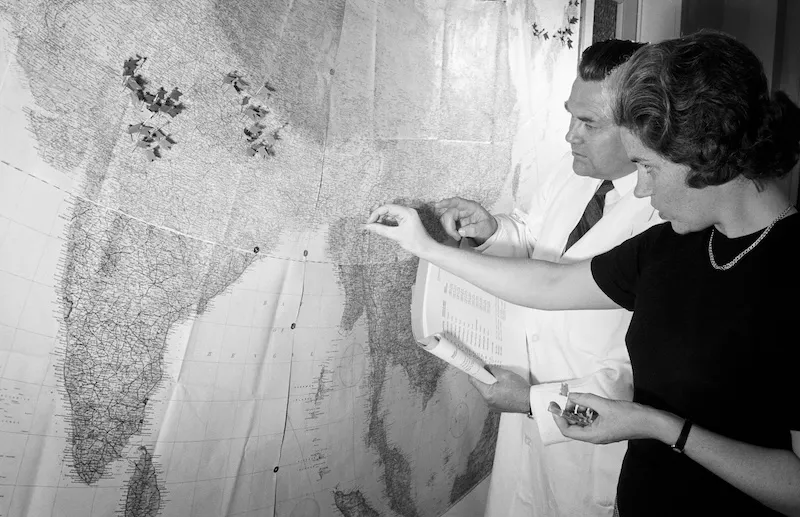
Ten thousand farmers gather to cheer a politician’s empty promises, scoring poppies by hand exactly as their great-grandparents did—only it is 1981, not the 1880s. A single rally opens onto a hidden world where peasant labor, state power, and global capital collide, and it suggests why “crisis” may be the wrong word for what came next.
Markets of Pain
Read the thread →
A close-up
Markets of Pain
Ten thousand farmers gather to cheer a politician’s empty promises, scoring poppies by hand exactly as their great-grandparents did—only it is 1981, not the 1880s. A single rally opens onto a hidden world where peasant labor, state power, and global capital collide, and it suggests why “crisis” may be the wrong word for what came next.
August 7, 2026
August 17, 2026
August 25, 2026
Health & Medicine, Economics & Business, Empire & Colonialism
Michael Pollack
Books /
Michael Pollack
Making the abutting property owner responsible for the public sidewalk is the central error of American sidewalk law.
A pandemic's worth of neighborhood walks turned into a question: why has the law almost everywhere made the property owner next door responsible for the public walkway out front? Where property law, local government, and the First and Fourth Amendments all meet the pavement, most of what happens turns out to be a policy choice we get to make.
Sidewalk Nation: The Life and Law of America's Most Overlooked Resource
Read the thread →
The wide angle
Sidewalk Nation: The Life and Law of America's Most Overlooked Resource
A pandemic's worth of neighborhood walks turned into a question: why has the law almost everywhere made the property owner next door responsible for the public walkway out front? Where property law, local government, and the First and Fourth Amendments all meet the pavement, most of what happens turns out to be a policy choice we get to make.
August 12, 2026
August 24, 2026
September 10, 2026
Cities & Urban Life, Law & Justice

Kiara Wyndham
Books /
Kiara Wyndham
A diverse community can still maintain white dominance.
One of the wealthiest and most racially diverse suburbs in the country tells itself three things: that it is harmonious, that it has no racial inequality, and that these facts make it superior to everywhere else. Two years and 150 interviews later, the harmony turns out to be real — and to rest on an unspoken bargain about which racial realities may be named out loud. Diversity, it turns out, is not the same thing as equity.
Diversityland: Hiding Racial Inequality in an American Suburb
Read the thread →
In a nutshell
Diversityland: Hiding Racial Inequality in an American Suburb
One of the wealthiest and most racially diverse suburbs in the country tells itself three things: that it is harmonious, that it has no racial inequality, and that these facts make it superior to everywhere else. Two years and 150 interviews later, the harmony turns out to be real — and to rest on an unspoken bargain about which racial realities may be named out loud. Diversity, it turns out, is not the same thing as equity.
August 23, 2026
October 16, 2026
October 27, 2026
Race & Inequality, Cities & Urban Life
Susan E. Farrell
Books /
Susan E. Farrell
Slaughterhouse-Five's aliens were borrowed from 1960s alien-abduction culture.
It changed how we write about war, got banned and burned, inspired rock bands, and put phrases into the language—yet the story behind the novel is as gripping as the book itself. A POW digging corpses from the ruins of firebombed Dresden, a discredited historian, and a strange leap into alien abduction: how a masterpiece took twenty-four years to find its shape.
Vonnegut's War: The Making of Slaughterhouse-Five
Read the thread →
In a nutshell
Vonnegut's War: The Making of Slaughterhouse-Five
It changed how we write about war, got banned and burned, inspired rock bands, and put phrases into the language—yet the story behind the novel is as gripping as the book itself. A POW digging corpses from the ruins of firebombed Dresden, a discredited historian, and a strange leap into alien abduction: how a masterpiece took twenty-four years to find its shape.
August 22, 2026
September 5, 2026
September 22, 2026
Literature & Writers, War & Conflict
Bradford A. Bouley
Books /
Bradford A. Bouley
Seventeenth-century Rome had a deliberate papal meat program, Urban VIII driving consumption to a pound a day per person.
It began with a lurid pamphlet about butchers who ground human flesh into sausage near the Pantheon. Chasing whether the tale was true led to a stranger truth: an unsustainable flood of meat into a single city, and the political collapse that came when the supply lines finally broke.
The Barberini Butchers: Meat, Murder, and Warfare in Early Modern Italy
Read the thread →
The wide angle
The Barberini Butchers: Meat, Murder, and Warfare in Early Modern Italy
It began with a lurid pamphlet about butchers who ground human flesh into sausage near the Pantheon. Chasing whether the tale was true led to a stranger truth: an unsustainable flood of meat into a single city, and the political collapse that came when the supply lines finally broke.
August 10, 2026
August 21, 2026
September 1, 2026
Food & Drink, Religion & Belief, War & Conflict
Bradley Efron
Books /
Bradley Efron
In noisy fields like health and politics the truth hides under variability and is recoverable only by averaging.
Sports, economics, politics, the stock markets, are all extremely noisy human activities that it pays to examine with a dose of statistical caution. Chapter 5 of my book offers a scorecard for reading the medical news. Should you believe that saunas cut the risk of strokes? That obesity is tied to liver cancer? That older fathers have sicker babies?
To Think Like a Statistician
Read the thread →
The wide angle
To Think Like a Statistician
Sports, economics, politics, the stock markets, are all extremely noisy human activities that it pays to examine with a dose of statistical caution. Chapter 5 of my book offers a scorecard for reading the medical news. Should you believe that saunas cut the risk of strokes? That obesity is tied to liver cancer? That older fathers have sicker babies?
August 4, 2026
August 20, 2026
September 4, 2026
Math & Statistics
Jonathan Earle
Books /
Jonathan Earle
Lincoln's rise was contingent, and the sense of its inevitability is an artifact of how 1860 is taught.
History doesn't repeat, but it rhymes. A long-ago election, held as the country tore itself apart over slavery, speaks uncomfortably to our own moment of fragile institutions and contested democracy—and to what it means when voters have to choose in the middle of a crisis.
He Has the People: Abraham Lincoln and the Election of 1860
Read the thread →
The wide angle
He Has the People: Abraham Lincoln and the Election of 1860
History doesn't repeat, but it rhymes. A long-ago election, held as the country tore itself apart over slavery, speaks uncomfortably to our own moment of fragile institutions and contested democracy—and to what it means when voters have to choose in the middle of a crisis.
August 11, 2026
August 19, 2026
August 31, 2026
Politics & Democracy
David M. Henkin
Books /
David M. Henkin
Baseball has no inherent character and captures nothing essential about America.
What does it actually mean to say baseball "means" something? A case for dropping the tired clichés about national character and instead treating the game as an object of inquiry—one whose meanings accumulated over time, across North America, East Asia, and the Caribbean, and alongside every other form of modern mass entertainment.
Out of the Ballpark: How to Think About Baseball
Read the thread →
In a nutshell
Out of the Ballpark: How to Think About Baseball
What does it actually mean to say baseball "means" something? A case for dropping the tired clichés about national character and instead treating the game as an object of inquiry—one whose meanings accumulated over time, across North America, East Asia, and the Caribbean, and alongside every other form of modern mass entertainment.
August 18, 2026
September 2, 2026
September 14, 2026
Sports & Games
Benjamin Robert Siegel
Books /
Benjamin Robert Siegel
America's opioid crisis is the wreckage of a dismantled global system for stabilizing medical opium, not corporate greed.
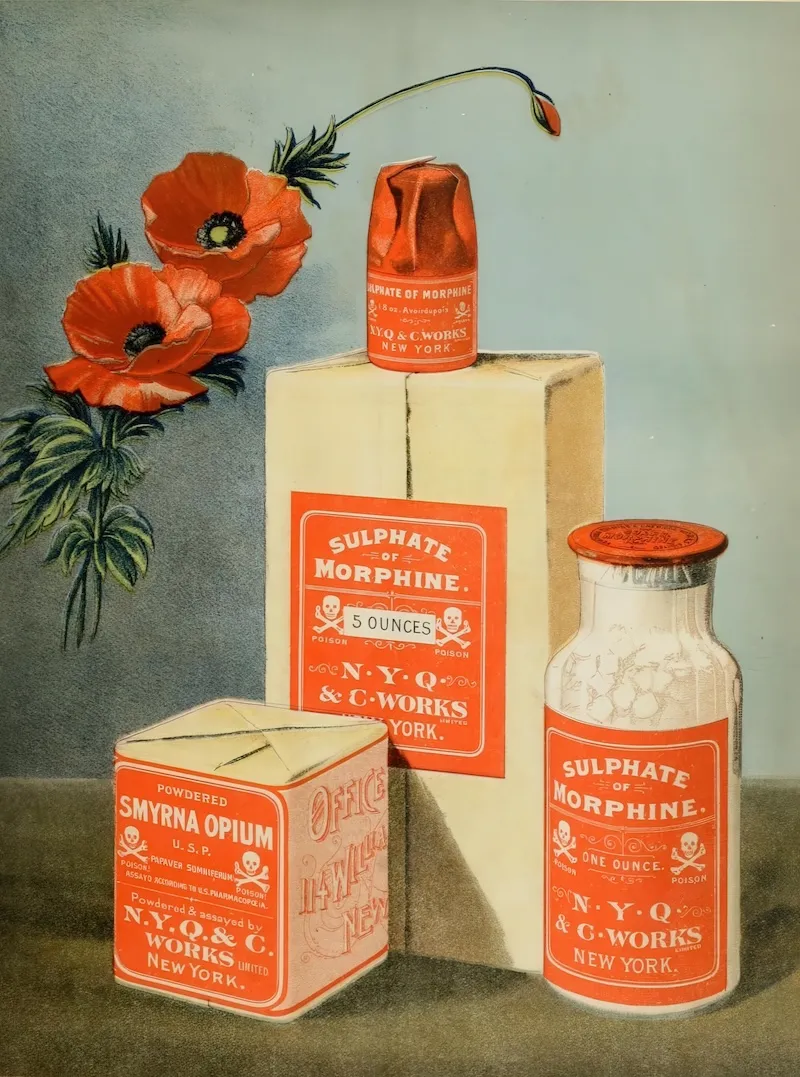
How does a humble crop, scraped by hand in the fields of central India, connect overdose deaths in America to the development dreams of newly independent states? Following the poppy across the century between empire and epidemic, a historian of agriculture uncovers the people and systems that quietly supplied the world’s pain relief—and the pride of families still producing a drug the world has almost stopped buying.
Markets of Pain
Read the thread →
The wide angle
Markets of Pain
How does a humble crop, scraped by hand in the fields of central India, connect overdose deaths in America to the development dreams of newly independent states? Following the poppy across the century between empire and epidemic, a historian of agriculture uncovers the people and systems that quietly supplied the world’s pain relief—and the pride of families still producing a drug the world has almost stopped buying.
August 7, 2026
August 17, 2026
August 25, 2026
Health & Medicine, Economics & Business, Empire & Colonialism

Paul Brummell
Books /
Paul Brummell
A statue's value is conferred by the people who interact with it, not by those who paid for it.
The lives of statues then can take unexpected twists. While some are ready to write the obituary of the public statue, the appearance in many places of new monuments to honour modern-day heroes, whether the leaders of independence struggles or top-flight football players, demonstrates that the genre continues to thrive.
Voices in Stone: The Lives of Public Statues
Read the thread →
A close-up
Voices in Stone: The Lives of Public Statues
The lives of statues then can take unexpected twists. While some are ready to write the obituary of the public statue, the appearance in many places of new monuments to honour modern-day heroes, whether the leaders of independence struggles or top-flight football players, demonstrates that the genre continues to thrive.
July 27, 2026
August 6, 2026
August 16, 2026
Art & Design, Politics & Democracy
Aram Han Sifuentes
Arts /
Books /
Aram Han Sifuentes
Immigrant labor is not invisible, but its inequality is.
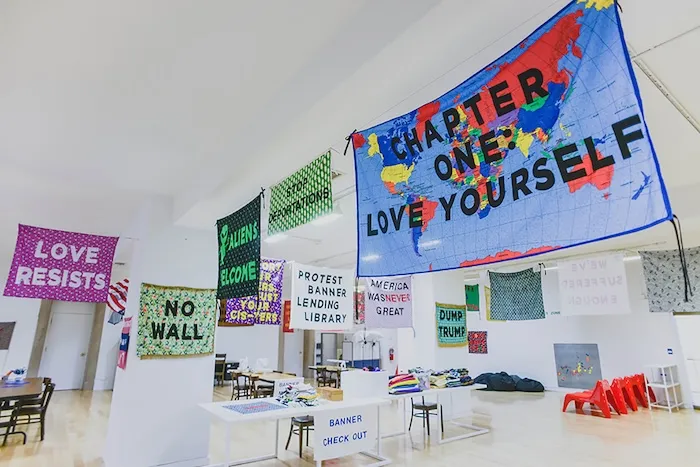
Textiles and immigrant justice grew up side by side — a seamstress mother in a dry cleaning store, a childhood in the Central Valley where the labor was visible and the inequality was not. When the two finally met, the result was a practice of communal making where impacted people are centered, stories surface over slow stitching, and the finished work goes on to march: over 4,000 protest banners, checked out like library books and carried into the streets.
Action in Artwork
Read the thread →
In a nutshell
Action in Artwork
Textiles and immigrant justice grew up side by side — a seamstress mother in a dry cleaning store, a childhood in the Central Valley where the labor was visible and the inequality was not. When the two finally met, the result was a practice of communal making where impacted people are centered, stories surface over slow stitching, and the finished work goes on to march: over 4,000 protest banners, checked out like library books and carried into the streets.
August 15, 2026
August 27, 2026
September 13, 2026
Art & Design, Migration & Borders

Max Dosser
Books /
Max Dosser
Nostalgia is itself a form of speculative fiction, and that is what links fandom to reactionary politics.
It's beyond the scope of any single book to provide a framework for preemptively stopping reactionary activity. But through analyzing the affective economies — the emotions circulating in these controversies — I demonstrate the various ways that looking to the interactions of fans of speculative fiction can enable us, be it scholars or the general public, to really understand these reactionary groups' formation, their communication, and their continuation.
Nostalgic Futures: The Reactionary Fantasies of Speculative Fiction Fandoms
Read the thread →
A close-up
Nostalgic Futures: The Reactionary Fantasies of Speculative Fiction Fandoms
It's beyond the scope of any single book to provide a framework for preemptively stopping reactionary activity. But through analyzing the affective economies — the emotions circulating in these controversies — I demonstrate the various ways that looking to the interactions of fans of speculative fiction can enable us, be it scholars or the general public, to really understand these reactionary groups' formation, their communication, and their continuation.
July 19, 2026
July 31, 2026
August 14, 2026
Media & Pop Culture, Literature & Writers

Amani C. Morrison
Books /
Amani C. Morrison
Chicago's kitchenette was a productive form that set the terms of national housing policy, not a symptom of shortage.
A celebrated civil-rights drama and the family that grew wealthy from the very apartments it depicts turn out to be tangled together in surprising ways. This close reading resists easy heroes and villains, showing how people working within unjust systems can fund real change while remaining caught in those systems' contradictions.
A Kitchenette to Fit Your Needs
Read the thread →
A close-up
A Kitchenette to Fit Your Needs
A celebrated civil-rights drama and the family that grew wealthy from the very apartments it depicts turn out to be tangled together in surprising ways. This close reading resists easy heroes and villains, showing how people working within unjust systems can fund real change while remaining caught in those systems' contradictions.
July 22, 2026
August 2, 2026
August 13, 2026
Race & Inequality, Cities & Urban Life, Architecture & Built Environment
Michael Pollack
Books /
Michael Pollack
Making property owners responsible for the sidewalk out front is the central error of American sidewalk law.
We walk over it every day without a second thought, yet this thin strip of public space is where fights over commerce, protest, policing, homelessness, free speech, and accessibility all collide. A case for treating an overlooked civic resource as the contested, high-stakes ground it actually is—and for rethinking who should be responsible for it.
Sidewalk Nation: The Life and Law of America's Most Overlooked Resource
Read the thread →
In a nutshell
Sidewalk Nation: The Life and Law of America's Most Overlooked Resource
We walk over it every day without a second thought, yet this thin strip of public space is where fights over commerce, protest, policing, homelessness, free speech, and accessibility all collide. A case for treating an overlooked civic resource as the contested, high-stakes ground it actually is—and for rethinking who should be responsible for it.
August 12, 2026
August 24, 2026
September 10, 2026
Cities & Urban Life, Law & Justice
Jonathan Earle
Books /
Jonathan Earle
Lincoln's rise was contingent, not fated.
We treat some outcomes as inevitable—of course the log-cabin boy became president at the nation's hour of crisis. But what if we took the sheer contingency of the past seriously? A case for narrative history that restores human agency, chance, and the sense that things could have gone very differently.
He Has the People: Abraham Lincoln and the Election of 1860
Read the thread →
In a nutshell
He Has the People: Abraham Lincoln and the Election of 1860
We treat some outcomes as inevitable—of course the log-cabin boy became president at the nation's hour of crisis. But what if we took the sheer contingency of the past seriously? A case for narrative history that restores human agency, chance, and the sense that things could have gone very differently.
August 11, 2026
August 19, 2026
August 31, 2026
Politics & Democracy
Bradford A. Bouley
Books /
Bradford A. Bouley
Seventeenth-century Rome's meat abundance was a deliberate papal program.
For a few decades in the seventeenth century, Rome was flooded with an astonishing amount of meat—at times a pound of it per person, per day. Why did feeding a city so much lamb and pork become a statement of religious and political power in the age of the Reformation? A story of faith, appetite, and the artisans who moved meat from pasture to table.
The Barberini Butchers: Meat, Murder, and Warfare in Early Modern Italy
Read the thread →
In a nutshell
The Barberini Butchers: Meat, Murder, and Warfare in Early Modern Italy
For a few decades in the seventeenth century, Rome was flooded with an astonishing amount of meat—at times a pound of it per person, per day. Why did feeding a city so much lamb and pork become a statement of religious and political power in the age of the Reformation? A story of faith, appetite, and the artisans who moved meat from pasture to table.
August 10, 2026
August 21, 2026
September 1, 2026
Food & Drink, Religion & Belief, War & Conflict

Fenwick McKelvey
Books /
Fenwick McKelvey
Computers transformed American politics through databases and direct mail, and the spectacular simulation ventures are the footnote.
What are the ways to produce new models and prototypes within the computational imaginary of politics? Mainstream games rarely reflect alternatives. As Jim Gasperini noted when making Hidden Agenda, discussed in the last chapter, "No matter how fantastic the fantasy, no matter how simulated the simulation, the outlines of our familiar reality will always be discernible underneath."
SimPolitics: America's Quest to Solve Politics with Computers
Read the thread →
A close-up
SimPolitics: America's Quest to Solve Politics with Computers
What are the ways to produce new models and prototypes within the computational imaginary of politics? Mainstream games rarely reflect alternatives. As Jim Gasperini noted when making Hidden Agenda, discussed in the last chapter, "No matter how fantastic the fantasy, no matter how simulated the simulation, the outlines of our familiar reality will always be discernible underneath."
July 26, 2026
August 3, 2026
August 9, 2026
Politics & Democracy, Technology & AI
Renée M. Jones
Books /
Renée M. Jones
Forty years of deregulation, not too much regulation, shrank the public stock markets.
America's biggest startups are raising trillions in private markets while sidestepping the disclosure rules that once protected investors and the public. This conversation traces how four decades of deregulation shrank the public markets, let companies stay private for decades, and handed founders nearly unchecked power. It asks what that shift means for ordinary people locked out of an insular, network-driven financing system.
Untamed Unicorns
Read the thread →
In a nutshell
Untamed Unicorns
America's biggest startups are raising trillions in private markets while sidestepping the disclosure rules that once protected investors and the public. This conversation traces how four decades of deregulation shrank the public markets, let companies stay private for decades, and handed founders nearly unchecked power. It asks what that shift means for ordinary people locked out of an insular, network-driven financing system.
August 8, 2026
August 29, 2026
September 17, 2026
Economics & Business, Law & Justice

Benjamin Robert Siegel
Books /
Benjamin Robert Siegel
The opioid crisis grew from the collapse of a global medical opium system, not corporate greed.
The opioid crisis is almost always told as a uniquely American tale of corporate greed. But what if it was really the wreckage of a global system, built over more than a century to supply the world with morphine, codeine, and pain pills? This is the hidden history of legal opium—the crop that moved from hand-scored poppy fields through treaties and monopolies into the medicine cabinets of the West.
Markets of Pain
Read the thread →
In a nutshell
Markets of Pain
The opioid crisis is almost always told as a uniquely American tale of corporate greed. But what if it was really the wreckage of a global system, built over more than a century to supply the world with morphine, codeine, and pain pills? This is the hidden history of legal opium—the crop that moved from hand-scored poppy fields through treaties and monopolies into the medicine cabinets of the West.
August 7, 2026
August 17, 2026
August 25, 2026
Health & Medicine, Economics & Business, Empire & Colonialism
Paul Brummell
Books /
Paul Brummell
A statue's value is conferred by the people who interact with it, not by those who paid for it.
Excepting the wondrous creations of the Greek god Hephaestus, and the statue of the murdered Commendatore in Mozart's opera Don Giovanni, statues are themselves passive and emotionless participants in their biographies. The lives of statues are really the lives of the humans who interact with them. The book tells their stories.
Voices in Stone: The Lives of Public Statues
Read the thread →
The wide angle
Voices in Stone: The Lives of Public Statues
Excepting the wondrous creations of the Greek god Hephaestus, and the statue of the murdered Commendatore in Mozart's opera Don Giovanni, statues are themselves passive and emotionless participants in their biographies. The lives of statues are really the lives of the humans who interact with them. The book tells their stories.
July 27, 2026
August 6, 2026
August 16, 2026
Art & Design, Politics & Democracy
Lily Kelting
Books /
Lily Kelting
Heritage is a biased story about the past turned into a product, and the local is itself a global idea.
Why compare fine dining across three continents? Because zooming out reveals that no celebrated chef is truly exceptional — each one recycles the same nostalgic dreams of primitiveness and wildness that writers have leaned on for centuries. Seen from this vantage, even "the local" turns out to be a thoroughly global idea, and the plate becomes a way to think through the entangled political, ecological, and cultural crises of the Anthropocene.
Against Heritage
Read the thread →
The wide angle
Against Heritage
Why compare fine dining across three continents? Because zooming out reveals that no celebrated chef is truly exceptional — each one recycles the same nostalgic dreams of primitiveness and wildness that writers have leaned on for centuries. Seen from this vantage, even "the local" turns out to be a thoroughly global idea, and the plate becomes a way to think through the entangled political, ecological, and cultural crises of the Anthropocene.
July 28, 2026
August 5, 2026
August 28, 2026
Food & Drink
Bradley Efron
Books /
Bradley Efron
In noisy fields like health and politics, truth hides under variability and only averaging recovers it.
Is it a good idea to think like a statistician? A confident Yes here, admittedly by someone who earns his living doing so. We live in a random universe, where truth most often lies hidden beneath a fog of noise. Statistics is the science of peering through the fog and learning from experience, especially experience that arrives in sometimes contradictory pieces: Did the COVID vaccines save or cost lives? Is sugar good or bad for you?
To Think Like a Statistician
Read the thread →
In a nutshell
To Think Like a Statistician
Is it a good idea to think like a statistician? A confident Yes here, admittedly by someone who earns his living doing so. We live in a random universe, where truth most often lies hidden beneath a fog of noise. Statistics is the science of peering through the fog and learning from experience, especially experience that arrives in sometimes contradictory pieces: Did the COVID vaccines save or cost lives? Is sugar good or bad for you?
August 4, 2026
August 20, 2026
September 4, 2026
Math & Statistics
Fenwick McKelvey
Books /
Fenwick McKelvey
Computers transformed American politics through databases and direct mail, and the spectacular simulation ventures are the footnote.
What I hope people take away is both a skepticism that computers can fix politics, and better demands for claims that it will. Especially in the next election cycle, how can we assess accurately the hype. My book helps readers distinguish between what's new and what's just someone who knows the rules of the game, trying to oversell the new tool or piece of software.
SimPolitics: America's Quest to Solve Politics with Computers
Read the thread →
The wide angle
SimPolitics: America's Quest to Solve Politics with Computers
What I hope people take away is both a skepticism that computers can fix politics, and better demands for claims that it will. Especially in the next election cycle, how can we assess accurately the hype. My book helps readers distinguish between what's new and what's just someone who knows the rules of the game, trying to oversell the new tool or piece of software.
July 26, 2026
August 3, 2026
August 9, 2026
Politics & Democracy, Technology & AI
Amani C. Morrison
Books /
Amani C. Morrison
Chicago's kitchenette was a productive form that set the terms of national housing policy, not a symptom of shortage.
What starts as a literary curiosity turns into an archival scavenger hunt across sociology, public-housing records, and — improbably — a health-sciences library. This is the story of chasing a nearly invisible housing form through the archive, and of what history's cycles of segregation, migration, and neglect can teach us about the housing pressures of our own moment.
A Kitchenette to Fit Your Needs
Read the thread →
The wide angle
A Kitchenette to Fit Your Needs
What starts as a literary curiosity turns into an archival scavenger hunt across sociology, public-housing records, and — improbably — a health-sciences library. This is the story of chasing a nearly invisible housing form through the archive, and of what history's cycles of segregation, migration, and neglect can teach us about the housing pressures of our own moment.
July 22, 2026
August 2, 2026
August 13, 2026
Race & Inequality, Cities & Urban Life, Architecture & Built Environment

Georgia Kotretsos
Arts /
Books /
Georgia Kotretsos
Ripeness has been detached from season and sold as permanent availability, and what resists it is the withheld.
Nineteenth-century theatre thus operated as a densely social and often unruly space, where attention was dispersed and porous. Contemporary "social theatre" extends this condition into a more open and continuous field of exchange, where gestures of approval and disapproval circulate instantaneously. This raises questions of temporality and agency: what is seasonal—the act, the incident, or its reception?
THE AGE OF TOMATO
Read the thread →
The wide angle
THE AGE OF TOMATO
Nineteenth-century theatre thus operated as a densely social and often unruly space, where attention was dispersed and porous. Contemporary "social theatre" extends this condition into a more open and continuous field of exchange, where gestures of approval and disapproval circulate instantaneously. This raises questions of temporality and agency: what is seasonal—the act, the incident, or its reception?
July 16, 2026
August 1, 2026
September 7, 2026
Art & Design, Food & Drink
Max Dosser
Books /
Max Dosser
Nostalgia is itself a form of speculative fiction, and that is what links fandom to reactionary politics.
One of the best authors to do this kind of storytelling is Ted Chiang, who writes short stories where there's this technology, this novum, this thing dropped into the world. The story isn't really about that — it's about people interacting with it. He'll present people who are very positive about it and people who are very negative. So they're really these sociological takes on how the world is different because of this technology.
Nostalgic Futures: The Reactionary Fantasies of Speculative Fiction Fandoms
Read the thread →
The wide angle
Nostalgic Futures: The Reactionary Fantasies of Speculative Fiction Fandoms
One of the best authors to do this kind of storytelling is Ted Chiang, who writes short stories where there's this technology, this novum, this thing dropped into the world. The story isn't really about that — it's about people interacting with it. He'll present people who are very positive about it and people who are very negative. So they're really these sociological takes on how the world is different because of this technology.
July 19, 2026
July 31, 2026
August 14, 2026
Media & Pop Culture, Literature & Writers
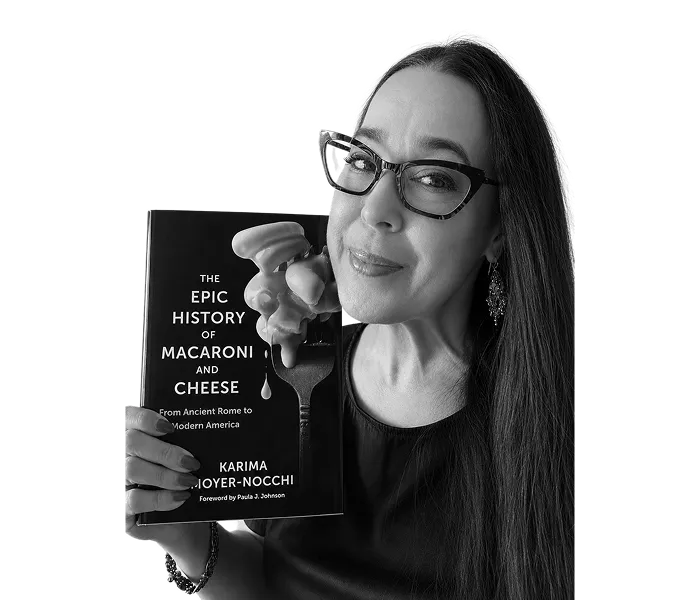
Karima Moyer-Nocchi
Books /
Karima Moyer-Nocchi
Macaroni and cheese endures because it keeps finding new cultural work, not because it tastes good.
Told in eight scenes, this close-up follows macaroni and cheese from Juliette Corson's 1877 fifteen-cent dinners for the poor through the anti-Italian cholera panic of the 1880s and the tariff fights of the 1890s. The resolution is pure irony: Americans planted durum wheat at home and, by World War I, were exporting it back to the very countries whose "imported" macaroni still filled their shelves.
The Epic History of Macaroni and Cheese: From Ancient Rome to Modern America
Read the thread →
A close-up
The Epic History of Macaroni and Cheese: From Ancient Rome to Modern America
Told in eight scenes, this close-up follows macaroni and cheese from Juliette Corson's 1877 fifteen-cent dinners for the poor through the anti-Italian cholera panic of the 1880s and the tariff fights of the 1890s. The resolution is pure irony: Americans planted durum wheat at home and, by World War I, were exporting it back to the very countries whose "imported" macaroni still filled their shelves.
July 14, 2026
July 21, 2026
July 30, 2026
Food & Drink

Gabriele Neri
Books /
Gabriele Neri
The cartoon is a form of architectural criticism, and often a more effective one than the essay.
That small, brilliant joke encapsulates an entire debate that had been raging for years about the "readability" of modern architecture, about the relationship between museums and artworks, and between museums and the city itself. Dunn distilled all of it into a single drawing and a single line.
Alan Dunn: The Cartoonist as Architectural Critic
Read the thread →
A close-up
Alan Dunn: The Cartoonist as Architectural Critic
That small, brilliant joke encapsulates an entire debate that had been raging for years about the "readability" of modern architecture, about the relationship between museums and artworks, and between museums and the city itself. Dunn distilled all of it into a single drawing and a single line.
June 8, 2026
July 10, 2026
July 29, 2026
Art & Design, Architecture & Built Environment, Media & Pop Culture
Lily Kelting
Books /
Lily Kelting
Heritage is not history but a biased story about the past turned into a product.
Culinary "heritage" isn't really the past — it's a product, something bought, sold, and traded on in the present. Comparing food revivals from the American South to the New Nordic kitchens of Noma to the traditional ingredients of India, this is a polemical argument that our nostalgia for old foods is bound up with regressive politics and a looming ecological reckoning. What if the truest way to honor the past is to go back more honestly?
Against Heritage
Read the thread →
In a nutshell
Against Heritage
Culinary "heritage" isn't really the past — it's a product, something bought, sold, and traded on in the present. Comparing food revivals from the American South to the New Nordic kitchens of Noma to the traditional ingredients of India, this is a polemical argument that our nostalgia for old foods is bound up with regressive politics and a looming ecological reckoning. What if the truest way to honor the past is to go back more honestly?
July 28, 2026
August 5, 2026
August 28, 2026
Food & Drink
Paul Brummell
Books /
Paul Brummell
A statue's value comes from the people who interact with it, not those who paid for it.
The genesis of Voices in Stone lay in the realisation that this debate on the destruction of monuments is an unsatisfactory starting point to understand them. It recalls G. K. Chesterton's caution that before deciding to remove a fence, it would be well to ensure that you understand why it was put up in the first place.
Voices in Stone: The Lives of Public Statues
Read the thread →
In a nutshell
Voices in Stone: The Lives of Public Statues
The genesis of Voices in Stone lay in the realisation that this debate on the destruction of monuments is an unsatisfactory starting point to understand them. It recalls G. K. Chesterton's caution that before deciding to remove a fence, it would be well to ensure that you understand why it was put up in the first place.
July 27, 2026
August 6, 2026
August 16, 2026
Art & Design, Politics & Democracy
Fenwick McKelvey
Books /
Fenwick McKelvey
Computers changed American politics through databases and direct mail, not grand simulations.
Every election night, the experts ask the same question: what will the voters do? Listen to the grammar. Millions of people, treated as a system you can predict, model, run. Politics was supposed to be the one thing we insisted stayed irreducibly human. Somewhere it quietly became a computation.
SimPolitics: America's Quest to Solve Politics with Computers
Read the thread →
In a nutshell
SimPolitics: America's Quest to Solve Politics with Computers
Every election night, the experts ask the same question: what will the voters do? Listen to the grammar. Millions of people, treated as a system you can predict, model, run. Politics was supposed to be the one thing we insisted stayed irreducibly human. Somewhere it quietly became a computation.
July 26, 2026
August 3, 2026
August 9, 2026
Politics & Democracy, Technology & AI
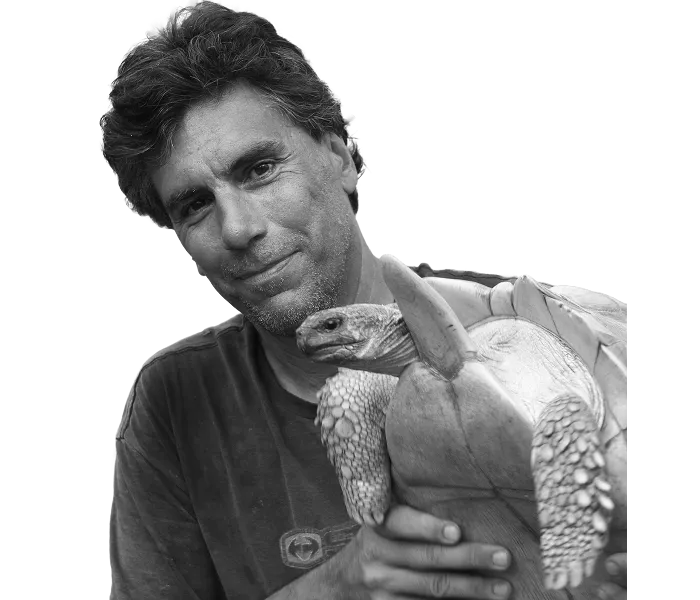
Craig Stanford
Books /
Craig Stanford
Turtles are as endangered as primates, and their apparent invulnerability is exactly what makes them easy to take.
A turtle pulled into its shell looks invulnerable — a jewel box that nothing can touch. Craig Stanford explains why that impression is an illusion: the same animals are flattened by cars and mailed to China in unmarked boxes. From arrow-poison frogs in Colombia to Komodo dragons in Indonesia, his close-up is a meditation on how easily something ancient and well-armored can vanish.
Cold-Blooded Murder
Read the thread →
A close-up
Cold-Blooded Murder
A turtle pulled into its shell looks invulnerable — a jewel box that nothing can touch. Craig Stanford explains why that impression is an illusion: the same animals are flattened by cars and mailed to China in unmarked boxes. From arrow-poison frogs in Colombia to Komodo dragons in Indonesia, his close-up is a meditation on how easily something ancient and well-armored can vanish.
June 12, 2026
July 25, 2026
July 25, 2026
Science & Nature, Environment & Climate
Craig Stanford
Books /
Craig Stanford
Turtles are as endangered as primates, and their apparent invulnerability is exactly what makes them easy to take.
He wrote me this lovely letter, an actual letter, answering all my questions, and I'm sure he got many letters from kids. I wrote him back, and we had this correspondence that went on for a couple of years. Eventually he would write the answers in the margins of my letters
Cold-Blooded Murder
Read the thread →
The wide angle
Cold-Blooded Murder
He wrote me this lovely letter, an actual letter, answering all my questions, and I'm sure he got many letters from kids. I wrote him back, and we had this correspondence that went on for a couple of years. Eventually he would write the answers in the margins of my letters
June 12, 2026
July 25, 2026
July 25, 2026
Science & Nature, Environment & Climate

David R. Samson
Books /
David R. Samson
Humans sleep less than any other primate, and that is an adaptation produced by sociality, not a deficit.
You have to have a big brain for sleep to really matter. Circadian rhythms, though — the first eukaryotes and prokaryotic life on the planet — had to time their behaviors adaptively. So the framing of the book is: why do we do what we do? Why do we experience the kinds of symptoms we do in the modern world? And the answer is a 1.5-billion-year-old answer. It goes back to the first life on this planet
The Sleepless Ape: The Story of Sleep in Human Evolution
Read the thread →
A close-up
The Sleepless Ape: The Story of Sleep in Human Evolution
You have to have a big brain for sleep to really matter. Circadian rhythms, though — the first eukaryotes and prokaryotic life on the planet — had to time their behaviors adaptively. So the framing of the book is: why do we do what we do? Why do we experience the kinds of symptoms we do in the modern world? And the answer is a 1.5-billion-year-old answer. It goes back to the first life on this planet
June 22, 2026
July 7, 2026
July 24, 2026
Science & Nature, Mind & Brain

Daisuke Miyao
Books /
Daisuke Miyao
Cinema's ethical value lies in indeterminacy, and Ozu's direct-address shots stage an encounter that refuses judgment.
From a historical and transnational viewpoint, Ozu's ambiguous and mysterious camera movements allow us multi-directional reading, which I think is an example of the ethics of indeterminacy. By way of discussing Ozu films, I want to foster readers' historical awareness and political consciousness.
Ozu and the Ethics of Indeterminacy
Read the thread →
A close-up
Ozu and the Ethics of Indeterminacy
From a historical and transnational viewpoint, Ozu's ambiguous and mysterious camera movements allow us multi-directional reading, which I think is an example of the ethics of indeterminacy. By way of discussing Ozu films, I want to foster readers' historical awareness and political consciousness.
July 23, 2026
July 23, 2026
July 23, 2026
Film & TV
Daisuke Miyao
Books /
Daisuke Miyao
Cinema's ethical value lies in indeterminacy, and Ozu's direct-address shots stage an encounter that refuses judgment.
However, I have been hesitant to write a book on a single director because, when I think of the historiography of Japanese cinema studies, it has been heavily inclined to the study of authorship. Besides, there are already many wonderful books on Ozu. Donald Richie. David Bordwell. Shigehiko Hasumi, to name a few. Why should I add another book to the packed bookshelf?
Ozu and the Ethics of Indeterminacy
Read the thread →
The wide angle
Ozu and the Ethics of Indeterminacy
However, I have been hesitant to write a book on a single director because, when I think of the historiography of Japanese cinema studies, it has been heavily inclined to the study of authorship. Besides, there are already many wonderful books on Ozu. Donald Richie. David Bordwell. Shigehiko Hasumi, to name a few. Why should I add another book to the packed bookshelf?
July 23, 2026
July 23, 2026
July 23, 2026
Film & TV
Daisuke Miyao
Books /
Daisuke Miyao
Ozu's films draw their ethical force from refusing to settle on one viewpoint.
As a film studies scholar, I believe cinema has an ethical purpose for the world. I began seriously thinking about the relationship between myself as a film viewer and the reality of the world for the first time when I co-translated Kiju Yoshida's Ozu's Anti-Cinema, one of the foundational works of Ozu studies in Japan, into English in 2003.
Ozu and the Ethics of Indeterminacy
Read the thread →
In a nutshell
Ozu and the Ethics of Indeterminacy
As a film studies scholar, I believe cinema has an ethical purpose for the world. I began seriously thinking about the relationship between myself as a film viewer and the reality of the world for the first time when I co-translated Kiju Yoshida's Ozu's Anti-Cinema, one of the foundational works of Ozu studies in Japan, into English in 2003.
July 23, 2026
July 23, 2026
July 23, 2026
Film & TV
Amani C. Morrison
Books /
Amani C. Morrison
Chicago's kitchenette was not just a symptom of housing shortage but shaped national housing policy.
How did a single, cramped style of apartment come to reshape an entire city's identity? This conversation traces how mid-century Chicago's subdivided "kitchenette" apartments moved from real estate boards and housing policy into fiction, drama, and the daily lives of Black families arriving during the Great Migration. It's a story about how a building type became a way of understanding a city — and the people priced into its smallest rooms.
A Kitchenette to Fit Your Needs
Read the thread →
In a nutshell
A Kitchenette to Fit Your Needs
How did a single, cramped style of apartment come to reshape an entire city's identity? This conversation traces how mid-century Chicago's subdivided "kitchenette" apartments moved from real estate boards and housing policy into fiction, drama, and the daily lives of Black families arriving during the Great Migration. It's a story about how a building type became a way of understanding a city — and the people priced into its smallest rooms.
July 22, 2026
August 2, 2026
August 13, 2026
Race & Inequality, Cities & Urban Life, Architecture & Built Environment
Karima Moyer-Nocchi
Books /
Karima Moyer-Nocchi
Macaroni and cheese endures because it keeps finding new cultural work, not because it tastes good.
The hard problem of food history is telling a true story without flattening it into gastromythology. Following macaroni and cheese from Cato's Rome through medieval mobility, English Macaroni Fashion, and the Jefferson–Hemings myth, she uses Restorative History to recover the African American women written out of the dish's American story—right up to the yellow box of Kraft Dinner.
The Epic History of Macaroni and Cheese: From Ancient Rome to Modern America
Read the thread →
The wide angle
The Epic History of Macaroni and Cheese: From Ancient Rome to Modern America
The hard problem of food history is telling a true story without flattening it into gastromythology. Following macaroni and cheese from Cato's Rome through medieval mobility, English Macaroni Fashion, and the Jefferson–Hemings myth, she uses Restorative History to recover the African American women written out of the dish's American story—right up to the yellow box of Kraft Dinner.
July 14, 2026
July 21, 2026
July 30, 2026
Food & Drink

Meredith F. Small
Books /
Meredith F. Small
Nothing counts as human thought unless it is universal, and a science that never leaves the West cannot show that.
I do indeed talk to everyone—the barista, the salesclerk, the Uber driver (I once almost missed a meeting because the Uber driver, who was from Morocco, and I were having an in-depth chat about Moroccan sheep, and he had photographs to show me). I am drawn to what other people think and do.
How We Think
Read the thread →
A close-up
How We Think
I do indeed talk to everyone—the barista, the salesclerk, the Uber driver (I once almost missed a meeting because the Uber driver, who was from Morocco, and I were having an in-depth chat about Moroccan sheep, and he had photographs to show me). I am drawn to what other people think and do.
June 17, 2026
July 1, 2026
July 20, 2026
Mind & Brain, Everyday Life & Anthropology
Max Dosser
Books /
Max Dosser
Nostalgia is itself a form of speculative fiction, imagining a past that never was.
What I'm looking at is less what the media itself is saying and more how people get attached to it — how they begin to police it and say, this is the way it has to be. When The Lord of the Rings: The Rings of Power comes out, and there are Black elves and Black dwarfs, and people throw a fit — well, why do you care? What is it about your vision of this imagined world that has you so opposed to the presence of diversity?
Nostalgic Futures: The Reactionary Fantasies of Speculative Fiction Fandoms
Read the thread →
In a nutshell
Nostalgic Futures: The Reactionary Fantasies of Speculative Fiction Fandoms
What I'm looking at is less what the media itself is saying and more how people get attached to it — how they begin to police it and say, this is the way it has to be. When The Lord of the Rings: The Rings of Power comes out, and there are Black elves and Black dwarfs, and people throw a fit — well, why do you care? What is it about your vision of this imagined world that has you so opposed to the presence of diversity?
July 19, 2026
July 31, 2026
August 14, 2026
Media & Pop Culture, Literature & Writers

Nicolas Pethes
Books /
Nicolas Pethes
Performer and audience really communicate, expectation running both ways, and the fans, not the artist, own the songs.
I try to make scenes and experiences like these accessible to readers, even though it's difficult to fully capture the joy and intensity they create in words. But I think it is important because it gives us a chance to challenge the sociological idea that the interaction between artists and fans is merely "parasocial." There are simply too many examples showing that these relationships are experienced as meaningful and real.
Springsteen Fandom: A Lifetime Conversation
Read the thread →
A close-up
Springsteen Fandom: A Lifetime Conversation
I try to make scenes and experiences like these accessible to readers, even though it's difficult to fully capture the joy and intensity they create in words. But I think it is important because it gives us a chance to challenge the sociological idea that the interaction between artists and fans is merely "parasocial." There are simply too many examples showing that these relationships are experienced as meaningful and real.
June 28, 2026
July 11, 2026
July 18, 2026
Music & Performance, Media & Pop Culture

Jonathan Weber
Books /
Jonathan Weber
The commercial internet was made in the city of San Francisco, not in Silicon Valley, and the reason is cultural.
In terms of the smaller stories, I'm a little biased because some of them are my story. The chapter three about The Industry Standard — how good is that? I don't know, but I think it's pretty good. So I would say The Industry Standard story is one of my favorites. Another one I would point to is the story of the Google buses.
City on the Edge: Technology, Politics, and the Fight for the Soul of San Francisco
Read the thread →
A close-up
City on the Edge: Technology, Politics, and the Fight for the Soul of San Francisco
In terms of the smaller stories, I'm a little biased because some of them are my story. The chapter three about The Industry Standard — how good is that? I don't know, but I think it's pretty good. So I would say The Industry Standard story is one of my favorites. Another one I would point to is the story of the Google buses.
June 20, 2026
July 9, 2026
July 17, 2026
Cities & Urban Life, Technology & AI
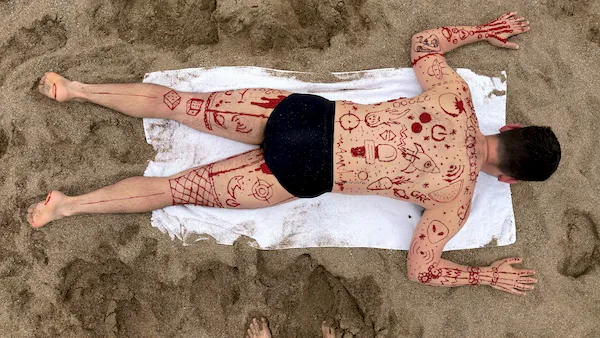
Georgia Kotretsos
Arts /
Books /
Georgia Kotretsos
Ripeness has been detached from season and sold as permanent availability.
What resists this condition is the private, the silent, the unknown, the unread, the unseen, the unspoken, the untouched, the unsmelled, the unheard—those dimensions that require time to be expressed. All life, in its material and immaterial form, demands duration that is stretched, slow, and unedited.
THE AGE OF TOMATO
Read the thread →
In a nutshell
THE AGE OF TOMATO
What resists this condition is the private, the silent, the unknown, the unread, the unseen, the unspoken, the untouched, the unsmelled, the unheard—those dimensions that require time to be expressed. All life, in its material and immaterial form, demands duration that is stretched, slow, and unedited.
July 16, 2026
August 1, 2026
September 7, 2026
Art & Design, Food & Drink

Yosef Grodzinsky
Books /
Yosef Grodzinsky
The neurological record arbitrates the LLM-versus-linguistics fight, and it supports a modular brain with partly innate language.
The computer metaphor permeates our lives for good reasons, but we need to be mindful of how we harness it to enhance our thoughts, and beware of hurdles and pitfalls along the path. This is what I've been trying to do, and I truly hope that the specifics of my view would be apparent to each and every reader.
How Deeply Human Is Language?
Read the thread →
A close-up
How Deeply Human Is Language?
The computer metaphor permeates our lives for good reasons, but we need to be mindful of how we harness it to enhance our thoughts, and beware of hurdles and pitfalls along the path. This is what I've been trying to do, and I truly hope that the specifics of my view would be apparent to each and every reader.
June 25, 2026
July 5, 2026
July 15, 2026
Language & Linguistics, Mind & Brain, Technology & AI
Karima Moyer-Nocchi
Books /
Karima Moyer-Nocchi
A dish endures not because it tastes good but because it keeps doing new cultural work.
Tasty is not enough to become an icon. Plenty of delicious things vanish. The ones that endure survive because they do cultural work — signaling refinement to one era, feeding families cheaply in the next, and quietly becoming "comfort" in a third. The staying power was never in the flavor.
The Epic History of Macaroni and Cheese: From Ancient Rome to Modern America
Read the thread →
In a nutshell
The Epic History of Macaroni and Cheese: From Ancient Rome to Modern America
Tasty is not enough to become an icon. Plenty of delicious things vanish. The ones that endure survive because they do cultural work — signaling refinement to one era, feeding families cheaply in the next, and quietly becoming "comfort" in a third. The staying power was never in the flavor.
July 14, 2026
July 21, 2026
July 30, 2026
Food & Drink
Daisuke Miyao
Books /
Daisuke Miyao
Melville's samurai is an invention, with an epigraph that exists in no Bushido and no Hagakure.
Equity, diversity, and inclusion should be the top priority in society. There is no doubt about that. They are a basic human right. However, are we sometimes becoming too defensive to avoid being offensive? Is it becoming difficult to critique others' thoughts? I think there is a clear difference between critiquing and criticizing.
Le Samouraï
Read the thread →
A close-up
Le Samouraï
Equity, diversity, and inclusion should be the top priority in society. There is no doubt about that. They are a basic human right. However, are we sometimes becoming too defensive to avoid being offensive? Is it becoming difficult to critique others' thoughts? I think there is a clear difference between critiquing and criticizing.
June 23, 2026
July 2, 2026
July 13, 2026
Film & TV
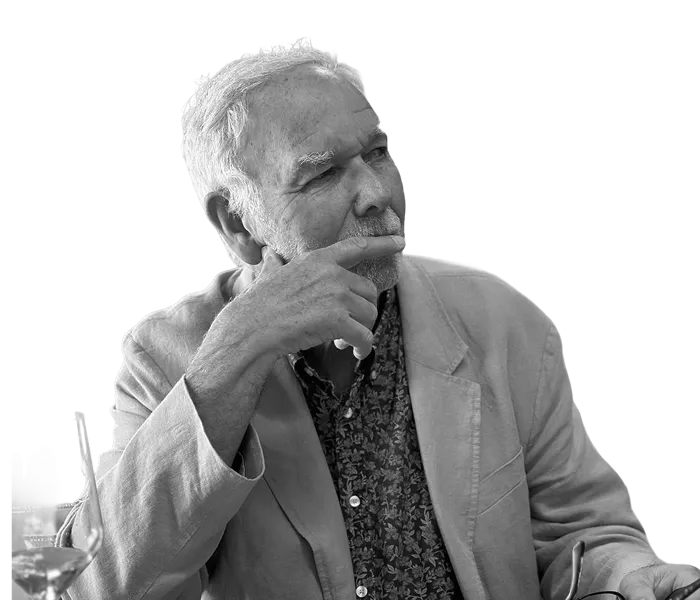
Rod Phillips
Books /
Rod Phillips
Mass cat-keeping began only in the 1950s and 60s, so pet cats are one percent of the human-cat relationship.
Humans had begun to establish permanent settlements where they practised agriculture and stored food, mainly grain. The grain attracted rodents and the rodents attracted wildcats, who soon became indispensable for dealing with the rodent problem. Over thousands of years, as they became fixtures in human settlements, wildcats evolved into cats
Cats: A History
Read the thread →
A close-up
Cats: A History
Humans had begun to establish permanent settlements where they practised agriculture and stored food, mainly grain. The grain attracted rodents and the rodents attracted wildcats, who soon became indispensable for dealing with the rodent problem. Over thousands of years, as they became fixtures in human settlements, wildcats evolved into cats
July 12, 2026
July 12, 2026
July 12, 2026
Science & Nature, Everyday Life & Anthropology

Rod Phillips
Books /
Rod Phillips
Mass cat-keeping began only in the 1950s and 60s, so pet cats are one percent of the human-cat relationship.
But cats rarely entered the historical record except tangentially. It's likely that all elite households had cats to keep the mouse population down, but family portraits far more often show a dog than a cat – presumably because they had a relationship with the dog or the dog was of a prestigious breed.
Cats: A History
Read the thread →
The wide angle
Cats: A History
But cats rarely entered the historical record except tangentially. It's likely that all elite households had cats to keep the mouse population down, but family portraits far more often show a dog than a cat – presumably because they had a relationship with the dog or the dog was of a prestigious breed.
July 12, 2026
July 12, 2026
July 12, 2026
Science & Nature, Everyday Life & Anthropology
Rod Phillips
Books /
Rod Phillips
Pet cats are a recent blip in a twelve-thousand-year relationship between humans and cats.
But it was not until after World War II that pet cats became common. In this sense, pet cats on a mass scale occupy only one per cent of the time that cats and humans have had relationships. That's why it's so important for a history of cats to cover not only pet cats, but also the more numerous feral and street cats. They have longer histories.
Cats: A History
Read the thread →
In a nutshell
Cats: A History
But it was not until after World War II that pet cats became common. In this sense, pet cats on a mass scale occupy only one per cent of the time that cats and humans have had relationships. That's why it's so important for a history of cats to cover not only pet cats, but also the more numerous feral and street cats. They have longer histories.
July 12, 2026
July 12, 2026
July 12, 2026
Science & Nature, Everyday Life & Anthropology
Nicolas Pethes
Books /
Nicolas Pethes
Performer and audience really communicate, expectation running both ways, and the fans, not the artist, own the songs.
So the book also became a document of my own journey as a fan. On the larger scale, it looks back across more than forty years to the moment when I first heard "No Surrender" and realized that I really could learn more from a three-minute record than I would ever learn in school.
Springsteen Fandom: A Lifetime Conversation
Read the thread →
The wide angle
Springsteen Fandom: A Lifetime Conversation
So the book also became a document of my own journey as a fan. On the larger scale, it looks back across more than forty years to the moment when I first heard "No Surrender" and realized that I really could learn more from a three-minute record than I would ever learn in school.
June 28, 2026
July 11, 2026
July 18, 2026
Music & Performance, Media & Pop Culture
Gabriele Neri
Books /
Gabriele Neri
The cartoon is a form of architectural criticism, and often a more effective one than the essay.
In Australia, the construction of the Sydney Opera House — today the country's most iconic monument — was accompanied by an endless stream of cartoons mocking the building. Were these merely jokes? Far from it. Behind many of these seemingly playful images lay complex editorial, political, and economic agendas.
Alan Dunn: The Cartoonist as Architectural Critic
Read the thread →
The wide angle
Alan Dunn: The Cartoonist as Architectural Critic
In Australia, the construction of the Sydney Opera House — today the country's most iconic monument — was accompanied by an endless stream of cartoons mocking the building. Were these merely jokes? Far from it. Behind many of these seemingly playful images lay complex editorial, political, and economic agendas.
June 8, 2026
July 10, 2026
July 29, 2026
Art & Design, Architecture & Built Environment, Media & Pop Culture
Jonathan Weber
Books /
Jonathan Weber
The commercial internet was made in the city of San Francisco, not in Silicon Valley, and the reason is cultural.
The book is pretty personal, more than most books like this. I'm a character in the book. I show up in chapter three, which is about the dot-com bubble of the late 90s. I was the editor of a magazine called The Industry Standard, which was the Bible of the dot-com boom. As journalists, we covered the dot-com boom, and obviously that was super interesting, and I had a front-row seat for all that stuff.
City on the Edge: Technology, Politics, and the Fight for the Soul of San Francisco
Read the thread →
The wide angle
City on the Edge: Technology, Politics, and the Fight for the Soul of San Francisco
The book is pretty personal, more than most books like this. I'm a character in the book. I show up in chapter three, which is about the dot-com bubble of the late 90s. I was the editor of a magazine called The Industry Standard, which was the Bible of the dot-com boom. As journalists, we covered the dot-com boom, and obviously that was super interesting, and I had a front-row seat for all that stuff.
June 20, 2026
July 9, 2026
July 17, 2026
Cities & Urban Life, Technology & AI

Ayşehan Jülide Etem
Books /
Ayşehan Jülide Etem
Cold War American educational films made geopolitics feel like friendship.
That scene condenses the logic of film diplomacy. Turkey gives America images of itself. America gives Turkey the apparatus for producing images. Turkey offers history, landscape, friendship, and civilizational depth. America offers technology, mobility, and the future. A political alliance becomes a childhood friendship. A Cold War relationship becomes a handshake.
Film Diplomacy: A Media History of Turkey–US Relations
Read the thread →
A close-up
Film Diplomacy: A Media History of Turkey–US Relations
That scene condenses the logic of film diplomacy. Turkey gives America images of itself. America gives Turkey the apparatus for producing images. Turkey offers history, landscape, friendship, and civilizational depth. America offers technology, mobility, and the future. A political alliance becomes a childhood friendship. A Cold War relationship becomes a handshake.
May 22, 2026
June 21, 2026
July 8, 2026
Film & TV, Politics & Democracy
David R. Samson
Books /
David R. Samson
Humans sleep less than any other primate, and that is an adaptation produced by sociality, not a deficit.
So interestingly, the modern mind thinks of the social condition as one that reduces sleep. Oh, I've got to sleep alone, in this sleep cell, this prison, so that nothing interferes with my sleep. But ironically, it was the social evolution of our species that made us such high-efficiency sleepers. Weird and beautiful sleepers in the first place.
The Sleepless Ape: The Story of Sleep in Human Evolution
Read the thread →
The wide angle
The Sleepless Ape: The Story of Sleep in Human Evolution
So interestingly, the modern mind thinks of the social condition as one that reduces sleep. Oh, I've got to sleep alone, in this sleep cell, this prison, so that nothing interferes with my sleep. But ironically, it was the social evolution of our species that made us such high-efficiency sleepers. Weird and beautiful sleepers in the first place.
June 22, 2026
July 7, 2026
July 24, 2026
Science & Nature, Mind & Brain

Neeraj Khemlani
Books /
Neeraj Khemlani
The companies that multiply a hundredfold are overwhelmingly dull business-to-business suppliers held thirty years without selling.
Matt Ankrum heard that story and decided he wanted to focus on those companies that multiplied 100 times, like Xerox. He started his research on 100-baggers and brought the coffee can concept together with it. Readers will like the metaphor of the coffee can story, and the power of exponential compounding, as well as the power of a relationship…
The Coffee Can Investor: A Stock-Picker's Journey to Build Generational Wealth
Read the thread →
A close-up
The Coffee Can Investor: A Stock-Picker's Journey to Build Generational Wealth
Matt Ankrum heard that story and decided he wanted to focus on those companies that multiplied 100 times, like Xerox. He started his research on 100-baggers and brought the coffee can concept together with it. Readers will like the metaphor of the coffee can story, and the power of exponential compounding, as well as the power of a relationship…
June 26, 2026
June 26, 2026
July 6, 2026
Economics & Business
Yosef Grodzinsky
Books /
Yosef Grodzinsky
The neurological record arbitrates the LLM-versus-linguistics fight, and it supports a modular brain with partly innate language.
You could say that my work on this book began at the very onset of my academic life. I started out as a medical student, with an interest in linguistics, neurophysiology, and the philosophy of mind. Unable to decide which path to take, I found a reasonable solution in doing many things in parallel, which meant doing both linguistics and medicine.
How Deeply Human Is Language?
Read the thread →
The wide angle
How Deeply Human Is Language?
You could say that my work on this book began at the very onset of my academic life. I started out as a medical student, with an interest in linguistics, neurophysiology, and the philosophy of mind. Unable to decide which path to take, I found a reasonable solution in doing many things in parallel, which meant doing both linguistics and medicine.
June 25, 2026
July 5, 2026
July 15, 2026
Language & Linguistics, Mind & Brain, Technology & AI
Robert P. Watson
Books /
Robert P. Watson
Lincoln grew his beard because eleven-year-old Grace Bedell told him to.
In her letter, with the audacity of a child, she tells him “You are unattractive. Your face, it's too thin, it's too narrow, you...
Read the thread →
In a nutshell
In her letter, with the audacity of a child, she tells him “You are unattractive. Your face, it's too thin, it's too narrow, you...
July 4, 2026
Politics & Democracy

Sarah M.S. Pearsall
Books /
Sarah M.S. Pearsall
The Boston Tea Party begins in Bengal, where East India Company misrule made EIC tyranny a live American fear.
This demolition of the private property of the EIC was audacious, horrifying many in England and even in Massachusetts itself. It also put at least some of the American colonies on a collision course with the British government, leading…
Freedom Round the Globe
Read the thread →
A close-up
Freedom Round the Globe
This demolition of the private property of the EIC was audacious, horrifying many in England and even in Massachusetts itself. It also put at least some of the American colonies on a collision course with the British government, leading…
May 26, 2026
June 24, 2026
July 3, 2026
Politics & Democracy, Empire & Colonialism
Daisuke Miyao
Books /
Daisuke Miyao
Melville's samurai is an invention, with an epigraph that exists in no Bushido and no Hagakure.
I think the question of the animal, or the thought of the nonhuman to decenter the human, is a crucial area for film theory in the twenty-first century. I would say Melville, as a cat person, tried to cross a border between the human and the nonhuman. Also, Cinema Is a Cat was my attempt to communicate with non-academics, cinephiles, and my fellow researchers and students.
Le Samouraï
Read the thread →
The wide angle
Le Samouraï
I think the question of the animal, or the thought of the nonhuman to decenter the human, is a crucial area for film theory in the twenty-first century. I would say Melville, as a cat person, tried to cross a border between the human and the nonhuman. Also, Cinema Is a Cat was my attempt to communicate with non-academics, cinephiles, and my fellow researchers and students.
June 23, 2026
July 2, 2026
July 13, 2026
Film & TV
Meredith F. Small
Books /
Meredith F. Small
Nothing counts as human thought unless it is universal, and a science that never leaves the West cannot show that.
Academics from several disciplines observe monkeys and apes, such as animal behaviorists, psychologists, and ecologists, but anthropologists do it for a specific reason—we want to know if we can trace some patterns of human behavior to our evolutionary cousins. What do we share with nonhuman primates? What makes humans different, if anything?
How We Think
Read the thread →
The wide angle
How We Think
Academics from several disciplines observe monkeys and apes, such as animal behaviorists, psychologists, and ecologists, but anthropologists do it for a specific reason—we want to know if we can trace some patterns of human behavior to our evolutionary cousins. What do we share with nonhuman primates? What makes humans different, if anything?
June 17, 2026
July 1, 2026
July 20, 2026
Mind & Brain, Everyday Life & Anthropology
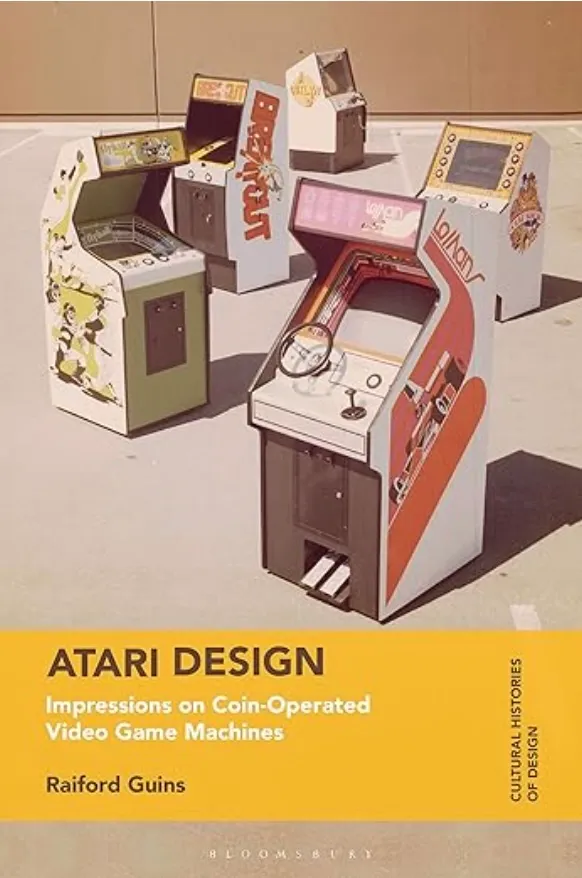

Raiford Guins
Books /
Raiford Guins
PONG succeeded because its understated wood-grain cabinet got it into cocktail lounges, hotel lobbies and airports.
What PONG did, and what Atari did that was so successful — the takeaway here is that Atari radically changed the way the coin-operated amusement industry functioned. Games have very limited locations. What Atari did was got its product into those locations — let's call them markets — but it also created new ones.
King PONG
Read the thread →
A close-up
King PONG
What PONG did, and what Atari did that was so successful — the takeaway here is that Atari radically changed the way the coin-operated amusement industry functioned. Games have very limited locations. What Atari did was got its product into those locations — let's call them markets — but it also created new ones.
May 27, 2026
June 18, 2026
June 30, 2026
Media & Pop Culture, Economics & Business, Technology & AI

Chris Evans
Books /
Chris Evans
International football management is a different job from club management.
A World Cup brings this together in a way that no other sporting event does. Everybody plays the same sport, but has different goals and national environments to work in - and it's the people who tell this story best.
How to Win the World Cup
Read the thread →
In a nutshell
How to Win the World Cup
A World Cup brings this together in a way that no other sporting event does. Everybody plays the same sport, but has different goals and national environments to work in - and it's the people who tell this story best.
June 29, 2026
Sports & Games
Nicolas Pethes
Books /
Nicolas Pethes
The bond between performer and audience is real communication, not parasocial illusion.
Many of Springsteen's songs are built around characters caught in situations where it's difficult to know what the right decision is. These aren't "big" heroic stories — they're stories about failure, exclusion, disappointment, and hope that often goes nowhere, all grounded in very concrete everyday situations. Just listen to any song on "Nebraska" or "The Ghost of Tom Joad", and you will immediately be drawn into these emotions.
Springsteen Fandom: A Lifetime Conversation
Read the thread →
In a nutshell
Springsteen Fandom: A Lifetime Conversation
Many of Springsteen's songs are built around characters caught in situations where it's difficult to know what the right decision is. These aren't "big" heroic stories — they're stories about failure, exclusion, disappointment, and hope that often goes nowhere, all grounded in very concrete everyday situations. Just listen to any song on "Nebraska" or "The Ghost of Tom Joad", and you will immediately be drawn into these emotions.
June 28, 2026
July 11, 2026
July 18, 2026
Music & Performance, Media & Pop Culture
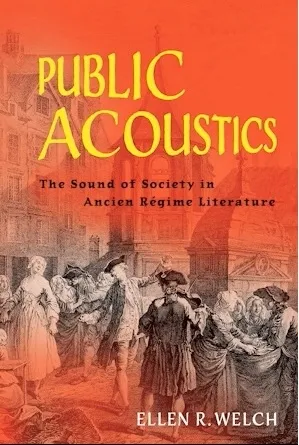
Ellen R. Welch
Books /
Ellen R. Welch
The public sphere French writers of the period described was acoustic, bruit and brouhaha moving like weather.
Welch zooms in on Claude Perrault — physician, architect, music theorist — and an unpublished preface in which he describes overhearing a debate between two music connoisseurs at a Paris opera. Perrault's defense of contrapuntal music doubles as a defense of complex listening, reframing social noise as intelligible complexity. There is, he implies, pleasure to be found in tuning into the many voices of society.
Public Acoustics: The Sound of Society in Ancien Régime Literature
Read the thread →
A close-up
Public Acoustics: The Sound of Society in Ancien Régime Literature
Welch zooms in on Claude Perrault — physician, architect, music theorist — and an unpublished preface in which he describes overhearing a debate between two music connoisseurs at a Paris opera. Perrault's defense of contrapuntal music doubles as a defense of complex listening, reframing social noise as intelligible complexity. There is, he implies, pleasure to be found in tuning into the many voices of society.
June 27, 2026
June 27, 2026
June 27, 2026
Literature & Writers, Music & Performance
Ellen R. Welch
Books /
Ellen R. Welch
The public sphere French writers of the period described was acoustic, bruit and brouhaha moving like weather.
Setting Habermas's 'public sphere' against the noisier reality of Old Regime France, Welch argues that early modern noise metaphors carried no fixed value judgment — public talk was confusing, heterogeneous, mobile, untraceable. Sonic models invite us to think less about policing speech and more about the ethics of listening and the politics of listenability.
Public Acoustics: The Sound of Society in Ancien Régime Literature
Read the thread →
The wide angle
Public Acoustics: The Sound of Society in Ancien Régime Literature
Setting Habermas's 'public sphere' against the noisier reality of Old Regime France, Welch argues that early modern noise metaphors carried no fixed value judgment — public talk was confusing, heterogeneous, mobile, untraceable. Sonic models invite us to think less about policing speech and more about the ethics of listening and the politics of listenability.
June 27, 2026
June 27, 2026
June 27, 2026
Literature & Writers, Music & Performance
Ellen R. Welch
Books /
Ellen R. Welch
In old-regime France, the public was heard as noise, not as reasoned debate.
Through these various case studies, Public Acoustics offers a parallel history to traditional narratives of the emergence of the public sphere, emphasizing how writers understood the importance of public discourse in terms of its sensuous, affective, confusing, and mobile qualities over its capacity to produce clear articulations of public opinion.
Public Acoustics: The Sound of Society in Ancien Régime Literature
Read the thread →
In a nutshell
Public Acoustics: The Sound of Society in Ancien Régime Literature
Through these various case studies, Public Acoustics offers a parallel history to traditional narratives of the emergence of the public sphere, emphasizing how writers understood the importance of public discourse in terms of its sensuous, affective, confusing, and mobile qualities over its capacity to produce clear articulations of public opinion.
June 27, 2026
June 27, 2026
June 27, 2026
Literature & Writers, Music & Performance
Neeraj Khemlani
Books /
Neeraj Khemlani
The companies that multiply a hundredfold are overwhelmingly dull business-to-business suppliers held thirty years without selling.
One example of a company that grew one hundred times in value was Fastenal, which provides nuts and bolts to construction companies. A simple business that just compounded over time. That really resonated with me because at Hearst, I watched our CEO start to move capital allocation toward acquiring B2B media companies
The Coffee Can Investor: A Stock-Picker's Journey to Build Generational Wealth
Read the thread →
The wide angle
The Coffee Can Investor: A Stock-Picker's Journey to Build Generational Wealth
One example of a company that grew one hundred times in value was Fastenal, which provides nuts and bolts to construction companies. A simple business that just compounded over time. That really resonated with me because at Hearst, I watched our CEO start to move capital allocation toward acquiring B2B media companies
June 26, 2026
June 26, 2026
July 6, 2026
Economics & Business
Neeraj Khemlani
Books /
Neeraj Khemlani
The stocks that grow a hundredfold are mostly dull suppliers held for decades without selling.
Matt is an advocate of investing in companies for the long term, not trading stocks. He has studied companies that have multiplied in value 100 times. They're called hundred baggers and the process usually takes 30 years.
The Coffee Can Investor: A Stock-Picker's Journey to Build Generational Wealth
Read the thread →
In a nutshell
The Coffee Can Investor: A Stock-Picker's Journey to Build Generational Wealth
Matt is an advocate of investing in companies for the long term, not trading stocks. He has studied companies that have multiplied in value 100 times. They're called hundred baggers and the process usually takes 30 years.
June 26, 2026
June 26, 2026
July 6, 2026
Economics & Business
Yosef Grodzinsky
Books /
Yosef Grodzinsky
Brain evidence suggests language is a distinct module and partly innate.
Who, if anyone, is right, and how can we tell? Do we learn everything from scratch, or could some knowledge be innate? Is our brain one big network, or is it built out of modules, language being one of them?
How Deeply Human Is Language?
Read the thread →
In a nutshell
How Deeply Human Is Language?
Who, if anyone, is right, and how can we tell? Do we learn everything from scratch, or could some knowledge be innate? Is our brain one big network, or is it built out of modules, language being one of them?
June 25, 2026
July 5, 2026
July 15, 2026
Language & Linguistics, Mind & Brain, Technology & AI
Sarah M.S. Pearsall
Books /
Sarah M.S. Pearsall
The Boston Tea Party begins in Bengal, where East India Company misrule made EIC tyranny a live American fear.
Iconic moments of the American Revolution (such as the Boston Massacre, the establishment of Valley Forge, the Yorktown surrender) look different by starting outside the thirteen colonies. We see things we did not see before. Such iconic moments become more interesting…
Freedom Round the Globe
Read the thread →
The wide angle
Freedom Round the Globe
Iconic moments of the American Revolution (such as the Boston Massacre, the establishment of Valley Forge, the Yorktown surrender) look different by starting outside the thirteen colonies. We see things we did not see before. Such iconic moments become more interesting…
May 26, 2026
June 24, 2026
July 3, 2026
Politics & Democracy, Empire & Colonialism
Loading the archive…
Know something the rest of us don't?
Most threads on Rorotoko begin with our invitation. Any thread can begin with a proposal: you write it with the same prompts every thread answers, and we review it.
Propose a thread →